Key takeaways
- Compare the best optical audio cables by connector, jacket and length, from a braided in-wall-rated cord to a mini Toslink cable for older gear.
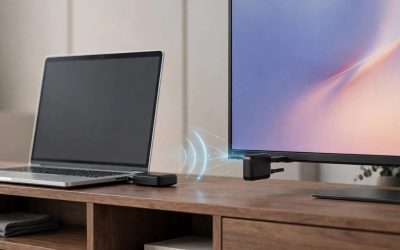
The best optical audio cable for most TV setups is the KabelDirekt TOSLINK cable in the 6 ft length, because it pairs the standard square Toslink plugs every TV and soundbar uses with a fully flexible PVC jacket, gold-plated connectors and the clearest published warranty in this group, a 36-month manufacturer term. An optical cable is the simplest wire in a home theater: it carries digital audio as pulses of light from a TV, console or disc player to a soundbar or receiver, and because the signal travels as light rather than electricity, it cannot hum, buzz or pick up interference from the power cables it runs beside. As an Amazon Associate, we earn from qualifying purchases. The five cables below were compared on published specifications only: connector type at each end, length, jacket construction, any in-wall rating, and each maker’s warranty and listing data. Every one of them is an audio cable; none of them carries video, and none of them can fix a format the optical standard itself does not support.
What separates these five is the ends, the jacket and the length, in that order. Four are Toslink-to-Toslink cables for the standard run between a TV and a soundbar: the KabelDirekt is the plain, well-documented default, the IVANKY is the braided, in-wall-rated build in a 10 ft length, the BlueRigger is the long-running classic design, and the Amazon Basics is the budget pick in the longer 9.8 ft size. The fifth, the FosPower, is the specialist: a Toslink-to-mini-Toslink cable for the shrinking family of sources, a Chromecast Audio, an older Mac, an AirPort Express, that hide their optical output inside a 3.5 mm jack. Buy the connector pair first and the length second; the jacket decides how the cable survives the route.
Table of Contents
- Quick Answer
- How to Choose an Optical Audio Cable
- Quick Comparison
-
- KabelDirekt TOSLINK Optical Audio Cable, 6 ft
-
- IVANKY Optical Audio Cable, 10 ft
-
- BlueRigger Digital Optical Audio Toslink Cable, 6 ft
-
- Amazon Basics Digital Optical Audio Toslink Cable, 9.8 ft
-
- FosPower Toslink to Mini Toslink Digital Optical Audio Cable, 10 ft
- Before You Buy: Fit, Safety and Listing Checks
- Frequently Asked Questions
- Conclusion
Quick Answer
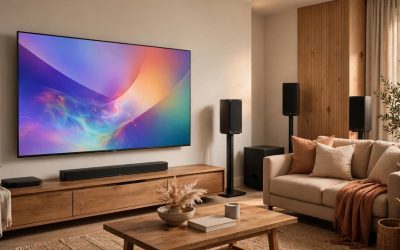
For the standard job, a TV’s optical output into a soundbar or receiver a few feet away, buy the KabelDirekt 6 ft: the documented default, with a flexible jacket that routes easily behind a stand and a 36-month warranty behind it. Buy the IVANKY 10 ft when the run is longer or goes inside a wall, because it is the pick here with a braided jacket and a CL3 in-wall rating in the maker’s listing. Buy the BlueRigger 6 ft when you want the design that has been sold, unchanged in its essentials, for well over a decade. Buy the Amazon Basics 9.8 ft when the budget decides and the run is long, and buy the FosPower only when your source has the small round mini-Toslink socket rather than the square one. Whichever you choose, measure the route the cable will actually take, down from the TV port and across to the bar, and buy the next length up rather than the exact figure: an optical cable pulled tight around a sharp corner is a cable being damaged.
How to Choose an Optical Audio Cable
Start with the connectors, because there are two optical ends and they do not interchange. The standard plug is the square Toslink connector, the one on the back of televisions, soundbars, receivers, consoles and disc players, usually behind a small spring-loaded flap or under a dust cap. The second is mini Toslink, a round 3.5 mm plug that carries the same optical signal from a smaller socket: some older laptops, the Chromecast Audio, the AirPort Express and a handful of portable players. A mini plug will not seat in a square socket and a square plug will not enter a round one, and neither is an analog headphone connection, however similar the mini plug looks to one. Four of the five cables here are Toslink at both ends; the FosPower is the Toslink-to-mini exception, bought for a specific source.
Know the format ceiling before you blame the cable. Optical S/PDIF carries uncompressed stereo and compressed surround: Dolby Digital and DTS, up to 5.1 channels, which covers broadcast TV, streaming services’ standard surround mixes and game consoles’ optical output. It does not carry Dolby TrueHD, DTS-HD Master Audio, Dolby Atmos in its object-based form, or uncompressed 7.1, because the interface’s bandwidth was fixed long before those formats existed. No cable in this roundup, at any tier, changes that ceiling; it is a property of the ports, not the wire. If your system is built around lossless or Atmos audio from a Blu-ray player or a streaming box, the right connection is HDMI with eARC, and the optical cable is the fallback for older receivers and simpler bars. Optical also carries no control signals, so unlike HDMI ARC it will not let the TV remote run the soundbar’s volume.
Measure the route, then respect the fiber. The light inside an optical cable travels through a thin plastic fiber core, and the core sets the handling rules. A gentle curve is fine; a sharp bend, a kink, or a cable pinched under a TV foot or behind a wall-mount bracket can crack the core and kill the signal outright or leave it dropping in and out. Measure the real path, down, across and up, add slack for the plugs to seat without strain, and step up a length if the figure lands close. Plastic-fiber runs are happiest at the lengths sold here, from 3.3 ft to 25 ft across the makers’ lines; the longer the run, the more a well-made cable with properly polished ends matters, because the signal fades with distance and with every imperfect surface it passes.
Read the jacket as a routing decision. The plain PVC jackets on the KabelDirekt, BlueRigger, Amazon Basics and FosPower are flexible and easy to coil into the short, slack loops a TV stand asks for. A braided nylon jacket, the IVANKY’s build, resists abrasion and pets and looks finished on an exposed run, at the cost of some stiffness in tight bends. The one jacket specification with a rule behind it is the in-wall rating: a cable hidden inside a wall cavity should carry a CL2 or CL3 rating under the electrical code, and among these five only the IVANKY’s listing claims a CL3 rating. An unrated cable behind drywall is the category’s one genuine installation error.
Read the connector claims correctly. Every maker here advertises gold-plated connectors, and the plating deserves an honest reading: the light signal passes through the polished end of the fiber, not through the metal shell, so plating cannot improve the sound. What it does is keep the shell from corroding, which keeps the plug seating firmly for years. The specification that touches the signal is the polish and alignment of the fiber tip itself, which is why the BlueRigger’s published emphasis on precision-polished connectors is the meaningful claim in its listing. Finally, every optical cable ships with protective caps over both tips. A cap left on blocks the light completely and is the single most common reason a new cable appears dead; keep the caps for any cable you unplug and store.
Quick Comparison
| Product | Tier | Length | Connectors | Jacket | Standout trait |
|---|---|---|---|---|---|
| KabelDirekt TOSLINK Optical Audio Cable | Mid-range | 6 ft | Toslink to Toslink | Flexible PVC | 36-month manufacturer warranty |
| IVANKY Optical Audio Cable | Premium | 10 ft | Toslink to Toslink | Braided nylon, aluminum shell | CL3 in-wall rating in the listing |
| BlueRigger Digital Optical Audio Toslink Cable | Mid-range | 6 ft | Toslink to Toslink | PVC | Design tracked on Amazon since 2011 |
| Amazon Basics Digital Optical Audio Toslink Cable | Budget | 9.8 ft | Toslink to Toslink | PVC with buffer tubing | Longest standard-format run at the budget tier |
| FosPower Toslink to Mini Toslink Cable | Budget | 10 ft | Toslink to mini Toslink | PVC with strain relief | The mini-Toslink pick for small optical sockets |
1. KabelDirekt TOSLINK Optical Audio Cable, 6 ft
Specs
- Model: not stated in the listing data reviewed
- Type: Toslink to Toslink digital optical audio cable (S/PDIF), per the maker
- Length: 6 ft; the line also runs 3, 10, 15 and 20 ft, each under its own listing
- Connectors: Toslink (F05) plugs with 24K gold-plated contacts, per the maker
- Core: fiber optic, metal-free construction, per the maker
- Jacket: fully flexible PVC, per the maker
- Testing: multi-stage testing during manufacturing, per the maker
- Warranty: 36-month manufacturer warranty, per the maker
What the specs say
The KabelDirekt is the default pick because its published record is the most complete here relative to what the category usually offers. The construction is the standard recipe done without shortcuts: a metal-free fiber core, so the cable is immune to the electrical interference that can ride a copper audio lead, a PVC jacket flexible enough to coil behind a TV stand, and gold-plated Toslink plugs. The differentiator is the paperwork: the maker states a 36-month warranty, the longest explicit term in this group, and a multi-stage testing step in manufacturing, which in a category sold on identical-looking black cords is the closest thing to a verifiable quality claim. The 6 ft length is the middle of the line and the right default for a soundbar sitting under or in front of the TV it serves.
Where it fits
Choose it for the common case: a TV optical output feeding a soundbar on the same stand, a console or Blu-ray player feeding an older receiver without HDMI ARC, or any short run where the cable will be handled, coiled and re-routed as the setup changes. The flexible jacket suits racks and stands where the cable bends gently in several directions.
Trade-offs
Each length in the KabelDirekt line is a separate listing with its own identifier, so the 6 ft figure has to be matched at ordering; the checks below return to this. The PVC jacket is the flexible end of the category, not the armored end, and the listing states no in-wall rating, so a run hidden inside a wall cavity belongs to the IVANKY below. There is no mini-Toslink version of this pick pinned here; sources with the small round socket need the FosPower.
2. IVANKY Optical Audio Cable, 10 ft
Specs
- Model: VAB02, per the Amazon product information
- Type: Toslink to Toslink digital optical audio cable (S/PDIF), per the maker
- Length: 10 ft (3 m)
- Jacket: braided nylon, slim profile, per the maker
- Connector shell: aluminum, per published listing coverage
- Connectors: gold-plated, per the maker
- Rating: CL3 rated, per the maker’s listing title
- Color: grey, per the listing
- Date first available: May 22, 2017, per the Amazon product information
- Warranty: not stated in the listing data reviewed
What the specs say
The IVANKY is the built-up pick: where the other standard-format cables here wear plain PVC, this one wraps the fiber in a braided nylon jacket with aluminum connector shells, the construction a cable wants when it will be seen, stepped around, or pulled through a route more than once. Its 10 ft length covers the runs the 6 ft picks cannot: a wall-mounted TV dropping to a bar on a console below, a receiver in a rack to the side. The specification that sets it apart is the CL3 rating in the maker’s listing, the in-wall rating that makes this the one pick here cleared for a run hidden inside a wall cavity. The model has been listed since 2017, a long run for the category.
Where it fits
Choose it for a longer or hidden run: across a room to a receiver, down inside a wall from a mounted TV, or along a baseboard where a cable takes knocks. The braided jacket also suits exposed runs in a finished room, where the cord reads as part of the installation rather than an afterthought.
Trade-offs
Two cautions belong with this pick. First, the Amazon listing crawl reviewed for this cable showed no featured offer in its summary area even while current roundups carry the cable as a selling pick; that pattern is a listing-page artifact more often than a stock fact, but the live offer and seller on this exact listing deserve a check before ordering. Second, a braided jacket is stiffer than PVC, so the tightest S-bends behind a crowded rack are harder work, and the listing data reviewed states no warranty term, leaving the order record as the purchase document.
3. BlueRigger Digital Optical Audio Toslink Cable, 6 ft
Specs
- Model: TOSLINK-6FT, per the tracker record for this listing
- Type: Toslink to Toslink digital optical audio cable (S/PDIF)
- Length: 6 ft (1.8 m)
- Jacket: durable PVC outer layer, per the maker’s published description
- Connectors: 24K gold-plated, precision-polished optical connectors, per the maker
- UPC: 609465955681, per the tracker record for this listing
- Listing history: tracked by camelcamelcamel since December 2011
- Warranty: lifetime warranty, per published roundup data for this line
What the specs say
The BlueRigger is the longevity pick. Its tracker record reaches back to December 2011, which makes this 6 ft design one of the longest-running listings in the category, sold through the whole era of the optical port’s decline and persistence. The published construction is the classic one: a PVC outer layer over the fiber, gold-plated connectors, and an emphasis on precision-polished connector ends, the detail that governs how cleanly the light passes from cable to port. The maker’s line is sold with a lifetime warranty per published roundup data, the strongest term in this group on paper. Nothing about the design is novel, and that is the point: it is the known quantity.
Where it fits
Choose it for a permanent, set-and-forget run: the cable behind a receiver that will not be touched for years, a spare for the drawer, or any install where a design with a decade-plus sales record matters more than a braided jacket. Its 6 ft length covers the standard TV-to-soundbar and console-to-receiver spans.
Trade-offs
The tracker record for this listing currently shows the cable carried by third-party sellers rather than an Amazon-sold offer, so the seller’s identity is part of the purchase check on this one. The maker’s wider line includes longer lengths and a separate in-wall-rated family under different listings, and none of those figures transfer to this 6 ft PVC cable. Marketing language in the line’s regional listings speaks of 7.1 support; read that against the format ceiling set out above, since optical carries compressed 5.1 surround and stereo, and no cable in this category carries uncompressed 7.1.
4. Amazon Basics Digital Optical Audio Toslink Cable, 9.8 ft
Specs
- Model: HL-003143, per the Amazon product information
- Type: Toslink to Toslink digital optical audio cable
- Length: 9.8 ft (3 m); the line also runs 3.3 ft and 6 ft, each under its own listing
- Connectors: gold-plated, corrosion-resistant, per the maker
- Construction: fiber optic cable with buffer tubing, per published coverage of the line
- Warranty: not stated in the listing data reviewed
What the specs say
The Amazon Basics is the budget pick, and the listing pinned here is its 9.8 ft length, the size that makes it more than a token economy choice: it reaches from a wall-mounted TV to a bar or receiver that the 6 ft cables cannot span, at the tier where buyers usually have to choose between length and price. The published construction is plain and adequate: a fiber optic core in buffer tubing, gold-plated Toslink connectors, and the multi-channel support the optical standard defines. Amazon sells the same design in 3.3 ft and 6 ft lengths under separate listings, and a separate CL3-rated variant exists elsewhere in the line; the figures here belong to this 9.8 ft standard listing only.
Where it fits
Choose it for a long, simple run on a budget: a TV on one wall feeding a soundbar beneath it with slack to route along the stand, a receiver across a rack, or a second-room and spare setup where the cable’s job is to work, not to be admired. It is also the sensible spare, the cable kept in a drawer against the day a system gets rearranged.
Trade-offs
The build is the plain end of the category: a standard PVC jacket without braid or armor, and no in-wall rating stated for this listing, so hidden runs belong to the IVANKY. The listing data reviewed states no warranty term. Because the line’s three lengths sit in one product family with near-identical titles, the length and the identifier in the reference table are the pair to match at ordering; the 6 ft sibling is the one most roundups cite, and it is a different listing from this 9.8 ft cable.
5. FosPower Toslink to Mini Toslink Digital Optical Audio Cable, 10 ft
Specs
- Model: FOSCBL-2033, per the Amazon product information
- Type: Toslink to mini Toslink digital optical audio cable (S/PDIF), per the maker
- Length: 10 ft (3 m)
- Connectors: metal connectors with 24K gold-plated ferrules, per the maker
- Jacket: PVC with strain relief at the connectors, per the maker
- Warranty: not stated in the listing data reviewed
What the specs say
The FosPower is the specialist pick, defined entirely by its smaller end. One end is the standard square Toslink plug that a soundbar or receiver takes; the other is a mini Toslink plug, the round 3.5 mm optical connector fitted to a specific family of sources: the Chromecast Audio, older Mac computers, the AirPort Express, and some portable players and DACs. For those sources this is not an optional upgrade but the only cable shape that connects them to a modern bar or receiver at all. The build follows the maker’s house pattern: metal connector bodies, gold-plated ferrules and a PVC jacket with strain relief where the cable meets the plug, the point where thin optical cables usually fail. The 10 ft length gives a small source, a streamer puck on a shelf, reach to the system it feeds.
Where it fits
Choose it when the source, not the destination, decides the cable: a Chromecast Audio feeding a soundbar, an older laptop or AirPort Express feeding a receiver, a portable player with a mini optical socket feeding a desktop system. If both of your devices take the square plug, this cable has nothing to offer you that the four above do not; it exists for the mixed pair.
Trade-offs
The maker’s own warning is the headline caution: a mini Toslink plug looks like a 3.5 mm headphone plug and is not one. It carries light, not analog audio, it will not convert a headphone jack into an optical output, and it only works in a socket built as a combined optical output. Check the source’s specification for the words mini Toslink or optical before ordering. The identifier pinned here was confirmed through a regional Amazon store’s product information for this exact model rather than a domestic listing crawl, so confirm the live offer on the listing itself. The jacket is plain PVC, and at 10 ft the thin cable asks for the gentle routing the How to Choose section describes.
Before You Buy: Fit, Safety and Listing Checks
Fit and Sizing Checks
Fit is a chain of three figures. First, the connector pair: square Toslink at both ends for televisions, soundbars, receivers, consoles and disc players; mini Toslink at the source end only for the small family of devices built with the round optical socket. The two shapes do not adapt to each other without a separate adapter, and the mini plug’s resemblance to a headphone plug is a trap the FosPower’s maker warns about in its own listing copy. Second, the length, measured along the route the cable will actually take rather than the straight line between ports, with slack at both ends so the plugs seat without the fiber bending sharply at the connector. Third, the bend discipline: no kink, no pinch under furniture, no fold flattened behind a wall-mount bracket. Where a run must hide inside a wall, the chain gains a fourth link, the in-wall rating, and only the CL3-rated IVANKY here satisfies it.
Safety and Recall Checks
None of the five cables in this roundup is under a CPSC recall, and no recall covers optical audio cables as a class. The nearest federal record in the wider cable category names a different kind of product entirely: in May 2019 the CPSC announced the recall of about 90,000 heyday 3-foot Lightning charging cables sold by Target, because the metal around the cord could become electrically charged if it touched a wall charger’s plug prongs, posing shock and fire hazards after reports of smoking, sparking and finger burns. No charging cable is in this roundup, and the record is named because it states this category’s safety logic from the failure side: the cables that get recalled are the ones carrying electric current. An optical cable carries light. It cannot shock, overheat or charge its own jacket, and its failure mode is a silent signal, not a hazard. The safety specifications that do apply here are the installation ones: use a CL2 or CL3 rated cable for in-wall runs, as the electrical code asks, keep fiber away from pinch points, and run the exact model through saferproducts.gov before installation, the same final check as for any product that lives behind a television.
Listing Checks
Four listing details deserve a second look. First, length families: KabelDirekt and Amazon Basics both sell one design in several lengths, each length a separate listing with its own identifier, so the length in the product name and the ASIN in the table below are a matched pair, and a search result landing on a sibling length is not this pick. Second, the IVANKY’s listing crawl showed no featured offer in its summary area while current roundups carry the cable as a current pick; treat that as a prompt to confirm the live offer and seller, not as a stock verdict. Third, the BlueRigger’s tracker record currently shows third-party sellers carrying the listing rather than an Amazon-sold offer, and its Amazon price history row stands empty for the same reason; the cable’s decade-long record is not in doubt, but the seller at checkout is worth reading. Fourth, gold plating: every maker here advertises it, and on an optical cable it protects the connector shell from corrosion while the light passes through the polished fiber tip, so read it as a durability claim, never as a sound-quality claim, and be suspicious of any listing in this category that prices the plating as an audio upgrade.
Frequently Asked Questions
Optical or HDMI ARC: which should I use for a soundbar?
HDMI ARC or eARC when both the TV and the bar offer it, optical when they do not. HDMI carries everything optical carries and more: the lossless formats, Atmos, uncompressed surround, and control signals that let one remote run the volume. Optical carries stereo and compressed Dolby Digital and DTS surround, which is the whole of what broadcast television and most streaming mixes ask for, and it asks nothing of the TV’s HDMI ports, which is why it remains the right answer for an older receiver, a bar without ARC, or a setup where every HDMI input is already spoken for. The cable itself is never the bottleneck in that decision; the ports are.
Can an optical cable carry Dolby Atmos or 7.1 sound?
No, and no optical cable can. The interface’s bandwidth was fixed by the S/PDIF standard long before object-based audio existed, and it tops out at uncompressed stereo and compressed 5.1 surround in Dolby Digital or DTS. A listing that advertises 7.1 support for an optical cable is describing compressed formats loosely or borrowing language from HDMI; the honest specification is the one in the How to Choose section. Systems built around Atmos or lossless audio from disc belong on HDMI with eARC, with optical kept as the connection for older components.
Does a more expensive optical cable sound better?
No. The signal is digital light: it arrives complete or it fails audibly as dropouts and silence, with no gradual degradation in between for a better cable to prevent. What the tiers above actually buy is construction and paperwork: a braided jacket and aluminum shells on the IVANKY, a stated 36-month warranty on the KabelDirekt, a lifetime term and a decade of sales history on the BlueRigger, against the plain, adequate builds of the budget picks. Pay for the jacket your route needs, the length your room needs and the warranty you value, and let any listing that promises richer sound from a fiber carry its own burden of proof.
Why is there no sound after I plug in the optical cable?
Work through the four usual causes in order. First, the protective caps: both fiber tips ship capped, and a cap left in place blocks the light entirely, the single most common cause. Second, the seating: a Toslink plug has one correct orientation and should click home; a plug resting loose in its socket passes nothing. Third, the settings: the TV or source must be told to output through its optical port, and the soundbar or receiver must be switched to the matching optical input, and many televisions need their output format set to PCM or Dolby Digital for a bar to accept it. Fourth, the cable itself: a sharp bend or kink, often where the cable was folded behind a mount, can crack the fiber, and a cable that fails the first three checks and works when swapped has given its diagnosis.
Conclusion
An optical audio cable is judged by three matches: the connector pair against the two ports it joins, the length against the route it will actually travel, and the jacket against the way that route treats a cable. The KabelDirekt 6 ft is the default, the most completely documented standard cable here, with the group’s clearest warranty. The IVANKY 10 ft is the built-up pick, braided and CL3 rated, for longer, exposed or in-wall runs. The BlueRigger 6 ft is the longevity pick, a design tracked since 2011 with polished connector ends and a lifetime term. The Amazon Basics 9.8 ft covers the long run at the budget tier, and the FosPower is the specialist, the mini Toslink cable for the small family of sources nothing else here can connect. Confirm the connector shapes, measure the route, take the caps off, and any of the five will carry the sound quietly for years.