Our Short List of 3

- Tier: Budget
- Material: Silicone
- Size: 2 inches wide x 39 inches long per sweep
- Pack size: 2 sweeps
- Tier: Mid-range
- Material: Silicone
- Size: 2 inches wide x 39 inches long
- Pack size: 1 sweep

- Tier: Budget
- Material: Adhesive foam tape
- Size: 0.5 inch wide x 0.0625 inch thick x 33 feet long
- Pack size: 1 roll, 33 feet total
All 5 Picks at a Glance
| Product | Specs | Action |
|---|---|---|
| 1. GroTheory 2 Pack Door Draft Stopper |
| Check price on Amazon |
| 2. Holikme Door Draft Stopper |
| Check price on Amazon |
| 3. MAGZO Weather Stripping Door Seal |
| Check price on Amazon |
 4. CloudBuyer Door and Window Weather Stripping |
| Check price on Amazon |
 5. Frost King SB36 Aluminum Brush Door Sweep |
| Check price on Amazon |
Key takeaways
- Find the best home theater door seals for quieter movie nights. Compare adhesive sweeps, foam tape, EPDM strips and brush sweeps for every door gap.
Quick answer: The best home theater door seal for most rooms is the GroTheory 2 Pack Door Draft Stopper, because two silicone sweeps cover the bottom gap of a theater door and a second door for the same effort, and the adhesive backing installs in minutes with no tools. If the gap under the door is uneven or wider than a standard sweep can cover, the Holikme Door Draft Stopper gives a firmer silicone seal in a single wide strip. For the sides and top of the frame, the MAGZO Weather Stripping Door Seal foam tape and the CloudBuyer D-Type EPDM strip close the perimeter gaps that a bottom sweep cannot reach. For a permanent, heavy-duty fix on a door that gets daily use, the Frost King SB36 Aluminum Brush Door Sweep mounts with screws and brushes the floor instead of dragging across it. A complete seal uses a bottom sweep plus a perimeter strip, and the combination below covers both jobs.
As an Amazon Associate, we earn from qualifying purchases.
Table of Contents
- Why Door Gaps Ruin Home Theater Sound
- How Door Seals Reduce Sound
- The Five Types of Home Theater Door Seals
- How to Measure Your Door Gaps
- How to Choose the Right Door Seal
- The 5 Best Home Theater Door Seals
- How to Install a Home Theater Door Seal
- Common Mistakes to Avoid
- Frequently Asked Questions
- Conclusion
- Product and ASIN Reference
Why Door Gaps Ruin Home Theater Sound
A home theater door looks solid, yet the gaps around it leak sound in both directions. Dialogue, bass, and surround effects escape through the space under the door and the thin lines where the door meets the frame, and hallway noise, voices, and household sounds travel the other way into the room. A door that is closed but unsealed is closer to a door left ajar than most owners expect, because air moves freely through even a narrow opening, and sound travels with that air.
The bottom gap is usually the largest leak. Most interior doors sit above the floor by a visible margin so they can swing freely over carpet, tile, or hardwood, and that margin becomes a direct channel for sound. Light from the hallway spilling under the door is a useful clue: if light passes through, sound passes through too. The side and top gaps are narrower, but they run the full height and width of the door, so their combined area is large. Together, the four edges of a door can leak as much sound as a small open vent.
Sealing those gaps is one of the most cost-effective upgrades in a home theater. Acoustic panels and heavy curtains improve the sound inside the room, but they do nothing about the air path around the door. A door seal attacks the leak at its source, and the improvement is noticeable the first time a movie plays with the door closed. Bass is less likely to disturb people in the next room, quiet dialogue stays intelligible, and late-night viewing becomes less of a negotiation with the rest of the household.
Door seals also help with drafts, dust, odors, and insects, which makes them useful beyond movie night. A sealed theater room holds its temperature better, so heating and cooling run less often, and the room stays cleaner because dust has one less entry point. The products in this guide are all adhesive or screw-mounted strips that install without altering the door frame, which keeps them suitable for rented homes as well as owned ones.
How Door Seals Reduce Sound
Sound moves through air, so any opening that lets air through also lets sound through. A door seal works by closing those openings with a flexible material that compresses when the door closes and springs back when it opens. The seal does not need to be heavy or thick to help; it needs to make continuous contact along the full length of the gap, with no breaks or thin spots.
Foam tape compresses into the space between the door and the frame, filling irregular gaps where the frame is slightly uneven. Silicone sweeps hang from the bottom of the door and flex against the floor, following small changes in floor height as the door swings. Rubber D-shaped strips compress into a rounded profile that seals against the door stop. Brush sweeps use dense bristles that block air while letting the door move freely, which suits doors that are opened and closed many times a day.
No adhesive seal turns a hollow interior door into a solid-core door. A hollow door still transmits sound through its face, and a seal cannot change that. What a seal does is remove the flanking path around the edges, which is often the dominant leak. In many rooms, sealing the gaps delivers a bigger audible difference than any other single change short of replacing the door itself. For the best result, pair a bottom sweep with a perimeter seal so every edge is covered, and keep expectations realistic: the goal is a clearly quieter room, not a recording studio.
Material choice matters for durability. Silicone stays flexible across seasons and resists taking a permanent set after months of compression. EPDM rubber handles temperature swings and resists cracking. Foam tape is the easiest to install and the cheapest per foot, but it compresses permanently over time and needs replacement sooner. Aluminum brush sweeps last the longest because the metal carrier does not flex and the bristles wear slowly, but they require screws and a drill.
The Five Types of Home Theater Door Seals
Adhesive silicone sweeps are the most popular type for home theater doors. A silicone strip with a strong adhesive backing sticks to the bottom of the door, and its layered or tapered profile seals gaps of up to about one inch. Installation takes minutes: measure, cut, clean, peel, and press. Silicone glides over smooth floors and resists moisture, which makes it a good fit for basement theater rooms. The main limitation is adhesion on rough or dusty surfaces, so surface preparation matters.
Foam tape is a roll of adhesive-backed foam that sticks to the door frame rather than the door. It comes in many widths and thicknesses, and a single roll can seal several doors. Foam tape is the best choice for the sides and top of the frame, where a sweep cannot reach, and it works on gaps from a fraction of an inch up to about half an inch. It is inexpensive, easy to cut with scissors, and available in colors that blend with white or dark frames. Its weakness is lifespan: foam compresses permanently after a year or two of daily door use and then needs replacing.
EPDM rubber strips, often sold in a D-shaped profile, are a step up from foam tape for the door frame. The D shape compresses into a seal that springs back, and EPDM rubber resists weather, ozone, and temperature changes better than open-cell foam. These strips suit theater doors that open and close often, because the rubber recovers its shape after each closing. They cost more per foot than foam tape, but they last longer and seal more consistently.
Brush sweeps use an aluminum carrier with dense bristles that hang down to the floor. The bristles block air and sound while creating almost no drag, so the door swings freely even on carpet. Brush sweeps are the best choice for doors over carpet or uneven floors, where a solid silicone sweep might catch or wear quickly. They mount with screws, so installation takes longer, but the result is permanent and adjustable.
Twin or slide-on draft stoppers are fabric-covered foam tubes that slide under the door and seal both faces at once. They need no adhesive and no tools, which makes them ideal for renters, and they can be removed in seconds. Their limitation is that they only seal the bottom gap, so they work best as a companion to a perimeter strip rather than a complete solution on their own.
How to Measure Your Door Gaps
Measure before ordering, because the right seal depends on the size of the gap. Close the theater door and look at the bottom gap from the side. Slide a coin or a stack of paper under the door to estimate the clearance, or use a ruler for a direct reading. Most interior doors have a bottom gap between one quarter inch and one inch. If the gap is wider than one inch, look for a wide-gap sweep designed for gaps up to nearly two inches, or consider an automatic door bottom.
Check the side and top gaps by closing the door and looking for daylight or hallway light around the edges. A gap that shows light is a gap that leaks sound. Measure the side gaps with a feeler gauge or a folded piece of card: slide the card between the door and the frame and note where it moves freely and where it binds. Frames are rarely perfectly square, so measure at the top, middle, and bottom of each side and use the largest reading.
Measure the door width and height as well. Most interior theater doors are 30 to 36 inches wide and 80 inches tall, and most sweeps are sold in 36 to 39 inch lengths that can be cut down. A perimeter strip needs enough length to cover both sides and the top, which is roughly twice the height plus the width, so a 16 to 17 foot roll covers one standard door with a little to spare, while a 33 foot roll covers two doors or leaves room for mistakes.
Note the floor type under the door. Silicone sweeps glide well on hardwood, tile, and laminate, and work acceptably on low-pile carpet. Brush sweeps are better on medium-pile carpet and uneven floors. Foam and rubber perimeter strips do not touch the floor at all, so floor type does not affect them. Also note whether the door swings inward or outward, because a sweep mounts on the face of the door that faces the room or the hallway, and the adhesive strip must sit flat against a clean surface.
How to Choose the Right Door Seal
Start with the bottom gap, because it is the largest single leak. Choose a sweep whose maximum gap rating exceeds the gap you measured, with a little margin to spare. A sweep rated for gaps up to one inch will not seal a gap of one and a quarter inches, and a sweep that is too wide will drag and wear out quickly. If the gap varies along the width of the door, choose a flexible silicone sweep that can follow the variation rather than a rigid one.
Next, cover the perimeter. A bottom sweep alone leaves the sides and top open, so add foam tape or an EPDM strip on the frame. Foam tape is the simplest choice for a first installation, while EPDM strips are the better choice for a door that is used daily. Match the thickness of the strip to the gap: too thin and it will not touch the door, too thick and the door will not latch. A good test is to close the door on a strip of paper after installation; the paper should pull out with slight resistance all the way around.
Consider installation effort. Adhesive products install in minutes with scissors and a cleaning cloth, while screw-mounted brush sweeps need a drill, a level, and a steady hand. Renters should favor adhesive and slide-on products that remove cleanly. Homeowners who want a permanent fix should consider the brush sweep, which outlasts adhesive products and can be adjusted or replaced without damaging the door.
Think about how many doors need sealing. A theater room often has one main door, but a second door to a hallway or equipment closet can leak just as much sound. Two-packs and long rolls are economical when more than one door needs treatment, and buying a roll with extra length is cheaper than ordering a second roll later. Keep a spare length of foam tape for repairs, because a small section can be replaced without redoing the whole frame.
Finally, match the color to the door and frame. White strips blend with painted frames, black strips disappear against dark theater doors, and brown strips suit wood finishes. A seal that blends in is more likely to stay in place, because nobody is tempted to remove a strip that looks like part of the door.
The 5 Best Home Theater Door Seals
1. GroTheory 2 Pack Door Draft Stopper
- Tier: Budget
- Material: Silicone
- Size: 2 inches wide x 39 inches long per sweep
- Pack size: 2 sweeps
The GroTheory 2 Pack Door Draft Stopper is the best overall pick for a home theater because it solves the two most common problems at once: the bottom gap of the theater door and the bottom gap of a second door. Two silicone sweeps arrive in the box, each 2 inches wide and 39 inches long, so a theater room with a main door and a closet or hallway door can be sealed in one session. The silicone body is flexible enough to follow small changes in floor height, and the adhesive backing is wide enough to hold firmly on a clean door face.
Installation is straightforward. Measure the door width, cut the sweep to length with scissors, clean the bottom of the door with a damp cloth and let it dry, then peel the backing and press the strip firmly along the door. The sweep seals gaps up to 1 inch, which covers the great majority of interior doors, and the two-layer silicone profile creates more than one line of contact with the floor, so sound has to cross two barriers instead of one. The white finish blends with painted doors and light frames, and the strip can be trimmed to fit narrower doors without fraying.
In a theater room, this sweep earns its place by cutting the most audible leak first. Dialogue and bass that used to escape under the door are reduced, and hallway noise drops at the same time. Because the pack includes two sweeps, the second one can seal the door to an equipment closet or a hallway, which removes a second leak that a single-sweep purchase would leave open. The silicone material resists moisture, so it suits basement theater rooms where humidity runs higher than in the rest of the house, and it wipes clean with a damp cloth when dust collects along the floor line.
The sweep glides well over hardwood, tile, laminate, and low-pile carpet, and it does not catch on thresholds the way a rigid sweep can. On medium-pile carpet it may drag slightly at first, so check the swing after installation and trim the bottom edge if needed. The adhesive is strong, which is a benefit during use and a drawback if the sweep ever needs to move: once it is pressed on, it does not reposition cleanly, so measure twice and apply once. A hair dryer on a low setting can soften the adhesive for removal, but the strip itself is best treated as a one-time installation.
For a first-time buyer, the two-pack is also good value in practical terms: one sweep for the theater door, one spare or one for a second door, and no need to order again if the first cut is a little short. The GroTheory sweep is a Budget tier product that covers the largest gap in the room for a modest outlay, and it pairs well with a perimeter strip from elsewhere in this guide for a complete seal.
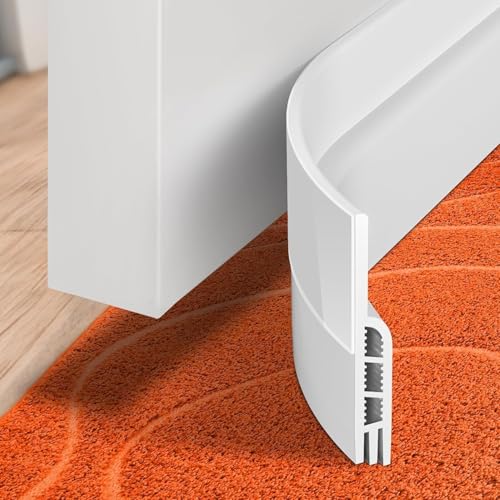
2. Holikme Door Draft Stopper
- Tier: Mid-range
- Material: Silicone
- Size: 2 inches wide x 39 inches long
- Pack size: 1 sweep
The Holikme Door Draft Stopper is a single wide silicone sweep built for doors where the bottom gap is the main problem and the owner wants a firm, simple fix. The strip is 2 inches wide and 39 inches long, with a strong adhesive backing that bonds to the door face and a silicone body that flexes against the floor. It is the kind of product that does one job well: it closes the space under the door and stays there.
The Holikme sweep suits theater rooms where the door is opened and closed often, because the silicone body recovers its shape after each swing instead of taking a permanent bend. The white finish matches painted doors and light trim, and the 39 inch length fits standard 30 to 36 inch doors with room to trim. Cutting is easy with household scissors, and the cut edge does not unravel, so a custom fit is a matter of minutes rather than a project.
Sound reduction from a bottom sweep is most noticeable on voices and mid-range sounds, which are exactly the frequencies that carry dialogue through a closed door. Bass still passes through the door face itself, but the sweep removes the air path that lets bass escape around the edges, and the room becomes noticeably quieter from the hallway side. The sweep also blocks light from the hallway, which helps in a darkened theater where a line of light under the door is a distraction during a film.
Installation follows the same routine as other adhesive sweeps: measure the door, cut the strip, clean and dry the door face, peel the backing, and press firmly from one end to the other. Take care to keep the strip straight, because a crooked application leaves a gap at one end and a drag at the other. Press along the full length with a firm hand or a cloth, and avoid opening and closing the door for a few hours so the adhesive can set.
The Holikme sweep is a Mid-range tier product, and its appeal is simplicity rather than features. There is no hardware, no drilling, and no second piece to fit. It is a good choice for a theater door that already has a perimeter seal or for a room where the bottom gap is clearly the dominant leak. Pair it with foam tape or an EPDM strip on the frame for a complete seal, and the combination covers every edge of the door.
3. MAGZO Weather Stripping Door Seal
- Tier: Budget
- Material: Adhesive foam tape
- Size: 0.5 inch wide x 0.0625 inch thick x 33 feet long
- Pack size: 1 roll, 33 feet total
The MAGZO Weather Stripping Door Seal is a foam tape that seals the sides and top of the door frame, which is the part of the job a bottom sweep cannot do. The roll is half an inch wide and one sixteenth of an inch thick, with a total length of 33 feet, so one roll covers the perimeter of two standard doors or one door with generous spare length for mistakes and future repairs. The adhesive foam compresses when the door closes and fills gaps that vary along the frame.
Foam tape is the easiest perimeter seal to install. Cut a length for each side of the frame, peel the backing, and press the tape onto the clean door stop or frame where the door meets it when closed. The tape conforms to slight irregularities in the frame, which is useful in older homes where the frame is not perfectly straight. The black color blends with dark theater frames and disappears in a dim room, and the thin profile means the door still latches normally after installation.
In a home theater, the perimeter seal matters because the side and top gaps run the full height and width of the door. Even a narrow gap along the hinge side can leak a surprising amount of sound, and foam tape closes it for the cost of a few minutes of work. The tape also cushions the door as it closes, which reduces the thud that can carry through a quiet house during a late film, and it blocks dust and drafts at the same time.
The trade-off with foam tape is lifespan. Foam compresses permanently over time, especially on a door that is opened and closed many times a day, and after a year or two it may need replacing. The 33 foot roll makes that an easy job, because there is usually enough tape left for a second application, and replacement takes the same few minutes as the first installation. Keep the roll stored flat and away from heat so the adhesive stays fresh.
This is a Budget tier product and the best value perimeter seal in this guide. Buy it alongside a bottom sweep and the two together seal all four edges of the theater door. Measure the frame before ordering, confirm the gap is within the range the tape can fill, and press the tape firmly along its full length so no section lifts away from the frame.
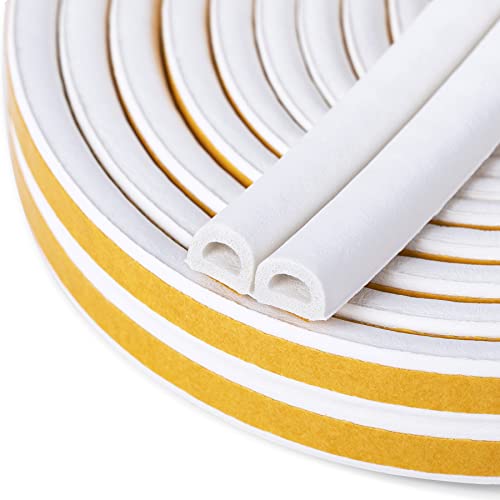
4. CloudBuyer Door and Window Weather Stripping
- Tier: Mid-range
- Material: EPDM rubber with silicone and PVC
- Size: 0.35 inch x 0.24 inch x 16.5 feet
- Pack size: 1 strip, 16.5 feet total
The CloudBuyer Door and Window Weather Stripping is a D-shaped EPDM rubber strip that seals the door frame with a more durable material than foam tape. The strip is 16.5 feet long and measures about 0.35 inch by 0.24 inch in cross-section, which suits gaps of roughly one sixth to one fifth of an inch. The D profile compresses when the door closes and springs back when it opens, so the seal stays consistent over many cycles.
EPDM rubber is the right material for a theater door that gets daily use. It resists temperature swings, moisture, and ozone, and it does not take a permanent set the way foam does. The strip is self-adhesive, so installation is the same peel-and-press routine as foam tape, but the result lasts longer. The white color matches painted frames, and the strip can be cut with scissors to fit each side of the frame and the top.
The 16.5 foot length covers one standard door with a little to spare, which makes this a one-door product rather than a multi-door roll. Measure the frame carefully before cutting, and cut the top piece first so the side pieces can be trimmed to meet it neatly at the corners. Press the strip firmly onto a clean, dry frame, and avoid stretching it during application, because a stretched strip will shrink back and leave a gap at the ends.
In the theater, the CloudBuyer strip closes the perimeter gaps that let dialogue and hallway noise pass around the door. It works well alongside a bottom sweep, and the combination of a rubber perimeter seal and a silicone bottom sweep is one of the most effective adhesive-only setups available. The strip also reduces the sound of the door closing, because the rubber cushions the contact between the door and the frame, and it blocks drafts and dust at the same time.
This is a Mid-range tier product, positioned between foam tape and a screw-mounted sweep in both cost and durability. Choose it when the theater door is used every day and the owner wants a perimeter seal that will not need replacing after a single season. It is also a good choice for a door frame with a slightly uneven gap, because the D profile compresses unevenly to match.
5. Frost King SB36 Aluminum Brush Door Sweep
- Tier: Premium
- Material: Aluminum carrier with brush bristles
- Size: 2 inches wide x 36 inches long
- Pack size: 1 sweep
The Frost King SB36 Aluminum Brush Door Sweep is the premium pick in this guide and the most durable bottom seal of the five. An aluminum carrier holds dense bristles that hang down to the floor, blocking air and sound while letting the door swing freely. The sweep is 2 inches wide and 36 inches long, in a silver aluminum finish, and it seals gaps of up to 2 inches, which covers doors with a larger than usual clearance.
The brush design is the key difference. A solid silicone sweep drags across the floor and wears over time, especially on carpet, while bristles flex and recover with each swing. The door moves with almost no resistance, so the sweep suits theater doors that are opened and closed many times a day, and it works on carpet, tile, hardwood, and uneven floors where a solid sweep might catch. The aluminum carrier does not bend or warp, so the bristles stay aligned along the full width of the door.
Installation is a screw-mounted job rather than a peel-and-stick one. Hold the sweep against the bottom of the door, mark the screw positions, drill pilot holes, and fasten the carrier with the included screws. A level helps keep the sweep straight, and the bristles should just touch the floor along their full length when the door is closed. The extra effort pays off in longevity: the sweep can be adjusted, the bristles can be trimmed, and the carrier will outlast adhesive products by a wide margin.
In a home theater, the Frost King sweep is the right choice for a main door that sees constant use or for a door with a wide bottom gap that adhesive sweeps cannot cover. It also suits a door over carpet, where silicone sweeps drag and wear quickly. Pair it with a perimeter strip on the frame for a complete seal, and the room gains a bottom seal that will last for years rather than seasons.
This is a Premium tier product, and the price of admission is installation time rather than complexity. A homeowner with a drill and a level can fit it in under half an hour, and the result is a permanent, adjustable seal. Renters should check with the property owner before drilling, since the sweep leaves screw holes in the door, but for an owned theater room it is the most durable option in this guide.
How to Install a Home Theater Door Seal
Start with the bottom sweep. Measure the width of the door and cut the sweep to length, leaving a small margin at the hinge side so the strip does not bind. Clean the bottom of the door with a damp cloth, then dry it fully, because dust and moisture weaken adhesive. Peel a short section of backing, align the strip, and press it on gradually from one end to the other, smoothing as you go. Open and close the door slowly to check the fit, and trim the bottom edge if it drags.
Next, install the perimeter strip. Measure each side of the frame and the top, and cut the tape or rubber strip to match. Clean the frame with a damp cloth and let it dry. Apply the strip to the door stop or the frame where the door meets it when closed, pressing firmly along the full length. Start at the top of each side and work downward so the strip stays straight. Close the door and check the latch: the door should close and latch with a firm push but without forcing.
Test the seal with a simple paper check. Close the door on a strip of paper at several points around the frame and pull gently. The paper should move with slight resistance everywhere. If it slides freely at one point, that section of the seal is too thin or has lifted, so press it down again or add a second layer. If the paper will not move at all, the seal is too thick at that point and the door may not latch reliably, so trim or reposition that section.
Give adhesive seals time to set. Avoid opening and closing the door more than necessary for a few hours after installation, and keep the room at a normal temperature so the adhesive bonds fully. In cold weather, warm the adhesive with a hair dryer on a low setting before pressing it on, which improves the bond. Check the seals after a week of use and press down any section that has lifted at the ends.
Common Mistakes to Avoid
The most common mistake is sealing only the bottom of the door and leaving the sides and top open. A bottom sweep is the biggest single improvement, but the perimeter gaps still leak sound, so a complete job always includes both. The second mistake is choosing a seal that is too thin for the gap. A foam tape that does not touch the door when it closes does nothing at all, so measure first and match the thickness to the gap.
Another mistake is applying adhesive strips to a dirty or damp surface. Dust, grease, and moisture prevent a strong bond, and the strip will peel away within days. Clean every surface with a damp cloth, dry it fully, and avoid touching the adhesive side with bare fingers. A related mistake is stretching foam tape or rubber strip during application, which causes it to shrink back and leave a gap at the ends. Cut the strip to length first, then press it on without pulling.
Do not ignore the hinge side. The gap on the hinge side is easy to overlook because it is narrow, but it runs the full height of the door and leaks sound along its whole length. Run the perimeter strip continuously down the hinge side as well as the latch side. Finally, do not expect a seal to fix a door that does not close properly. If the door sags, binds, or will not latch, fix the hinges and the latch first, then seal the gaps.
Frequently Asked Questions
What is the best door seal for a home theater door?
The GroTheory 2 Pack Door Draft Stopper is the best starting point for most theater rooms, because two silicone sweeps seal the bottom gap of the theater door and a second door, and the adhesive backing installs in minutes. Pair it with a perimeter strip such as the MAGZO foam tape or the CloudBuyer EPDM strip for a complete seal around all four edges.
Do door seals really reduce sound from a home theater?
Yes, door seals reduce sound by closing the air gaps around the door, which are the main path for dialogue, bass, and hallway noise. They do not make a hollow door soundproof, and they cannot block sound that passes through the door face itself, but they remove the flanking path around the edges, which is often the largest leak in the room.
Should I use a bottom sweep, a perimeter strip, or both?
Use both for the best result. A bottom sweep closes the largest single gap under the door, while a perimeter strip closes the sides and top of the frame. Either one alone helps, but the combination seals all four edges and delivers a clearly larger reduction in sound than either product on its own.
How long do adhesive door seals last?
Adhesive silicone sweeps and EPDM rubber strips typically last several seasons of daily use, while foam tape usually needs replacing after a year or two because the foam compresses permanently. A screw-mounted aluminum brush sweep lasts the longest of all, because the metal carrier does not flex and the bristles wear slowly. Check the seals once a year and replace any section that has flattened or lifted.
Conclusion
A home theater door seal is a small purchase that makes a real difference to how a theater room sounds and how it feels to use. The GroTheory 2 Pack Door Draft Stopper covers the bottom gap of two doors for a modest outlay, the Holikme Door Draft Stopper gives a firm single-sweep fix, the MAGZO Weather Stripping Door Seal and the CloudBuyer D-Type strip close the perimeter gaps that a sweep cannot reach, and the Frost King SB36 Aluminum Brush Door Sweep provides a permanent, heavy-duty bottom seal for doors that see daily use.
Measure the gaps before ordering, choose a sweep that covers the bottom clearance and a strip that matches the frame gaps, and install both for a complete seal. The result is a quieter room, clearer dialogue, less sound escaping to the rest of the house, and a theater that is easier to enjoy late at night. Start with the bottom sweep, add the perimeter strip, test the seal with a strip of paper, and enjoy the difference the first time a film plays with the door closed.
Product and ASIN Reference
| Product | ASIN |
|---|---|
| GroTheory 2 Pack Door Draft Stopper | B07ZQ2ZKLW |
| Holikme Door Draft Stopper | B07MSM6G9R |
| MAGZO Weather Stripping Door Seal | B081ZQBQG8 |
| CloudBuyer Door and Window Weather Stripping | B077LJT1F8 |
| Frost King SB36 Aluminum Brush Door Sweep | B005MUEQ26 |