Our Short List of 3
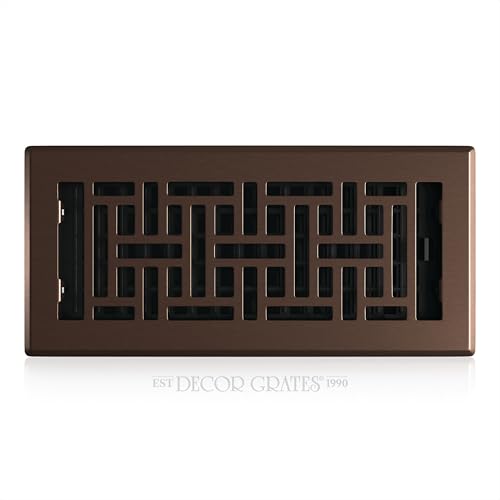
- Type: Floor register with adjustable damper
- Duct opening: 4 x 10
- Material: Steel with rubbed bronze finish
- Pattern: Oriental

- Type: Wall or ceiling register with two-way deflection
- Duct opening: 10 x 6
- Overall dimensions: 11.75 x 7.75 x 1
- Material: Solid steel with matte white powder-coated finish

- Type: Linear slot diffuser vent cover
- Duct opening: 10 x 4
- Material: Aluminum with white finish
- Design: Modern linear slot
All 4 Picks at a Glance
| Product | Specs | Action |
|---|---|---|
| 1. Decor Grates AJH410-RB Oriental Floor Register |
| Check price on Amazon |
| 2. EZ-FLO 61610 Wall or Ceiling Register |
| Check price on Amazon |
| 3. Buildmart 10×4 Modern AC Vent Cover |
| Check price on Amazon |
 5. NeuForm 4×10 Floor Register with Tray for Flooring Insert |
| Check price on Amazon |
Key takeaways
- Compare the best home theater vent covers for quiet airflow, clean looks, and easy fit, with floor, wall, and ceiling options explained in plain terms.
The best home theater vent cover for most rooms is the Decor Grates AJH410-RB Oriental Floor Register, because its steel body handles foot traffic, its adjustable lever lets you balance airflow without tools, and its rubbed bronze finish looks deliberate next to dark theater seating and wood-toned floors rather than like an afterthought. If your theater vents sit in a wall or ceiling, the EZ-FLO 61610 is the strongest simple choice, with five dampers and eighteen louvers that aim air where you want it. For a modern room with clean lines, the Buildmart 10×4 linear slot diffuser keeps the grille nearly invisible. The Imperial RG3052 pop-up register suits low-profile floor runs where a raised grille would catch feet, and the NeuForm flooring-insert register is the pick when you want the vent to disappear into the floor itself. Measure the duct opening first, then match the cover to the surface it sits in, the direction you need air to travel, and the look of the room.
As an Amazon Associate, we earn from qualifying purchases.
Table of Contents
- Quick Comparison
- How to Choose a Home Theater Vent Cover
- 1. Decor Grates AJH410-RB Oriental Floor Register
- 2. EZ-FLO 61610 Wall or Ceiling Register
- 3. Buildmart 10×4 Modern AC Vent Cover
- 4. Imperial RG3052 Pop-Up Floor Register
- 5. NeuForm 4×10 Floor Register with Tray for Flooring Insert
- Vent Covers in a Home Theater Room
- Frequently Asked Questions
- Conclusion
- Product and ASIN Reference
Quick Comparison
| Product | Best For | Opening | Mount | Tier |
|---|---|---|---|---|
| Decor Grates AJH410-RB Oriental Floor Register | Most theater floors, decorative finish | 4 x 10 | Floor | Mid-range |
| EZ-FLO 61610 Wall or Ceiling Register | Wall and ceiling vents | 10 x 6 | Wall or ceiling | Budget |
| Buildmart 10×4 Modern AC Vent Cover | Modern rooms, low-profile linear look | 10 x 4 | Ceiling, wall, or floor | Premium |
| Imperial RG3052 Pop-Up Floor Register | Low-profile floor runs | 4 x 10 | Floor | Mid-range |
| NeuForm 4×10 Floor Register with Tray | Hiding the vent in the flooring | 4 x 10 | Floor or wall | Premium |
How to Choose a Home Theater Vent Cover
Measure the duct opening, not the old cover
Every vent cover in this guide is sized by the duct opening it fits, and that number is smaller than the cover itself. A register listed for a 4 x 10 opening has an overall footprint larger than 4 x 10, because the frame needs material around the hole to sit flat and stay put. Measure the hole in the floor, wall, or ceiling with a tape measure, side to side and end to end, and write down both numbers before you order anything. Do not measure the old grille and assume the numbers match, because the old grille overhangs the opening on every side. Do not measure the room and guess, because duct openings follow the ductwork, not the room plan. If the opening is a quarter inch off the listed size, check the overall dimensions of the replacement cover against the space around the hole, including baseboards, rug edges, and the swing of a nearby door. A cover that is too small leaves a gap around the duct where dust and conditioned air escape into the wall or floor cavity. A cover that is too large may not sit flat, and a cover that does not sit flat will rock underfoot, rattle when the system runs, and draw the eye every time the lights go down for a movie.
Match the cover to the surface
Floor, wall, and ceiling vents ask for different things from a cover. A floor register must carry weight. People walk across it, chairs roll over it, and a vacuum cleaner bumps it weekly. Steel floor registers are built for that job, and the best of them use a damper box underneath so the face stays rigid while the airflow control lives below the walking surface. A wall register does not carry weight, so it can be lighter, but it must aim air into the room rather than straight up or straight down, which is why adjustable louvers matter more on a wall than on a floor. A ceiling register must hold itself in place against gravity, so screws and a frame that grips the duct matter more than they do on a floor, where gravity does the holding. Some covers are made for one surface only, and some are made for two or three. The Buildmart linear diffuser and the NeuForm insert register are listed for more than one surface, while the Decor Grates and Imperial picks are floor registers first. Buying a wall-only cover for a floor opening is the most common sizing mistake in this category, and it usually ends with a cracked grille within a season.
Think about noise before you think about looks
A home theater is a quiet room by design. The projector fan, the seating, and the sound system all assume a low background noise level, and a vent cover that whistles, rattles, or buzzes will be heard during quiet scenes. Noise at a vent usually comes from three places. The first is a loose fit, where the cover vibrates against the duct edge every time the blower starts. The second is a damper or louver that is half open, which narrows the air path and makes the moving air whistle through the gap. The third is a thin face that flexes under air pressure and hums. You can prevent most of it before you buy. Choose a cover with a solid frame and a damper that locks in position rather than one that drifts. Seat the cover fully in the opening so no edge lifts. Open the damper fully when the system runs, and use the room thermostat or the system controls to manage temperature rather than choking airflow at the register. If a cover rattles after installation, a thin foam gasket around the frame or a small adjustment to the damper usually settles it. A cover that still whistles with the damper wide open is usually too small for the airflow the duct carries, and the fix is a larger opening or a different register, not a tighter damper.
Airflow direction matters more in a theater than in a hallway
In a hallway, air can go anywhere and nobody notices. In a theater, air that blows straight at the seating can feel like a draft on the back of the neck, air that blows at the screen can stir dust in the projector beam, and air that blows at a curtain can move the fabric during a film. Adjustable louvers and dampers exist to solve exactly this problem. A floor register with a lever lets you close off a vent near the front row and open one near the back, so the room warms and cools evenly without a cold spot where people sit. A wall register with two-way or three-way deflection lets you send air along the wall instead of straight out, which mixes the air without a direct draft. A linear slot diffuser spreads air in a thin sheet along the ceiling or wall, which is the gentlest way to move a large volume of air through a room without anyone feeling it. When you plan a theater, think of the vents as part of the seating layout. Note which seats sit nearest each vent, which direction each vent faces, and whether the air path crosses the screen or the projector beam. Then choose covers that let you aim and balance that air, rather than covers that simply fill the hole.
Material and finish set the look and the lifespan
Vent covers are made from steel, aluminum, cast iron, and plastic, and each material behaves differently in a theater. Powder-coated steel is the workhorse for floors, because it resists scratches, carries weight, and takes a finish that matches wood, bronze, or black hardware. Aluminum is lighter and resists corrosion, which makes it a good choice for ceiling diffusers and for rooms where humidity runs high. Cast iron is heavy and decorative, and it suits rooms with a traditional look, but its weight makes it harder to lift for cleaning. Plastic is light and inexpensive, and it will not rust, but it can crack under foot traffic, so it belongs on walls and ceilings rather than floors. Finish matters too, because a vent cover sits in the line of sight whenever the room lights are up. A rubbed bronze or matte black finish blends with dark theater walls and seating, while a white finish blends with light ceilings and trim. A finish that matches the floor is less visible than one that contrasts with it, which is why the NeuForm insert register, which accepts a piece of your own flooring, is the least visible option in this guide. Whatever finish you choose, look for a powder-coated or otherwise sealed surface rather than raw metal, because a sealed surface resists dust buildup and wipes clean without leaving marks.
Dampers, louvers, and filters each do a different job
A damper sits below the grille and controls how much air passes through the vent. A louver sits in the face of the grille and controls which direction the air goes. A filter or mesh screen sits across the opening and catches dust, pet hair, and small debris before it enters the duct. These three parts are often confused, and buying the wrong one leads to disappointment. If your room is too warm while the rest of the house is comfortable, you need a damper you can close partway, or a cover with a lever that does the same job. If the air blows at the wrong place, you need adjustable louvers. If dust settles on the seats and the screen between films, a mesh trap under the register may help, but it will also restrict airflow, so it needs regular cleaning. None of the five covers in this guide is a filter, and none of them should be used as one without checking the airflow effect. The EZ-FLO register in this guide has the most louver control, with eighteen louvers and five dampers, while the Decor Grates and Imperial floor registers put the control in a single lever. Choose the level of control that matches how often you will adjust it. A theater that is used every evening benefits from a lever you can reach with a foot, while a theater that is used once a week can live with a damper you set once and leave alone.
Cleaning and maintenance are part of the choice
A vent cover in a theater collects dust on its face, dust in its damper box, and dust in the duct below it, and that dust shows up in the projector beam and on dark seating. Choose a cover you can lift out, wipe down, and put back without tools, and you will actually clean it. Floor registers that drop into the opening are the easiest to maintain, because you lift the grille, vacuum the duct mouth, wipe the damper, and set it back. Wall and ceiling registers that screw in take longer, so they tend to be cleaned less often, which is one reason to choose a finish that does not show dust. Avoid covers with deep decorative scrollwork in a room where dust is a concern. The Oriental pattern on the Decor Grates pick has openings wide enough to wipe with a cloth, while the linear slot on the Buildmart pick needs a thin brush or a vacuum nozzle. Plan to vacuum the registers when you vacuum the room, and to lift and clean the damper boxes twice a year, in spring and in autumn.
1. Decor Grates AJH410-RB Oriental Floor Register
- Type: Floor register with adjustable damper
- Duct opening: 4 x 10
- Material: Steel with rubbed bronze finish
- Pattern: Oriental
The Decor Grates AJH410-RB is the most complete floor register in this guide, and it earns the top spot by doing the ordinary things well. It fits a 4 x 10 duct opening, which is the most common floor vent size in American homes, and its steel face is built to be walked on. The Oriental pattern gives the room a finished look without turning the vent into a centerpiece, and the rubbed bronze finish sits comfortably against dark wood floors, dark carpet, and the deep wall colors that suit a theater. The adjustable control lever is the feature that matters most day to day. It opens and closes the damper below the grille, so you can balance the room without kneeling down and reaching into the duct. In a theater, that means you can close the vent nearest the screen a little and open the vent near the seating, or shut a vent in an unused corner entirely, and the change takes seconds.
Steel is the right material for a floor register that will see daily foot traffic. It does not flex under a chair leg, it does not crack when a vacuum cleaner bumps it, and its powder-coated surface resists the scuffs that show quickly on bare metal. The AJH410-RB uses that strength in a classic louvered layout, with a damper box underneath that keeps the airflow control out of the walking surface. That layout also keeps the face easy to clean. The openings in the Oriental pattern are wide enough to wipe with a damp cloth, and the grille lifts out of the opening for a deeper clean of the duct mouth. For a theater, where dust on the seating and in the projector beam is a constant concern, a grille that lifts out easily is worth more than a grille that looks elaborate but cannot be cleaned.
The rubbed bronze finish deserves a note, because finish is where many vent covers fail in a theater. A bright white grille on a dark floor draws the eye every time the lights come up, and a shiny metal grille reflects the screen and the room lighting. Rubbed bronze is dark enough to recede against wood and dark carpet, and its low sheen does not throw reflections across the room. If your theater has black seating and dark walls, this finish will read as part of the room rather than as a piece of hardware. If your theater has light floors, the same finish provides a deliberate contrast that looks like a design choice, especially when it matches door hardware or light fixtures in the same tone.
Fit is straightforward. The cover is made for a 4 x 10 opening, and it drops into the duct without screws or tools. Measure the opening before ordering, and check that the floor around the opening is flat, because a grille that rocks on an uneven floor will rattle when the system runs. If the floor is uneven, a thin gasket under the frame usually settles it. The lever sits at the side of the grille where a foot can reach it, which is a small detail that matters in a room where you adjust airflow often. You can nudge the damper open or closed without bending down, and the lever holds its position rather than drifting as the system cycles.
There are two limits to keep in mind. The first is that a decorative steel register is heavier than a plastic one, so it is not the easiest cover to lift with one hand while holding a vacuum nozzle with the other. The second is that the Oriental pattern, while easy to wipe, has more surface area than a plain louvered grille, so it collects dust a little faster. Neither limit is a reason to avoid the cover. Both are the normal trade-offs of a steel decorative register, and both are managed by the same routine that keeps any theater clean: vacuum the grilles when you vacuum the room, and lift them for a deeper clean twice a year.
For most home theaters with floor vents, this is the cover to buy first. It fits the most common opening, it handles foot traffic, it balances airflow with a lever you can reach, and its finish suits the dark, quiet look of a theater. Order one, test the fit in the most-used vent, and then match the rest of the floor vents in the room to it.
2. EZ-FLO 61610 Wall or Ceiling Register
- Type: Wall or ceiling register with two-way deflection
- Duct opening: 10 x 6
- Overall dimensions: 11.75 x 7.75 x 1
- Material: Solid steel with matte white powder-coated finish
The EZ-FLO 61610 is the wall and ceiling answer in this guide, and it is the cover to choose when your theater vents are not in the floor. It fits a 10 x 6 duct opening, with overall dimensions of 11.75 x 7.75 x 1, and it is made from solid steel with a matte white powder-coated finish. The face carries eighteen louvers and five adjustable dampers, which is more airflow control than any other cover in this guide. That control is the reason to buy it. A wall vent that blows straight out into the room can create a draft across the seating, and a ceiling vent that blows straight down can stir dust into the projector beam. The 61610 lets you aim the air and set the volume at the same time, so the room cools and warms evenly without a cold spot where people sit.
Two-way deflection is the key idea here. The louvers direct air in two directions, and the dampers behind them set how much air passes through. Together they let you send air along the wall or across the ceiling instead of straight into the room, which mixes the air gently and avoids the direct blast that makes a theater uncomfortable. In a room with seating against the back wall, that matters, because the vent behind the seating is often the one that causes the most complaints. Aim it along the wall, open the damper only partway, and the back row stays comfortable without feeling a draft on the back of the neck. In a room with a ceiling vent over the projector, aim the air away from the lens and the beam, and the picture stays clean.
The steel body is solid and the matte white finish is practical for ceilings and light-colored walls. White is the right choice for a ceiling, because a ceiling grille is seen against a white or light surface, and a dark grille on a light ceiling draws the eye. The powder-coated finish resists dust buildup and wipes clean, which matters for a ceiling register that is cleaned less often than a floor register. Screws are included, and the cover mounts with them, so it holds itself in place against gravity. That screw mounting is also the main maintenance difference from a drop-in floor register. You will need a screwdriver to remove it for a deep clean, so plan to clean it when you clean the room rather than expecting to lift it out on a whim.
Sizing needs care, because a 10 x 6 opening is a wall and ceiling size, not a floor size. Measure the duct opening in the wall or ceiling, not the old grille, and confirm the overall dimensions against the space around the opening. The 61610 is a two-way register, which suits most theater walls, and the same model family includes a three-way version for rooms that need air sent in three directions. Do not order the three-way version for a wall that sits in a corner, because one direction will blow straight into the corner and waste airflow. For a flat wall or a flat ceiling, the two-way layout in this pick is the right choice.
The limits of this cover are the limits of any steel wall register. It is heavier than a plastic grille, so it needs its screws seated firmly, and it will show dust on its white face sooner than a dark finish would. Both are easy to manage. Seat the screws, check them once a year, and wipe the face when you dust the room. The other limit is that it is not a floor register. Do not put it in a floor opening, where foot traffic would bend the louvers and crack the damper mechanism. Used on a wall or ceiling, it is the strongest airflow-control cover in this guide, and it is the one to buy when your theater vents live above the seating rather than below it.
3. Buildmart 10×4 Modern AC Vent Cover
- Type: Linear slot diffuser vent cover
- Duct opening: 10 x 4
- Material: Aluminum with white finish
- Design: Modern linear slot
The Buildmart 10×4 is the modern-looking cover in this guide, and it is the one to choose when the theater is designed around clean lines and minimal hardware. It is a white aluminum linear slot diffuser that fits a 10 x 4 opening, and it works on ceilings, walls, and floors. The linear slot layout spreads air in a thin, even sheet rather than in separate jets from individual louvers, which is the gentlest way to move air through a quiet room. In a theater, that gentle spread matters. Air that arrives as a sheet along the ceiling mixes with the room air without a draft, without stirring dust into the projector beam, and without the whistle that a narrow louver gap can produce when the damper is half open.
Aluminum is a good material for this job. It is lighter than steel, it resists corrosion, and it holds a clean white finish that blends with ceilings and light trim. The Buildmart cover uses that lightness well. It sits flat, it does not sag in a ceiling mount, and its frame stays rigid across the 10-inch span. The white finish is the right choice for a ceiling diffuser, where the grille is seen against a light surface, and it also works on a light wall. In a theater with a dark ceiling, the same white grille will stand out more, so this pick suits rooms with light ceilings best, or rooms where the ceiling vents sit outside the direct line of sight from the seating.
The linear slot design is also the quietest layout in this guide when it is sized correctly. A slot spreads the same volume of air across a wider opening than a set of louvers does, so the air moves more slowly through each part of the grille, and slow air is quiet air. That is the main reason linear diffusers appear in offices, studios, and theaters. The trade-off is that a slot diffuser needs the right duct pressure behind it. If the duct carries far more air than the slot can pass, the air will whistle. If it carries far less, the room will not cool evenly. Measure the opening, confirm the duct size matches, and leave the damper or the system controls to manage volume rather than choking the slot itself.
Cleaning a linear slot takes a little more effort than cleaning a louvered grille, because the channels are narrow. A vacuum nozzle with a brush head handles the face, and a thin brush reaches into the slots. Plan to vacuum the diffuser when you vacuum the room, and to wipe the frame with a damp cloth so dust does not build up along the slot edges. The aluminum body wipes clean easily and does not hold dust the way a rough cast surface can.
The limits are straightforward. The Buildmart diffuser is a modern, minimal cover, so it does not suit a room with traditional decor, where a decorative steel register would look more at home. Its white finish is less suited to a dark ceiling than a dark finish would be. And its narrow slots, while quiet and even, need regular vacuuming to stay clear. For a modern theater with light ceilings and a clean, uncluttered look, none of those limits matter much, and the even, quiet airflow is the deciding factor. Choose this cover when the room design calls for a grille that nearly disappears, and when quiet, even air matters more than decorative detail.
4. Imperial RG3052 Pop-Up Floor Register
The Imperial RG3052 is the low-profile floor register in this guide, and it is the cover to choose when a raised grille would catch feet, chair legs, or a vacuum cleaner. It fits a 4 x 10 duct opening, it is finished in white, and its pop-up design sits nearly flush with the floor when closed. That flush fit is the whole point. A theater floor sees traffic in the dark, when people move to and from their seats during a film, and a grille that stands proud of the floor is a trip point. The RG3052 keeps the walking surface smooth, and it opens only as far as needed to pass air, so the room stays comfortable without a raised edge in the walkway.
Imperial has made registers for a long time, and the RG3052 shows that experience in its simplicity. There is no elaborate pattern to clean, no lever sticking up from the face, and no separate damper box to align. The register pops up to pass air and settles back down when it is closed, and the white finish blends with light floors and light trim. That simplicity makes it easy to live with. You can vacuum over it without catching a corner, you can wipe it with a damp cloth without working around scrollwork, and you can lift it out to clean the duct mouth without tools. For a theater that is used by children, by guests who do not know the room, or by anyone who walks to the kitchen in the dark during a film, that flush, simple surface is a real advantage.
The white finish suits rooms with light floors, light baseboards, and light ceilings, where a dark grille would draw the eye. In a theater with dark floors, the same white grille will stand out, so this pick is best matched to light-colored rooms, or to rooms where the vent sits under seating or in a walkway that is rarely seen. The steel and plastic construction of the Imperial line is built for floor use, and the pop-up mechanism is designed to be opened and closed many times without wearing loose. Like any moving part, it benefits from a clean duct mouth, because dust and grit in the mechanism will make it stick over time. Vacuum the duct mouth when you vacuum the room, and the pop-up action will stay smooth.
Sizing follows the same rule as every cover in this guide. Measure the 4 x 10 duct opening, not the old grille, and confirm that the floor around the opening is flat so the register sits flush. A pop-up register that sits on an uneven floor will not close fully, and a register that does not close fully will rattle when the system runs and catch a toe in the dark. If the floor is uneven, a thin gasket under the frame usually levels it. Do not force the register into an opening that is too small, because the pop-up mechanism needs clearance to move, and a tight fit will bind it.
The limits of the RG3052 are the limits of its design. It does not offer the fine airflow control of a lever-operated damper, so it suits rooms where the airflow balance is set at the system and rarely changed at the register. It does not offer the decorative look of the Decor Grates pick, so it suits rooms where the vent should disappear rather than decorate. And its white finish needs wiping to stay clean on a floor that sees daily traffic. For a theater where a flush floor matters more than fine control or decoration, those limits are acceptable, and the low profile is the deciding factor. Choose this cover for walkways, for vents near the entrance, and for any floor opening where a raised grille would be a nuisance.
Specs
- Type: Pop-up floor register
- Duct opening: 4 x 10
- Material: Steel and plastic with white finish
- Design: Low-profile pop-up
- Mount: Drop-in floor mount
- Use: Floor walkways and low-profile theater floors
- ASIN: B002FB65MY
5. NeuForm 4×10 Floor Register with Tray for Flooring Insert
- Type: Floor register with tray for flooring insert
- Duct opening: 4 x 10
- Overall dimensions: 10 x 4 x 2
- Material: Heavy-duty steel, black finish
The NeuForm 4×10 register is the most discreet cover in this guide, because it is designed to disappear into the floor. It fits a 4 x 10 opening, it is made from heavy-duty steel, and it carries a tray that accepts a piece of your own flooring. Cut the flooring to fit the tray, set it in place, and the vent reads as a continuation of the floor rather than as a piece of hardware. In a theater, where the floor is often a dark wood or a carefully chosen laminate and every visible grille breaks the look, that disappearing act is the main reason to buy it. The black steel frame in this pick frames the flooring insert cleanly, and the flush mount keeps the surface level with the surrounding floor.
The flush mount is more than a look. A register that sits level with the floor does not catch feet, chair legs, or vacuum cleaners, and it does not create a shadow line that draws the eye when the room lights come up. The NeuForm register achieves that level fit with a heavy-duty steel frame that holds the flooring insert rigid, so the insert does not flex underfoot. The frame is 10 x 4 x 2 in overall size, and the steel body is built for walk-on use, which matters for a floor register that will see daily traffic. The insert itself is your flooring, so its durability matches the floor around it, and its appearance matches exactly, because it is the same material.
Installation takes more care than a drop-in register, because the flooring insert must be cut to fit the tray. Measure the tray, cut the flooring piece a fraction short so it drops in without binding, and test the fit before you set the register in the duct. The register is listed for floor or wall use, and the flush design suits a floor best, where the insert can match the surrounding surface. On a wall, the same tray can hold a piece of wall paneling or trim, but the floor application is where it earns its place in this guide. Take your time with the cut, because a clean insert is what makes the vent disappear, and a rough insert will draw more attention than a plain grille would.
Cleaning is simple. Vacuum the insert when you vacuum the floor, and lift the register to vacuum the duct mouth when you do a deeper clean. The steel frame wipes clean with a damp cloth, and the flooring insert cleans the same way the rest of the floor does. Because the insert is your flooring, there is no finish to match and no color to fade differently from the room. If the flooring is replaced later, cut a new insert from the new material and the vent matches again.
The limits are the cost of the disappearing act. The NeuForm register needs a flooring offcut and a careful cut, so it takes longer to install than a drop-in grille. It is a premium cover, and it suits a room where the floor is a design feature. In a theater with carpet, the insert idea works less well, because carpet does not cut cleanly into a rigid tray, and a carpet insert can fray at the edges. For wood, laminate, and vinyl plank floors, it is the least visible vent cover in this guide, and the one to choose when the room design calls for a floor with no visible hardware at all.
Vent Covers in a Home Theater Room
A home theater asks more of a vent cover than a bedroom or a hallway does, because the room is used in the dark, in quiet, and with people sitting still for two hours at a time. Three theater-specific issues deserve a plan before you buy: light, dust, and seating layout.
Light is the first. A vent cover with a shiny finish can catch light from the screen and throw a reflection across the room, and a white grille on a dark floor can glow faintly in the projector beam. Choose a matte or low-sheen finish for any vent that sits in the line of sight from the seating, and prefer dark finishes for floor vents in dark rooms. The rubbed bronze Decor Grates pick and the black NeuForm frame both suit that rule. A white grille is fine on a light ceiling, where it blends with the surface, but the same white grille on a dark floor will be visible in every dark scene. If a vent sits directly in the projector beam, consider a linear diffuser that spreads air without a reflective face, or move the seating so the beam does not cross the vent.
Dust is the second. A theater collects dust on the screen, on the seating, and in the projector beam, and the vents are one of the places that dust comes from. A grille with wide openings passes dust freely, and a grille with a mesh trap catches dust but restricts airflow. The practical answer is maintenance rather than hardware. Vacuum the grilles when you vacuum the room, lift the floor registers twice a year and vacuum the duct mouth, and wipe the damper boxes so dust does not build up and blow into the room when the system starts. A cover that lifts out without tools will be cleaned, and a cover that needs a screwdriver will not, so favor drop-in floor registers for the vents you will clean most often.
Seating layout is the third. Map the vents against the seats before you buy. A vent under the front row will blow air at the legs of the people in front, a vent behind the back row will blow at the back of their necks, and a vent near the screen can stir dust across the picture. Use the damper or lever on each register to balance the room, closing the vents nearest the screen a little and opening the ones that serve the seating. If the room has only one vent and it sits in the wrong place, a louvered wall register that aims air along the wall, or a linear diffuser that spreads air across the ceiling, will do more for comfort than a stronger blower. Comfort in a theater is about even, quiet air, not about moving the largest possible volume through a single opening.
Finally, think about the system as a whole. Vent covers do not heat or cool a room on their own. They pass the air the system delivers, and they aim it. If the theater is always too warm while the rest of the house is comfortable, the problem may be the duct layout, the insulation, or the heat from the projector and the seating, and no vent cover will fix it alone. In that case, balance the registers, check that the duct dampers in the basement or attic are open to the theater run, and consider whether the room needs its own zone or a supplemental fan. A good vent cover makes a well-designed system work better. It cannot rescue a system that does not deliver enough air to the room in the first place.
Frequently Asked Questions
What size vent cover do I need for a home theater?
Measure the duct opening, not the old cover, and match the listed opening size to your measurement. The most common floor opening is 4 x 10, and the most common wall and ceiling opening in this guide is 10 x 6. If the opening does not match a standard size, check the overall dimensions of the replacement cover against the space around the hole before ordering.
Can I use a floor vent cover on a wall or ceiling?
Only if the cover is listed for that surface. Floor registers are built to carry weight and usually drop into the opening, while wall and ceiling registers screw in and aim air with louvers. The EZ-FLO 61610 in this guide is made for walls and ceilings, the Buildmart diffuser is listed for ceilings, walls, and floors, and the Decor Grates, Imperial, and NeuForm picks are floor registers first. Using a floor-only cover on a ceiling risks a grille that falls out, and using a wall-only cover on a floor risks a grille that cracks underfoot.
Why does my vent cover rattle when the system runs?
A rattle usually means a loose fit, a damper that drifts, or a grille that does not sit flat. Seat the cover fully in the opening, check that the damper holds its position, and add a thin foam gasket around the frame if the edge lifts. If the cover still rattles with the damper wide open, the opening may be too small for the airflow the duct carries, and a larger register or a different grille layout is the fix.
How often should I clean home theater vent covers?
Vacuum the grilles when you vacuum the room, and lift the floor registers for a deeper clean twice a year, in spring and in autumn, when the system changes over between heating and cooling. Wipe the damper boxes and vacuum the duct mouth at the same time, so dust does not blow into the room when the system starts. Covers that lift out without tools are the easiest to keep clean, which is one reason drop-in floor registers suit a theater.
Conclusion
The right home theater vent cover is the one that fits the duct opening, suits the surface it sits in, and lets you aim and balance the air without noise or a draft. For most theaters with floor vents, the Decor Grates AJH410-RB Oriental Floor Register is the strongest all-around choice, with a steel body, a foot-reachable lever, and a rubbed bronze finish that suits a dark room. For wall and ceiling vents, the EZ-FLO 61610 gives the most airflow control, with five dampers and eighteen louvers. For a modern room, the Buildmart 10×4 linear diffuser spreads air quietly and nearly disappears. For a walkway where a raised grille would catch feet, the Imperial RG3052 pop-up register sits flush. And for a wood or laminate floor where the vent should vanish entirely, the NeuForm flooring-insert register is the most discreet option in this guide. Measure first, buy for the surface and the job at each opening, and let the finish tie the room together. A theater with quiet, even air is a theater where the room disappears and the film takes over, and the vent covers are a small but real part of making that happen.
Product and ASIN Reference
| Product | ASIN |
|---|---|
| Decor Grates AJH410-RB Oriental Floor Register | B004TW8A02 |
| EZ-FLO 61610 Wall or Ceiling Register | B00838IAOE |
| Buildmart 10×4 Modern AC Vent Cover | B08F9FCKN3 |
| Imperial RG3052 Pop-Up Floor Register | B002FB65MY |
| NeuForm 4×10 Floor Register with Tray for Flooring Insert | B0DDRMDD6D |