Our Short List of 3


All 5 Picks at a Glance
| Product | Specs | Action |
|---|---|---|
 Diablo D1024X 10-Inch 24-Tooth Ripping Blade (ASIN: B00008WQ2V) | Check price on Amazon | |
| Diablo D1050X 10-Inch 50-Tooth Combination Blade (ASIN: B00008WQ2Z) | Check price on Amazon | |
| Diablo D1060X 10-Inch 60-Tooth Fine Finish Crosscut Blade (ASIN: B00008WQ30) | Check price on Amazon | |
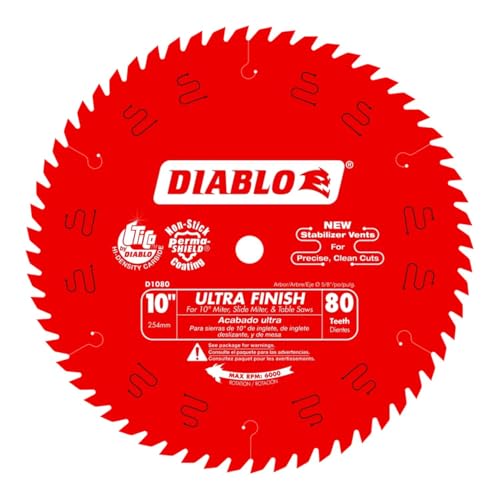 Diablo D1080X 10-Inch 80-Tooth Ultra Finish Blade (ASIN: B00008WQ32) | Check price on Amazon | |
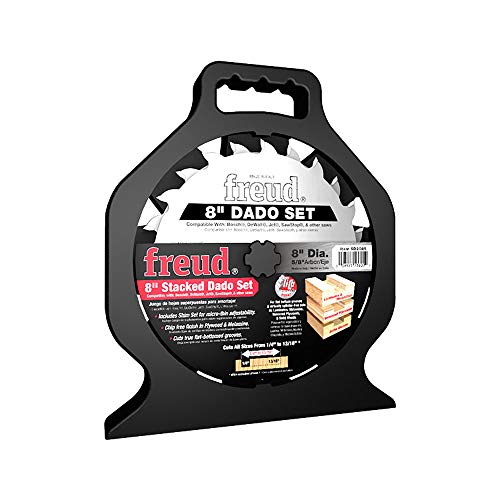 Freud SD208S 8-Inch Pro Dado Set (ASIN: B072MJ2V9J) | Check price on Amazon |
Key takeaways
- Compare the main types of circular saw blades — rip, crosscut, combination, fine-finish and dado — by tooth count, grind and kerf, with five carbide picks.
Disclosure: As an Amazon Associate, we may earn from qualifying purchases made through links on this page, at no additional cost to you.
“Blade type” is the first decision in any saw purchase, and it matters more than brand. The phrase covers circular saw blades sorted by the job they are built to do: ripping along the grain, crosscutting across it, a combination grind that handles both, fine-finish blades for plywood and melamine, and stacked dado sets that cut flat-bottomed grooves. Each type is defined by measurable features — tooth count, tooth grind, hook angle, kerf width, plate thickness, diameter and arbor size — so once you can read those numbers, the right type is rarely a guess.
This guide explains the five main types and pairs each one with a representative carbide-tipped blade sold on Amazon US. All five picks are 10-inch blades with a 5/8-inch arbor, or an 8-inch dado set on the same arbor, so they fit the table saws and miter saws found in most home shops. Four come from Freud’s Diablo line and the dado set from Freud’s own line, which keeps the comparison focused on tooth geometry rather than brand marketing. If you only remember one rule, make it this: fewer teeth with deep gullets for ripping, more teeth with a steep bevel for crosscuts and finish work.
Quick Picks
- Best rip blade type: Diablo D1024X — 24 ATB teeth and a thin 0.098-inch kerf for fast cuts along the grain.
- Best combination blade type: Diablo D1050X — 50 ATB teeth in grouped sets with a flat-top raker, one blade for rips and crosscuts.
- Best crosscut blade type: Diablo D1060X — 60 Hi-ATB teeth for clean crosscuts in hardwood, plywood and trim stock.
- Best fine-finish blade type: Diablo D1080X — 80 Hi-ATB teeth for chip-free edges in veneered plywood and melamine.
- Best dado blade type: Freud SD208S Pro Dado Set — an 8-inch stacked set that dials groove widths from 1/4 inch to 7/8 inch.
Diablo D1024X 10-Inch 24-Tooth Ripping Blade (ASIN: B00008WQ2V)
The ripping type is built for speed along the grain. The D1024X carries just 24 teeth on a 10-inch plate, and the low tooth count leaves deep gullets between teeth that clear the long chips a rip cut produces. The teeth use an ATB (alternate top bevel) grind with a 15-degree hook angle, so the blade pulls itself into the cut and feeds with little effort from the operator. Freud rates the blade at a maximum of 6,000 RPM, and the listing names rough framing lumber, finish lumber, plywood, OSB and hardboard siding as its working materials.
The plate is 0.071 inch thick and cuts a 0.098-inch kerf, a thin-kerf profile that removes less stock and asks less of smaller saws than a full-kerf blade. The teeth are TiCo hi-density carbide, Freud’s proprietary carbide blend, brazed onto a hardened steel body, and the plate carries a Perma-SHIELD non-stick coating that resists heat, gumming and corrosion. Laser-cut stabilizer vents trap noise and vibration, helping the blade track straight on long rips.
Highlights
– 24 ATB teeth with deep gullets sized for fast chip removal on rip cuts
– Thin 0.098-inch kerf reduces feed effort on jobsite and benchtop saws
– TiCo hi-density carbide teeth on a hardened steel plate
– Perma-SHIELD coating and laser-cut stabilizer vents
Considerations
– The 24-tooth count leaves a rougher edge than finish blades, so visible crosscuts need sanding or a different blade
– Thin-kerf plates can deflect in very thick, dense stock if the feed rate is forced
Diablo D1050X 10-Inch 50-Tooth Combination Blade (ASIN: B00008WQ2Z)
A combination blade is the compromise type: one blade that stays on the arbor for both rips and crosscuts. The D1050X runs 50 ATB teeth arranged in groups of five, with four beveled teeth followed by a flat-top raker in each group. The beveled teeth shear crosscut fibers cleanly, while the raker clears the groove on rip cuts, and the large gullets between groups move waste out of the cut. It shares the family dimensions of the other Diablo blades here: 10-inch diameter, 5/8-inch arbor, 0.098-inch kerf and a 15-degree hook angle.
Like the rip blade, the D1050X uses TiCo hi-density carbide teeth and a Perma-SHIELD coating on a laser-cut plate with stabilizer vents and heat expansion slots that let the steel expand under load without warping the cut line. Freud positions it for ripping and crosscutting wood and wood composites on miter saws and table saws — exactly the mixed workload a combination type exists for.
Highlights
– 50-tooth combination grind: ATB teeth plus a flat-top raker in each group of five
– Handles rips and crosscuts without a blade change
– Thin 0.098-inch kerf keeps feed pressure low on mid-power saws
– Laser-cut expansion slots and stabilizer vents for a true-running plate
Considerations
– A compromise by design: it neither rips as fast as a 24-tooth blade nor finishes as cleanly as an 80-tooth blade
– Thick hardwood rips go slower than with a dedicated rip blade
Diablo D1060X 10-Inch 60-Tooth Fine Finish Crosscut Blade (ASIN: B00008WQ30)
Crosscut blades trade speed for edge quality, and the D1060X is the crosscut type in this lineup. Its 60 teeth use a Hi-ATB (high alternate top bevel) grind, where each tooth is beveled at a steeper angle and the bevels alternate left and right. That geometry slices wood fibers instead of chopping them, which is what prevents tear-out where the blade exits the workpiece. The manufacturer lists a 6,000 RPM maximum, a 15-degree hook angle, a 0.098-inch kerf and a 0.071-inch plate.
Freud describes the blade as a fine-finish tool for crosscutting oak, pine, melamine, plywood and moulding on sliding and chop-style miter saws as well as jobsite and workshop table saws. The teeth are TiCo hi-density carbide joined with tri-metal shock-resistant brazing, and the hardened steel body carries the same Perma-SHIELD coating and laser-cut kerf design as the rest of the line. Sixty teeth is the point where crosscuts in hardwood and sheet goods typically come off the saw needing little or no sanding.
Highlights
– 60 Hi-ATB teeth slice fibers for clean, low-tear-out crosscuts
– Suited to hardwood, plywood, melamine and moulding
– Tri-metal shock-resistant brazing protects the carbide tips
– Works on miter saws and table saws with a 5/8-inch arbor
Considerations
– The high tooth count feeds more slowly and builds heat on long rip cuts
– Fine teeth load up faster in resinous softwood if the blade is not kept clean
Diablo D1080X 10-Inch 80-Tooth Ultra Finish Blade (ASIN: B00008WQ32)
The fine-finish type pushes the crosscut idea to its limit. With 80 Hi-ATB teeth on a 10-inch plate, the D1080X takes many small bites per revolution, and the special cutting geometry is designed to minimize grabbing and blowout on fragile surfaces. Freud rates it at 6,000 RPM maximum with a 15-degree hook angle, a 0.098-inch kerf and a 0.071-inch plate — the same chassis as the 60-tooth blade, with the extra teeth doing the finishing work.
This is the type to reach for when the surface itself is the finished face: veneered plywood, melamine panels, MDF, paneling and delicate molding, plus fine crosscuts in oak and pine. The Amazon listing describes flawless finishes in melamine and veneered plywood with little rework, and the construction matches the rest of the line — TiCo carbide teeth, a tough steel plate, Perma-SHIELD coating and a laser-cut thin kerf. On a miter saw it is a trim blade; on a table saw it sizes cabinet parts that will be seen.
Highlights
– 80 Hi-ATB teeth for the smoothest crosscut finish in this group
– Designed for chip-free cuts in veneered plywood and melamine
– Minimizes grabbing and blowout on delicate surfaces
– Same thin-kerf, coated, laser-cut plate design as the other Diablo blades
Considerations
– Slowest feeding blade here; a poor choice for ripping or thick stock
– The dense tooth pattern dulls faster if used on abrasive material all day
Freud SD208S 8-Inch Pro Dado Set (ASIN: B072MJ2V9J)
A dado set is a different kind of blade type altogether: instead of one plate, two outer blades and a stack of chippers mount together to cut a wide, flat-bottomed groove in a single pass. The SD208S is an 8-inch set with 12-tooth outer blades on a 5/8-inch arbor, and by adding or removing chippers, spacers and the included precision shim set, it cuts grooves from 1/4 inch to 7/8 inch wide. Freud rates the set at 6,000 RPM maximum and designs it for table saws, portable table saws and radial arm saws.
The outer blades use a negative hook angle, which is what produces the flat groove bottoms and virtually splinter-free edges in plywood, melamine and solid wood. The teeth are Freud’s TiCo hi-density carbide in a crosscutting blend, and the Silver I.C.E. coating limits build-up so the stack runs cooler and cleaner. Freud also optimizes this set for underpowered saws and saws fitted with electronic safety brakes, naming SawStop, Jet, DeWalt and Bosch among compatible makes.
Highlights
– Stacked set cuts flat-bottomed grooves from 1/4 inch to 7/8 inch wide
– Negative hook angle for clean, splinter-free groove edges
– Includes two blades, three chippers, spacers and a precision shim set
– Sized and balanced for lower-power and safety-brake-equipped table saws
Considerations
– Only fits saws whose arbor is long enough for the full stack at the width you need
– An 8-inch set raises less above the table than a 10-inch blade, limiting groove depth
How to Choose
Start with the cut, not the blade. Ripping — cutting along the grain to narrow a board — needs a low tooth count with deep gullets, roughly 24 teeth on a 10-inch blade, because the long chips have to go somewhere. Crosscutting — cutting across the grain to length — needs the opposite: 60 teeth or more with a high bevel angle so fibers are sheared rather than torn. If your saw does both jobs daily and you would rather not swap blades, the 50-tooth combination type is the honest middle ground.
Sheet goods change the answer again. Veneered plywood and melamine chip where the teeth exit, so the fine-finish type with 80 teeth earns its place even though it feeds slowly. Grooves, rabbets and tenon cheeks are not a tooth-count question: they need a dado stack, and the deciding factors become the groove width range and whether your saw’s arbor and motor suit a stacked set.
Then confirm the mechanical fit. Diameter must match the saw (10-inch blades on 10-inch saws; the 8-inch dado set is deliberately smaller to keep torque demands down), the arbor hole must match the shaft — 5/8 inch on every pick here — and the blade’s maximum RPM rating must meet or exceed the saw’s speed. Finally, match kerf to power: thin-kerf blades around 0.098 inch suit jobsite and benchtop saws, while full-kerf plates reward high-power cabinet saws with extra stability.
Key Specifications Explained
Tooth count. The number of teeth around the rim. Fewer teeth cut faster and rougher; more teeth cut slower and smoother. On a 10-inch blade, the working bands are about 24 teeth for ripping, 40–50 for combination, 60 for crosscuts and 80 or more for fine finishing.
Tooth grind. The shape of the carbide tip. ATB teeth are beveled alternately left and right for clean crosscuts. Hi-ATB raises that bevel angle for finish work. Flat-top (FTG) teeth rip efficiently along the grain. Combination blades mix ATB teeth with a flat-top raker, and triple-chip (TCG) grinds appear on blades for laminate and non-ferrous metal.
Hook angle. How far the tooth face leans into the cut. A positive hook around 15–20 degrees feeds aggressively and suits ripping and general work. A negative hook, as on the dado set, pushes back slightly and leaves flatter, cleaner groove bottoms.
Kerf and plate. Kerf is the width of the slot the blade cuts; plate is the thickness of the steel body. Thin-kerf blades near 0.098 inch waste less material and need less power. The plate, 0.071 inch on these Diablo blades, is always thinner than the kerf so the body clears the cut.
Diameter and arbor. Diameter sets both the saw size and the maximum depth of cut. The arbor is the center hole; 5/8 inch is the standard for 10-inch table and miter saws in North America. Both numbers must match the saw exactly.
Carbide. The teeth on every pick here are carbide-tipped: small pieces of tungsten carbide brazed to a steel plate. Freud’s TiCo blend is its own hi-density formulation, and coatings such as Perma-SHIELD and Silver I.C.E. shed heat, pitch and corrosion.
Setup and Use Tips
Mount the blade with the teeth pointing in the direction of rotation — on most table saws the printed side faces you and the teeth at the front point down toward the table. Seat the blade fully against the arbor flange, then snug the nut; a blade that is not seated flat will wobble and burn the cut. Check that the blade’s RPM rating meets your saw’s speed before the first cut.
Set blade height so the gullets just clear the top of the workpiece on through cuts; this keeps the tooth geometry working at its ground angle and reduces tear-out. For plywood and melamine, support the sheet fully and consider a zero-clearance insert, which backs up the fibers where the teeth exit. Feed at a pace the blade sets — a finish blade pushed too fast chips, and a rip blade pushed too slowly polishes and burns.
With a dado stack, build the stack on a flat surface, stagger the chippers so their teeth do not align, and test the width on scrap before cutting the workpiece; the shim set exists to close the last few thousandths of an inch. Clean blades cut like sharp ones: pitch build-up on the teeth mimics dullness, so a soak in blade cleaner and a soft brush restores most “tired” blades.
Common Mistakes to Avoid
The most common mistake is ripping with a high-tooth finish blade. Eighty teeth in a rip cut cannot clear chips, so the blade overheats, burns the edge and strains the motor. The reverse error — crosscutting trim with a 24-tooth rip blade — tears fibers and leaves edges that no amount of sanding fully rescues.
A second mistake is ignoring the arbor and diameter. A blade with the wrong center hole will not run true even if it can be forced onto the shaft, and an oversized blade is a safety hazard, not an upgrade. Third, buying by tooth count alone: grind quality, plate flatness and carbide grade matter as much as the number.
Finally, dado stacks get misused in two ways: stacking wider than the arbor allows, which leaves too few threads for the nut, and fitting a stack to a saw whose manual prohibits dado blades. Check both before the set goes on the saw.
FAQ
What is the difference between a rip blade and a crosscut blade?
A rip blade has few teeth (about 24 on a 10-inch blade) with deep gullets and an aggressive hook, so it clears long grain chips quickly. A crosscut blade has many more teeth (60–80) with a steep ATB bevel that shears fibers across the grain for a clean edge.
Can one blade really do both jobs?
Yes — that is the combination type. A 50-tooth combination blade groups ATB teeth with a flat-top raker so it rips acceptably and crosscuts cleanly. It will not beat a dedicated blade at either job, but it removes the need to swap blades for mixed work.
Why do plywood and melamine need so many teeth?
The veneer face chips where a tooth exits the panel. More teeth mean each tooth takes a smaller bite, and the high bevel angle slices the veneer instead of lifting it, which is why 80-tooth fine-finish blades are the standard pick for sheet goods.
Does a dado set fit every table saw?
No. The saw needs an arbor long enough to hold the stack plus the nut, enough motor power to turn it, and a throat plate that accepts the wider cut. Many compact benchtop saws limit stack width or prohibit dado blades entirely, so check the saw manual first.
How long does a carbide-tipped blade stay sharp?
It depends on the material: clean hardwood is gentle, while MDF, melamine and dirty reclaimed lumber wear carbide much faster. Pitch build-up is often mistaken for dullness, so clean the blade before judging it.
Final Verdict
Blade type is a geometry decision. Choose the D1024X rip type for breaking down lumber along the grain, the D1050X combination type when one blade has to cover a mixed day, the D1060X crosscut type for clean cuts to length in hardwood and trim, the D1080X fine-finish type when veneered plywood or melamine faces must come off the saw ready to use, and the Freud SD208S dado set when the job is grooves and joinery rather than through cuts. Match the type to the cut first, then confirm diameter, arbor and RPM against your saw.