Key takeaways
- Compare the best ventilation fans for bathrooms, garages, grow rooms, and attics, with airflow, noise, duct size, and controls explained in plain terms.
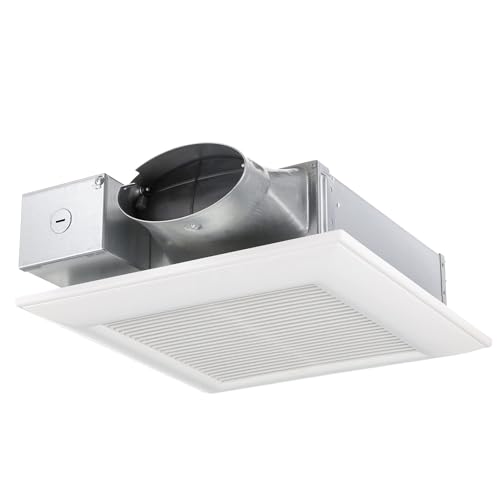
The best ventilation fan for most homes is the Panasonic WhisperValue FV-0510VS1, because one housing covers three airflow settings, its slim body fits ceilings and walls, and its quiet DC motor clears steam without the roar of an older fan. If you need to move a large volume of air through ductwork, the AC Infinity Cloudline S6 is the strongest inline option, while the iLiving 10-Inch Shutter Exhaust Fan suits garages, attics, and workshops that need whole-room air changes. The Vivosun 6-Inch 440 CFM Inline Duct Fan covers basic ducted jobs at a lower tier, and the Broan-NuTone AE110LK adds a built-in light for bathrooms that need a fan and a fixture in one opening. Choose by room size first, then match duct size, noise level, and controls to the job.

As an Amazon Associate, we earn from qualifying purchases.
Table of Contents
- Quick Comparison
- How to Choose a Ventilation Fan
- 1. AC Infinity Cloudline S6 Inline Duct Fan
- 2. Panasonic WhisperValue FV-0510VS1 Bathroom Exhaust Fan
- 3. Vivosun 6-Inch 440 CFM Inline Duct Fan
- 4. iLiving 10-Inch Shutter Exhaust Fan
- 5. Broan-NuTone AE110LK Bathroom Exhaust Fan with Light
- Frequently Asked Questions
- Conclusion
- Product and ASIN Reference
Quick Comparison
| Product | Best For | Airflow | Noise | Tier |
|---|---|---|---|---|
| AC Infinity Cloudline S6 Inline Duct Fan | Ducted ventilation and grow rooms | 402 CFM | 32 dBA | Premium |
| Panasonic WhisperValue FV-0510VS1 Bathroom Exhaust Fan | Most bathrooms, one fan for several room sizes | 50, 80, or 100 CFM | Under 0.3 sones at the lowest setting | Mid-range |
| Vivosun 6-Inch 440 CFM Inline Duct Fan | Basic inline duct jobs | 440 CFM | 50 decibels | Budget |
| iLiving 10-Inch Shutter Exhaust Fan | Garages, attics, and workshops | 820 CFM | Variable speed | Premium |
| Broan-NuTone AE110LK Bathroom Exhaust Fan with Light | Bathrooms that need a fan and a light in one unit | 110 CFM | 1.0 sone | Mid-range |
How to Choose a Ventilation Fan
Match airflow to room size
Airflow is measured in cubic feet per minute, usually shortened to CFM, and it is the first number to get right. A common rule for bathrooms is one CFM per square foot of floor, so a bathroom of 80 square feet needs about 80 CFM, and a bathroom of 100 square feet needs about 100 CFM. A fan that is too small leaves steam on the mirror and moisture in the walls, which feeds mildew over time. A fan that is far too large wastes energy and can pull conditioned air out of the house faster than needed. For garages, workshops, and attics, the math changes: whole-room ventilation is often sized by air changes per hour instead, and a fan rated at 820 CFM can serve a space of around 1,200 square feet when the goal is steady air exchange rather than spot moisture removal. Inline duct fans sit in the middle of this picture. A 6-inch inline fan rated near 400 CFM can ventilate a grow room, boost airflow between rooms, or exhaust a small workshop, provided the duct run is not so long or so bent that resistance eats the rated airflow. Before ordering, measure the room, count the fixtures that produce moisture, and pick a fan whose top setting covers the largest realistic load rather than the average one.
Understand noise ratings
Ventilation fans are rated in sones or in decibels, and the two scales are not interchangeable. Sones describe how loud a sound feels to a listener, and the scale is linear: a fan rated at 2.0 sones sounds about twice as loud as a fan rated at 1.0 sone. Bathroom fans commonly range from under 0.3 sones, which is barely noticeable, to 4.0 sones, which is clearly audible across a room. Decibels use a logarithmic scale, so a small change in the number means a larger change in perceived loudness. Inline duct fans are usually rated in decibels, with quiet models near 30 dBA and basic blowers near 50 decibels. Noise matters most in bathrooms and bedrooms, where a loud fan gets switched off early and the room never fully dries. In a garage or an attic, a louder fan is easier to accept, because nobody sleeps next to it and the run time is usually shorter. When two fans offer similar airflow, the quieter one is the better daily companion, and a variable speed control lets you trade a little airflow for a lot less noise on ordinary days.
Duct size decides what the fan can actually move
A fan rated at 110 CFM through a 6-inch duct will not deliver 110 CFM through a 3-inch duct, and a fan installed on undersized ductwork runs louder and moves less air than its label promises. Duct size is a hard constraint, not a suggestion. Most bathroom fans use a 4-inch duct, with some larger models accepting a 6-inch duct as well. Inline duct fans are sized by the duct they fit: a 6-inch inline fan belongs in 6-inch ductwork, and stepping it down to a smaller duct wastes the capacity you bought. Long duct runs, tight bends, and roof caps with screens all add resistance, which is why DC-motor fans with pressure-sensing speed control are useful: the motor raises its speed to hold airflow when static pressure rises. Before ordering, measure the existing duct or the duct run you plan to install, and check the fan housing dimensions against the space above the ceiling or inside the wall. A housing that is even a half inch too deep means cutting framing or choosing a slimmer fan.
Motor type and energy use
Traditional AC motors run at a fixed speed and draw more power for a given airflow. DC motors, sometimes called ECM motors, use less power, run quieter, and often include a speed selector or a pressure sensor that holds the rated airflow as duct conditions change. The Panasonic fans in this guide use DC motors, and both carry an energy-efficiency certification. The AC Infinity inline fan uses an EC motor with a mixed-flow design, which pairs high airflow with low power draw. The Vivosun inline blower uses a simpler AC-style motor, which keeps its design straightforward and its tier lower. Neither type is wrong. A DC design pays off in a bathroom that runs the fan often or for long stretches, while a basic AC design is fine for a space that needs occasional bursts of ventilation. Look at wattage alongside airflow: a fan that moves more air per watt does the same job with less electricity over its life, and that difference adds up when a fan runs every day.
Controls: speed, humidity, and timers
A plain on-off switch is enough for a fan that serves one small room, but controls change how a fan is used day to day. A variable speed controller lets you run an inline fan gently for background ventilation and turn it up when the room is full of steam, smoke, or heat. A humidity sensor turns a bathroom fan on when steam rises and off when the air dries, which protects the room when someone forgets to switch the fan on. A thermostat does the same job for heat, switching a garage or attic fan on when the temperature climbs. A timer switch runs the fan for twenty or thirty minutes after a shower, which is the period when most moisture leaves the room. Some fans bundle these controls into the unit, while others expect you to add a wall switch. Decide which behavior you want before you buy, because adding a sensor later is not always possible with a fan that has no control input.
Installation access and placement
Some fans install from below, through the ceiling opening, with no attic access needed. Broan calls this room-side installation, and it is the easiest path for a replacement: the housing fits through the finished ceiling, the duct and wiring connect from below, and the grille clips on last. Other fans are easier to install with attic access or during a remodel when the ceiling is open. Wall-mounted shutter fans need a wall opening of the right size and a clear path for the air to leave the building, plus a damper or shutter that closes when the fan is off so cold air and insects stay outside. Inline duct fans mount inside the duct run itself, often with hanging straps or brackets, and they need enough straight duct on either side to work efficiently. Venting matters as much as the fan: moist air must go outside the building envelope, through a roof cap or a wall vent, never into an attic or a wall cavity, where it will only move the moisture problem to a place that is harder to see.
Fan-only models versus fan-light combinations
A combined fan-light unit replaces a separate ceiling light and a separate fan, which suits a small bathroom with one ceiling fixture. The Broan-NuTone AE110LK pairs its fan with an LED light that offers selectable color temperatures, so the light can be set warm or cool to match the rest of the room. The trade-off is that a failed light in a combined unit is harder to service than a failed bulb in a separate fixture, and a fan-light needs a wiring setup that supports switching the fan and the light independently if you want that control. If the bathroom already has good lighting from a vanity fixture, a fan-only model is the simpler and often quieter choice. The Panasonic WhisperValue in this guide is a fan-only model, which keeps its wiring to one switch and one circuit. Inline duct fans and shutter fans are fan-only by design, since they serve rooms where lighting is handled separately.
Durability, certification, and warranty
Ventilation fans live in damp, dusty, or hot places, so build quality matters. Look for housings that resist rust, motors rated for continuous running, and bearings built for long service. Safety certification from a recognized listing body, such as ETL listing, shows that the fan was evaluated against a published standard. Energy-efficiency certification shows that the fan meets an efficiency threshold for its airflow class. Warranty length is a useful signal too: a six-year motor warranty suggests the maker expects the motor to last, while a one-year warranty is the norm for the lowest tier. None of these marks guarantees a perfect fan, but together they separate fans built for years of daily use from fans built to a price point. Check the warranty terms before ordering, and keep the receipt, because a fan that fails in its second year is only covered if the paperwork is in order.
1. AC Infinity Cloudline S6 Inline Duct Fan
The AC Infinity Cloudline S6 is the most capable inline fan in this guide, and its strength is the combination of high airflow, low noise, and a motor that holds its performance through long duct runs. A mixed-flow design with a stator blade pushes air through filters and bends that would slow a simpler blower, and the EC motor delivers 402 CFM at only 32 dBA, which is quiet enough to sit near a living space without dominating the room. The variable speed controller lets you dial the fan down for background air exchange and up for full exhaust, so one fan can serve a grow tent in the morning, a workshop in the afternoon, and a stuffy room in the evening. Dual ball bearings give the motor a long rated life, and the fan is built to run for extended periods without the heat buildup that shortens the life of cheaper blowers.
Installation is straightforward for an inline fan. The unit mounts inside a 6-inch duct run, and its compact housing fits in the space between joists or above a ceiling where a larger fan would not. The controller sits at the end of a long cord, so it can be placed where it is easy to reach even when the fan itself is tucked away. The fan works as a booster for heating and cooling as well as an exhaust fan: mounted in a duct that carries conditioned air to a distant room, it helps that room reach the same temperature as the rest of the house. It also suits AV closets and equipment racks, where steady airflow keeps electronics cool without adding noise to the room. The main drawback is that an inline fan is only as good as its ductwork. A crushed duct, a sharp bend right at the fan outlet, or a blocked vent cap will cut the delivered airflow well below the rated figure, so the duct run deserves the same attention as the fan. Buyers who already have clean 6-inch ducting will get the full benefit; buyers starting from scratch should budget for proper duct and fittings alongside the fan.
Specs
- Airflow: 402 CFM
- Noise level: 32 dBA
- Duct size: 6 inches
- Dimensions: 7.9 x 12.6 x 8.4 inches
- Motor: EC motor with mixed-flow design
- Speed control: Variable speed controller included
- Static pressure: 503 Pa
- Power draw: 70 watts maximum, 38 watts average
- Bearings: Dual ball bearings
- Tier: Premium
- ASIN: B07FPFVZTZ
2. Panasonic WhisperValue FV-0510VS1 Bathroom Exhaust Fan
The Panasonic WhisperValue FV-0510VS1 is the most flexible bathroom fan in this guide, and that flexibility is the reason it leads the list for most homes. A three-position airflow selector lets one housing serve a powder room at 50 CFM, a standard full bathroom at 80 CFM, or a larger bathroom at 100 CFM. Instead of guessing the room size once and living with the choice, the installer sets the selector during installation, and the fan holds that airflow even as duct pressure changes, thanks to an ECM motor with a pressure-sensing control that raises speed to compensate. That matters in real houses, where duct runs are rarely straight and short, and where a fixed-speed fan can lose a large share of its rated airflow to a long run or a tight bend. Noise stays low across the range, from under 0.3 sones at the lowest setting to 0.9 sones at the top setting, so the fan is easy to leave running after a shower.
The slim housing is the second reason this fan suits so many homes. At 3-3/8 inches deep, it fits in ceilings and walls where deeper housings cannot go, and it mounts on a ceiling or a wall, which makes it useful in manufactured homes and in rooms with shallow framing. The grille measures 13 x 13 inches and sits flush against the ceiling, and the fan is listed for use over a tub or shower enclosure when wired through a ground-fault protected circuit. A built-in damper stops backdraft when the fan is off, and the fan carries an energy-efficiency certification. The fan is a fan-only model, with no light, so it suits bathrooms that already have a vanity light or a separate ceiling light, and it keeps the wiring simple: one switch, one circuit, one job. The only real drawback is that the fan needs a 4-inch duct, so homes with older 3-inch ductwork will need a duct upgrade or a different fan. For a primary bathroom or a bathroom that will be remodeled once and then left alone for years, the selectable airflow and the quiet DC motor make this the strongest single pick for most homes.
Specs
- Airflow: 50, 80, or 100 CFM, selectable at installation
- Noise level: Under 0.3 sones at 50 CFM, up to 0.9 sones at 100 CFM
- Duct size: 4 inches
- Housing depth: 3-3/8 inches
- Grille dimensions: 13 x 13 inches
- Motor: ECM motor with pressure-sensing speed control
- Mounting: Ceiling or wall mount
- Certification: Energy-efficiency-certified
- Tier: Mid-range
- ASIN: B06W2LB17J
3. Vivosun 6-Inch 440 CFM Inline Duct Fan

The Vivosun 6-Inch 440 CFM Inline Duct Fan is the straightforward choice in this guide: a simple inline blower that moves a large volume of air through 6-inch ductwork without extra controls or smart features. Its 440 CFM rating is the highest airflow figure among the inline fans here, and its 2450 RPM motor is built for steady exhaust duty in grow tents, basements, kitchens, and workshops. The fan is ETL listed, which shows it was evaluated against a published safety standard, and it ships with a 5.4-foot power cord that reaches a nearby outlet without an extension. The housing is a compact cylinder that fits inline in a duct run, and the fan can be hung with straps or mounted with brackets, depending on the space.
This fan suits buyers who want raw airflow and are happy to control it with a separate switch or speed controller. It works well as the exhaust side of a grow tent setup, where it pairs with a carbon filter to move warm, humid air out of the tent, and it works as a booster in a long duct run that serves a distant room. The trade-offs are noise and power draw: at 50 decibels and 135 watts, it is louder and thirstier than the EC-motor fans in this guide, so it fits better in a basement, a garage, or a grow room than in a quiet living space. The fan has a single speed level on its own control, so fine speed adjustment needs an external controller. Buyers who need quiet operation or precise speed control should look at the premium inline pick instead, but buyers who need a strong, simple blower for a space where noise is not the main concern will find this fan does the job with little fuss.
Specs
- Airflow: 440 CFM
- Fan speed: 2450 RPM
- Duct size: 6 inches
- Dimensions: 9.3 x 11.4 x 5 inches
- Wattage: 135 watts
- Noise level: 50 decibels
- Weight: 10.05 pounds
- Power cord: 5.4 feet
- Certification: ETL listed
- Tier: Budget
- ASIN: B077492C4C
4. iLiving 10-Inch Shutter Exhaust Fan

The iLiving 10-Inch Shutter Exhaust Fan is the whole-room option in this guide, built for garages, attics, sheds, workshops, and chicken coops rather than for a single bathroom. Its 10-inch blade moves up to 820 CFM, enough to exchange the air in a space of up to 1,200 square feet, and its automatic gravity shutters open when the fan runs and close when it stops, keeping out drafts, rain, and insects. A variable speed control with a thermostat and humidity sensing adjusts the fan to the conditions in the room, so it can run gently on a mild day and at full speed when heat or moisture builds up. A wireless remote adds convenience when the fan is mounted high on a wall or in a spot that is awkward to reach.
The fan mounts on a wall and needs a 10.5-inch wall opening, so installation means cutting a square hole and sealing the frame against the weather. Once mounted, it is a set-and-forget unit: the thermostat handles hot afternoons in the attic, the humidity control handles damp mornings in the workshop, and the shutters handle the hours in between. The 65-watt motor is modest for the airflow it delivers, which keeps running costs low during long summer days. The main drawback is that a wall-mounted shutter fan is a permanent change to the building, and it needs a clear path for exhaust air outside, away from windows and intake vents that would pull the warm air straight back in. It is also louder at full speed than a bathroom fan, which is expected for a fan moving this much air, and it belongs in spaces where that noise is acceptable. For a garage that bakes in summer or an attic that traps heat, this fan is the most direct fix in the guide.
Specs
- Airflow: Up to 820 CFM
- Coverage: Up to 1,200 square feet
- Blade size: 10 inches
- Wall opening required: 10.5 inches
- Power: 65 watts
- Controls: Variable speed with thermostat and humidity control, plus wireless remote
- Shutters: Automatic gravity shutters
- Mounting: Wall mount
- Tier: Premium
- ASIN: B07QXDM2P8
5. Broan-NuTone AE110LK Bathroom Exhaust Fan with Light
The Broan-NuTone AE110LK is the fan-light combination in this guide, pairing a 110 CFM exhaust fan with a built-in LED light in a single ceiling unit. That combination suits bathrooms with one ceiling fixture, where a separate fan and a separate light would mean two openings and two wiring runs. The fan moves enough air for a full bathroom of up to about 105 square feet, and it does so at 1.0 sone, which is quiet enough for daily use. The LED light offers selectable color temperatures, so the light can be set warm or cool to match the rest of the room, and the grille is designed for easy cleaning, which matters in a room where steam and dust collect on every surface.
Installation is the other strength of this fan. It is built for room-side retrofit, which means the housing fits through the finished ceiling and the duct and wiring connect from below, with no attic access needed. That makes it a practical replacement for an older fan in a home where the attic is cramped or the ceiling cannot be opened. The housing measures 9.25 x 10 x 5.75 inches and fits 2 x 6 inch ceiling construction with a 4-inch duct connector and a damper that reduces air leakage when the fan is off. The fan carries an energy-efficiency certification and a three-year warranty, and at 23.4 watts it draws little power for the airflow it delivers. The trade-off is the fixed 110 CFM speed: unlike the selectable Panasonic fan, this fan cannot be set to a lower airflow for a small powder room, so it is best matched to a full bathroom rather than a tiny one. Buyers who want a fan and a light in one unit, installed from inside the room, will find this the simplest path in the guide.
Specs
- Airflow: 110 CFM
- Noise level: 1.0 sone
- Wattage: 23.4 watts
- Light: Built-in LED with selectable color temperatures
- Dimensions: 9.25 x 10 x 5.75 inches
- Duct size: 4 inches
- Weight: 8 pounds
- Installation: Room-side retrofit, no attic access needed
- Warranty: 3 years
- Certification: Energy-efficiency-certified
- Tier: Mid-range
- ASIN: B00MZ3IDM2
Frequently Asked Questions
How much airflow do I need for a bathroom?
A common rule is one CFM per square foot of floor, so a bathroom of 80 square feet needs about 80 CFM and a bathroom of 100 square feet needs about 100 CFM. Count the fixtures too: a bathroom with a tub and a separate shower needs more airflow than a powder room with a single sink. A selectable fan that covers 50, 80, or 100 CFM in one housing removes the guesswork, since the installer sets the airflow to match the room. If the duct run is long or has several bends, favor a fan with a DC motor and pressure-sensing control, because that design holds its rated airflow when resistance rises.
What duct size should a ventilation fan use?
Use the duct size the fan was designed for, and never step a fan down to a smaller duct if it can be avoided. Most bathroom fans use a 4-inch duct, with larger models accepting a 6-inch duct as well. Inline duct fans are sized by the duct they fit, so a 6-inch inline fan belongs in 6-inch ductwork. A fan rated at 110 CFM through a 6-inch duct will not deliver 110 CFM through a 3-inch duct, and undersized ductwork makes the fan louder while moving less air. Measure the existing duct before ordering, and check the housing dimensions against the space above the ceiling or inside the wall.
Are inline duct fans louder than ceiling exhaust fans?
Inline duct fans are usually rated in decibels while ceiling fans are usually rated in sones, so the numbers cannot be compared directly. A quiet inline fan with an EC motor can run near 30 dBA, which is quiet enough to sit near a living space, while a basic inline blower can reach 50 decibels, which is clearly audible. A quiet ceiling fan can run under 0.3 sones, which is barely noticeable, while a basic ceiling fan can reach 4.0 sones. Noise depends more on motor type and build quality than on fan style: EC and ECM motors run quieter than basic AC motors at the same airflow, and a variable speed control lets you trade a little airflow for a lot less noise.
Can a ventilation fan run continuously?
Many modern ventilation fans are rated for continuous running, and some are designed for it: a DC-motor bathroom fan can run at a low setting around the clock to keep a damp bathroom dry, and an inline fan can run steadily to keep a grow room or an equipment closet ventilated. Check the listing for a continuous-run rating before leaving a fan on all day, and make sure the fan is ducted outside rather than into an attic or a wall cavity. A humidity sensor or a timer switch is a useful partner for continuous or extended running, since it lets the fan respond to conditions instead of running at full speed when the room is already dry.
Conclusion
The right ventilation fan starts with the room, not the product page. Measure the space, count the moisture sources, and check the duct size before comparing models, because those three facts narrow the field faster than any feature list. For most bathrooms, the Panasonic WhisperValue FV-0510VS1 is the strongest all-around pick, with three airflow settings, a slim housing, and a quiet DC motor that suits both new work and retrofits. For ducted jobs that need serious airflow at low noise, the AC Infinity Cloudline S6 is the premium inline choice, while the Vivosun 6-Inch 440 CFM Inline Duct Fan covers basic ducted work at a lower tier. For garages, attics, and workshops, the iLiving 10-Inch Shutter Exhaust Fan moves whole-room volumes of air with thermostat and humidity control. For a bathroom that needs a fan and a light in one opening, the Broan-NuTone AE110LK installs from inside the room and covers a full bathroom at a quiet 1.0 sone. Pick the fan that matches the room, vent it outside, and let it run long enough after each shower or hot afternoon to finish the job.
Product and ASIN Reference
| Product | ASIN |
|---|---|
| AC Infinity Cloudline S6 Inline Duct Fan | B07FPFVZTZ |
| Panasonic WhisperValue FV-0510VS1 Bathroom Exhaust Fan | B06W2LB17J |
| Vivosun 6-Inch 440 CFM Inline Duct Fan | B077492C4C |
| iLiving 10-Inch Shutter Exhaust Fan | B07QXDM2P8 |
| Broan-NuTone AE110LK Bathroom Exhaust Fan with Light | B00MZ3IDM2 |