Our Short List of 3

- Best for: Shooters who want to stretch a .338 Lapua past 1,500 yards without running out of elevation. Watch out for: The 35 mm tube needs 35 mm rings, and the 56 mm objective needs tall rings to clear the barrel.
- Specs:
- Magnification: 5-25x
- Objective lens diameter: 56 mm
- Tube diameter: 35 mm

- Best for: Precision shooters who want proven tracking and a true zero stop at a mid-tier size and weight. Watch out for: 20 MRAD of elevation is tight for a mile, so use a 20 MOA canted base for shots past 1,500 yards.
- Specs:
- Magnification: 5-25x
- Objective lens diameter: 50 mm
- Tube diameter: 30 mm
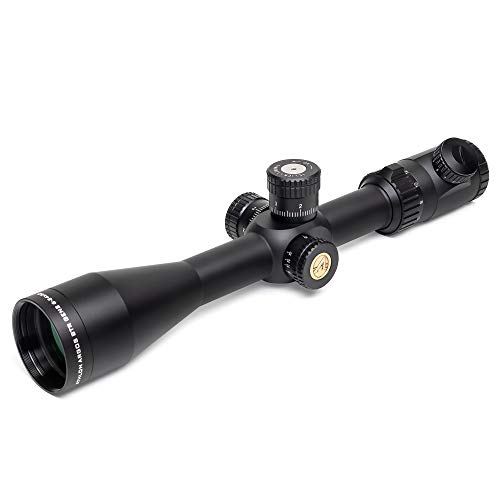
- Best for: New long-range shooters who want FFP, illumination, and a zero stop at the lowest cost in this group. Watch out for: 18 MIL of elevation runs out before 1,500 yards for most .338 Lapua loads, so add a 20 MOA canted base for longer shots.
- Specs:
- Magnification: 6-24x
- Objective lens diameter: 50 mm
- Tube diameter: 30 mm
All 4 Picks at a Glance
| Product | Specs | Action |
|---|---|---|
| Leupold Mark 5HD 5-25×56 M5C3 FFP TMR |
| Check price on Amazon |
| Vortex Viper PST Gen II 5-25×50 FFP EBR-7C MRAD |
| Check price on Amazon |
| Athlon Argos BTR Gen2 6-24×50 APMR MIL |
| Check price on Amazon |
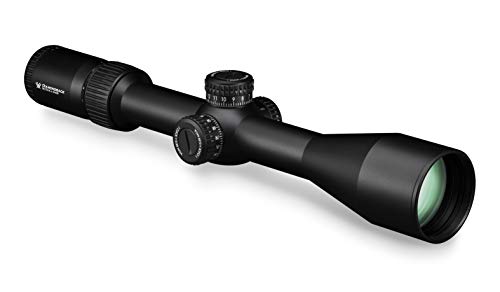 Vortex Diamondback Tactical 6-24×50 FFP EBR-2C MOA |
| Check price on Amazon |
Key takeaways
- The best 338 Lapua scope needs deep elevation travel, a tough tube, and a reticle that holds up to recoil. These 5 long-range optics cover every budget.
The .338 Lapua Magnum outruns most scopes. A 300-grain bullet drops roughly 16 MRAD by 1,500 yards, so a scope with only 12 or 14 MRAD of elevation runs out of travel before the cartridge runs out of range. Recoil is the second problem: a lightweight hunting scope with thin internals can lose zero after a few dozen rounds. The real decision is how much elevation travel you need for the distances you actually shoot, and how much punishment the scope must absorb while holding that zero.
This guide is for long-range target shooters, elk hunters carrying a .338 Lapua into the mountains, and owners of rifles like the Savage 110 BA Stealth and Ruger Precision Rifle who want a scope that matches the cartridge. The five scopes below were chosen from names and specifications on Amazon product pages, covering a spread of tube sizes, reticle systems, and elevation travel, so you can match the optic to your distance and your budget.
Quick Picks
As an Amazon Associate we earn from qualifying purchases
| Product | Best for | Key spec from title |
|---|---|---|
| Leupold Mark 5HD 5-25×56 | Shooting past 1,500 yards | 35 MIL elevation travel |
| Vortex Viper PST Gen II 5-25×50 | Mid-tier precision shooting | 20 MRAD elevation, RZR zero stop |
| Vortex Venom 5-25×56 | Best value in a 34 mm tube | 25 MRAD elevation, RevStop zero |
| Athlon Argos BTR Gen2 6-24×50 | Starting long range on a budget | 18 MIL elevation, zero stop |
| Vortex Diamondback Tactical 6-24×50 | Lightweight MOA setup | 65 MOA elevation, 24.6 oz |
How to Choose
Elevation Travel Decides Your Maximum Distance
A .338 Lapua load needs about 16 MRAD of elevation to reach 1,500 yards, and past that distance the number climbs fast. A scope with 18 MRAD of total travel leaves almost no margin once you zero at 100 yards, because roughly half the travel sits below zero. Look for 25 MRAD or more if you plan to shoot a mile, and remember that a 20 MOA canted scope base shifts the usable range upward, giving a scope with modest travel room to reach farther. Check the total travel figure on the product page, not the travel per rotation, since the per-rotation number tells you nothing about the limit.
Tube Size, Turret Clicks, and Zero Stop
Tube diameter sets the ceiling on adjustment travel. A 30 mm tube usually tops out near 20 MRAD, a 34 mm tube reaches 25 MRAD, and a 35 mm tube like the Mark 5HD reaches 35 MRAD. Turret clicks should match the reticle: MIL turrets with a MIL reticle, MOA turrets with a MOA reticle, so a 0.1 MIL click moves the point of impact 0.1 MIL at any distance. A zero stop matters just as much, because it lets you return to your 100-yard zero by feel after dialing for a long shot. Without one, a single miscounted rotation can leave you several MIL high or low.
Reticle: FFP, MIL or MOA, and Holdover Marks
First focal plane reticles keep their subtensions accurate at every magnification, which is why four of the five scopes here use FFP. A second focal plane reticle only reads true at its highest power, so a holdover that works at 24x is wrong at 12x. MIL suits shooters who think in tenths and read wind in MIL, while MOA suits shooters who think in inches at 100 yards. A Christmas-tree reticle with wind dots lets you hold elevation and wind at once, which helps when a .338 Lapua bullet spends more than two seconds in flight and the wind changes between shots.
Recoil Strength, Weight, and Mounting
The .338 Lapua pushes back hard, and a scope that survives on a .308 can shake loose on a .338 Lapua. A single-piece aircraft-grade aluminum tube, a recoil-rated erector system, and a lifetime warranty are the signs a scope was built for magnum recoil. Weight cuts the other way: a 35 oz scope is fine on a bench rifle but heavy on a mountain hunt, where a 24.6 oz scope saves your shoulders. Mounting matters too. A 35 mm tube needs 35 mm rings, and a 56 mm objective needs tall rings to clear the barrel, so check ring height before you order.
The 5 Best Options
Leupold Mark 5HD 5-25×56 M5C3 FFP TMR
- Best for: Shooters who want to stretch a .338 Lapua past 1,500 yards without running out of elevation. Watch out for: The 35 mm tube needs 35 mm rings, and the 56 mm objective needs tall rings to clear the barrel.
- Specs:
- Magnification: 5-25x
- Objective lens diameter: 56 mm
- Tube diameter: 35 mm
Shooters who want to stretch a .338 Lapua past 1,500 yards without running out of elevation. Watch out for: The 35 mm tube needs 35 mm rings, and the 56 mm objective needs tall rings to clear the barrel.
The 35 mm tube needs 35 mm rings, and the 56 mm objective needs tall rings to clear the barrel.
The Mark 5HD is the scope for shooters who want the .338 Lapua to reach its full distance. Its 35 MIL of elevation travel is nearly double what the mid-tier scopes offer, so a 1,500-yard shot uses less than half the dial, and a mile stays within reach. The 35 mm tube and the M5C3 turrets with ZeroLock give crisp 0.1 MIL clicks that return to zero with a positive stop. At 30 oz it is also the lightest scope in this group, which matters on a rifle that already weighs over 10 lb with a bipod and a full magazine.
Vortex Viper PST Gen II 5-25×50 FFP EBR-7C MRAD
- Best for: Precision shooters who want proven tracking and a true zero stop at a mid-tier size and weight. Watch out for: 20 MRAD of elevation is tight for a mile, so use a 20 MOA canted base for shots past 1,500 yards.
- Specs:
- Magnification: 5-25x
- Objective lens diameter: 50 mm
- Tube diameter: 30 mm
Precision shooters who want proven tracking and a true zero stop at a mid-tier size and weight. Watch out for: 20 MRAD of elevation is tight for a mile, so use a 20 MOA canted base for shots past 1,500 yards.
20 MRAD of elevation is tight for a mile, so use a 20 MOA canted base for shots past 1,500 yards.
The Viper PST Gen II has been the default mid-tier first focal plane scope for years, and it earns that spot on a .338 Lapua. The illuminated EBR-7C MRAD reticle gives hash-marked holdovers and wind dots that stay accurate at any magnification, and the RZR zero stop drops the turret back onto a 100-yard zero with a solid stop. XD glass keeps the image sharp at 25x, and the scope tracks true through repeated dialing. Its 20 MRAD of elevation covers 1,500 yards with a small margin, so pair it with a 20 MOA canted base if you want room for a mile.
Vortex Venom 5-25×56 FFP EBR-7C MRAD
The Venom packs a 34 mm tube and a 56 mm objective into the most affordable scope in this group, and it gives up little to the PST Gen II. The EBR-7C MRAD reticle is the same family, the RevStop zero system returns to zero reliably, and a throw lever comes in the box for fast magnification changes. Its 25 MRAD of elevation beats the PST Gen II, which makes it the better pick for shooters who plan to dial past 1,500 yards. The trade is a heavier build at 35 oz and a reticle that is not illuminated, so low-light holds rely on the outer crosshair.
- Specs:
- Magnification: 5-25x
- Objective lens diameter: 56 mm
- Tube diameter: 34 mm
- Reticle: FFP EBR-7C MRAD, non-illuminated
- Adjustment graduation: 0.1 MRAD per click
- Travel per rotation: 10 MRAD
- Max elevation adjustment: 25 MRAD (85 MOA) with RevStop ring removed; 18 MRAD (47 MOA) with ring installed
- Max windage adjustment: 25 MRAD (85 MOA)
- Parallax setting: 15 yards to infinity
- Eye relief: 3.6 inches
- Field of view: 21.2-4.7 ft at 100 yards
- Length: 15.25 inches
- Weight: 35 oz
- RevStop Zero System; throw lever included
- IPX7 waterproof; nitrogen gas purged
- Best for: Shooters who want 34 mm tube travel and a 56 mm objective without paying for a flagship scope.
- Watch out for: The full 25 MRAD of elevation is only available with the RevStop ring removed, so confirm the setup before a long-range session.
ASIN: B095PVP6D4
Athlon Argos BTR Gen2 6-24×50 APMR MIL
- Best for: New long-range shooters who want FFP, illumination, and a zero stop at the lowest cost in this group. Watch out for: 18 MIL of elevation runs out before 1,500 yards for most .338 Lapua loads, so add a 20 MOA canted base for longer shots.
- Specs:
- Magnification: 6-24x
- Objective lens diameter: 50 mm
- Tube diameter: 30 mm
New long-range shooters who want FFP, illumination, and a zero stop at the lowest cost in this group. Watch out for: 18 MIL of elevation runs out before 1,500 yards for most .338 Lapua loads, so add a 20 MOA canted base for longer shots.
18 MIL of elevation runs out before 1,500 yards for most .338 Lapua loads, so add a 20 MOA canted base for longer shots.
The Argos BTR Gen2 is the entry point into serious long-range shooting, and it brings features that cost twice as much elsewhere. A first focal plane APMR MIL reticle with illumination, a precision zero stop on the elevation turret, and 0.1 MIL clicks give a new shooter the same dialing habits as a flagship scope. The 18 MIL of total elevation is the smallest figure in this group, so it suits shooters working out to 1,200 yards and hunters who zero at 200 yards and hold over, rather than dialing for a mile. A sunshade comes in the box, and the argon-purged tube resists fog on cold mornings.
Vortex Diamondback Tactical 6-24×50 FFP EBR-2C MOA
- Best for: MOA shooters who want the lightest long-range scope in this group for a rifle they carry. Watch out for: No zero stop and no illumination, so confirm the 6-24×50 EBR-2C MOA style (DBK-10028) is selected on the listing.
- Specs:
- Magnification: 6-24x
- Objective lens diameter: 50 mm
- Tube diameter: 30 mm
MOA shooters who want the lightest long-range scope in this group for a rifle they carry. Watch out for: No zero stop and no illumination, so confirm the 6-24×50 EBR-2C MOA style (DBK-10028) is selected on the listing.
No zero stop and no illumination, so confirm the 6-24×50 EBR-2C MOA style (DBK-10028) is selected on the listing.
The Diamondback Tactical is the lightest scope here at 24.6 oz, and the only one with an MOA reticle, which makes it the natural pick for shooters who think in inches rather than MIL. The EBR-2C MOA reticle is a Christmas-tree design with holdover and wind marks that stay true at any magnification, and the exposed tactical turrets click in quarter-MOA steps. It has no zero stop and no illumination, so it suits shooters who dial carefully and shoot in daylight. At 65 MOA of elevation it covers 1,500 yards with a canted base, and the sunshade in the box helps on bright days.
Which One Fits Your Situation
Shooting Past 1,500 Yards on a Bipod
Pick the Leupold Mark 5HD 5-25×56. Its 35 MIL of elevation is the only figure here that leaves real headroom past a mile, and at 30 oz it keeps a bench or prone rifle balanced. The ZeroLock turret means you can dial for a long target and come straight back to your 100-yard zero without counting clicks.
Learning Long Range on a Budget
Pick the Athlon Argos BTR Gen2 6-24×50. It teaches the same skills as the expensive scopes, with a first focal plane reticle, illuminated holds, and a zero stop, at the lowest cost in this group. Work inside 1,200 yards while you learn wind calls, then add a canted base when you are ready to stretch farther.
A Mountain Hunt With a Heavy Rifle
Pick the Vortex Diamondback Tactical 6-24×50. At 24.6 oz it is the lightest scope here, and the MOA reticle suits hunters who range in yards and hold in inches. The 65 MOA of elevation covers an elk shot at distance with a canted base, and the generous 3.9 inches of eye relief protects your brow under recoil.
Dialing for Steel at a Mile
Pick the Vortex Venom 5-25×56. Its 25 MRAD of elevation with the RevStop ring removed reaches a mile, and the 34 mm tube and 56 mm objective gather light for late-afternoon steel sessions. The throw lever lets you drop from 25x to 5x fast when you move to a closer target.
Common Mistakes
- Buying a scope with 12 or 14 MRAD of elevation and discovering the turret runs out before 1,500 yards.
- Mixing MIL turrets with an MOA reticle, or the other way around, so every correction needs conversion.
- Mounting a 35 mm tube scope in 30 mm rings, or a 56 mm objective in low rings that touch the barrel.
- Choosing a second focal plane scope and using holdovers at the wrong magnification.
- Skipping the zero stop, then losing track of rotations after dialing for a long shot.
Frequently Asked Questions
How much elevation does a .338 Lapua need at 1,500 yards?
A typical 300-grain load needs about 16 MRAD, or roughly 55 MOA, of elevation from a 100-yard zero to reach 1,500 yards. That is why the scopes in this guide start at 18 MIL and run to 35 MIL. A scope with less travel can still work with a 20 MOA canted base, which shifts the usable range upward.
Is a first focal plane reticle necessary for a .338 Lapua?
It is strongly recommended. A first focal plane reticle keeps its holdover and wind marks accurate at every magnification, so a 5 MIL hold works at 10x just as it does at 25x. A second focal plane reticle only reads true at one magnification, usually the highest, which limits how you can use the zoom.
Can I use a 30 mm tube scope on a .338 Lapua?
Yes, if the scope has enough elevation travel and recoil-rated internals. A 30 mm tube usually tops out near 20 MRAD, which covers 1,500 yards with a small margin. A 34 mm or 35 mm tube gives more travel and more headroom, so it is the safer choice if you plan to shoot past 1,500 yards.
Do I need a 20 MOA canted base for a .338 Lapua scope?
Most shooters benefit from one. A canted base tilts the scope so more of its elevation travel sits above the zero, which extends the maximum distance you can dial. It costs nothing in accuracy and is almost mandatory for scopes with 18 to 20 MRAD of total travel on this cartridge.