Key takeaways
- Find the best indoor vertical wall planters for herbs, trailing plants and small spaces, with a modular self-watering pick that mounts cleanly indoors.
Choosing an indoor vertical wall planter is a decision about water control and wall safety, not about finding the prettiest pocket on a product page. A planter that looks lush in a photograph can still drip onto a floor, sag under wet soil, or crowd roots into pockets too shallow for the plants inside. The shape of the pocket, the path water takes from the top row to the bottom, and the way the unit fixes to the wall matter far more than the colour of the fabric or plastic.
This guide is for apartment dwellers with no spare floor space, cooks who want herbs within reach of the kitchen, and first-time indoor gardeners who want a living wall without drilling a dozen separate holes. The pick below comes from the product name and specifications listed on its Amazon page, with attention to pocket count, watering design, material, and mounting method.
Quick Picks
The table below gives a fast view of the single planter in this guide, so you can see at a glance what it holds and where it works best indoors. Use it to compare the pocket count and the watering design before reading the full detail below.
As an Amazon Associate we earn from qualifying purchases
| Product | Best for | Key spec from title |
|---|---|---|
| Worth Garden Upgraded 6 Sets (18 Pockets) Self Watering Stackable Vertical Planters | A kitchen or hallway wall for herbs and trailing plants | 18 pockets across 6 stackable 3-pocket planters |
How to Choose
Match pocket size to the plants you will actually grow
A wall pocket is a container, and its depth decides which plants can settle in without drying out between waterings. Shallow pockets suit succulents, small trailing plants, and young herbs with compact roots, while deeper pockets give leafy herbs and strawberries more room to spread. Before ordering, list the plants you want and check how much root space each one needs at full size, not at seedling size. A planter with many tiny pockets looks generous, yet it can leave you with crowded roots and plants that wilt on warm days. Choose a system where each pocket can be reached for watering and trimming without disturbing the wall.
Plan watering and drainage before you hang anything indoors
Water behaves differently on a wall than in a pot, because every drop that escapes a pocket runs down the surface below it. A good indoor system moves water from the top row downward in a controlled way, lets excess drain from each pocket, and gives you a way to stop a leak at a single outlet. Self-watering designs with a filtration path between levels help here, since they spread moisture gradually instead of flooding the top row and starving the bottom. Even so, water slowly, watch the lowest row while you learn the rhythm, and keep a towel beneath the planter for the first few waterings.
Check mounting strength and the wall behind the planter
Wet soil is heavy, and a wall planter gains weight with every watering, so the fixing method deserves as much attention as the pocket count. A single panel may feel light when empty, yet six filled panels plus damp potting mix can pull hard on screws and hooks. Confirm the wall material first, because plasterboard, brick, tile, and timber each need a different fixing, and a screw that holds in timber may not hold in a hollow wall. Use a level while you mark the holes, spread the load across several fixing points, and leave a small gap behind the panels so air can move.
Think about coverage, light, and growing room over time
A vertical garden changes as plants grow, so a layout that looks balanced on day one can turn into a shaded lower row. Tall or bushy plants at the top will shade the pockets below them, while trailing plants will cover the panels beneath and hide empty pockets. Place sun-loving herbs near the top where light reaches first, and put shade-tolerant plants lower down where the light is softer. Leave space between rows for leaves to spread, and plan to rotate or trim plants that outgrow their pocket. Modular panels help here, because you can add a row or move a panel to a brighter wall.
The 1 Best Option
Worth Garden Upgraded 6 Sets (18 Pockets) Self Watering Stackable Vertical Planters

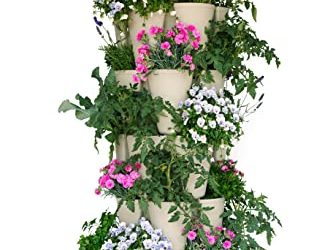
This Worth Garden set suits a household that wants a planted wall rather than a decorative pocket, because six modular panels combine into a display of eighteen planting pockets. Each panel holds three pockets, so you can arrange the set as one tall column, two shorter columns, or a wider block that fits the wall you have. The stacked design lets water filter from the top level down through the panels below, which keeps moisture moving through the whole wall instead of pooling in the first row. Herbs, strawberries, flowers, and trailing plants all fit, and compatible extra units can extend the set later.
Specs
- 6 modular wall planters, each with 3 pockets, for 18 pockets in total
- Stacked vertical design with a water filtration system that moves moisture from top to bottom
- Includes 6 water filter panels, 24 water level plugs, and 24 chock plugs for controlling pot outlets
- Made from propene polymer, suitable for indoor and outdoor use
- Each planter weighs 1.6 lbs when empty and fixes to a wall with regular screws
- Covers 3.2 square feet when the 6 planters are arranged together
- Designed for strawberries, flowers, and herbs in a green wall display
Best for: A kitchen, hallway, or living room wall where you want eighteen herbs, strawberries, or trailing plants in one modular display.
Watch out for: The drip path between stacked panels needs checking after setup, because a blocked filter or a loose plug can send water down the wall instead of into the pocket below.
Which One Fits Your Situation
You want a kitchen herb wall near a window
Put the Worth Garden set on the kitchen wall closest to natural light, with basil, parsley, mint, and chives in the upper pockets where they get the strongest light. The eighteen pockets give you room for several herbs at once, so you can pick leaves for cooking without stripping one plant bare. Water slowly from the top and let the filtration path carry moisture downward.
You live in a small apartment with no floor space
Choose the Worth Garden set when every square foot of floor already has a job, because the panels use wall space that would otherwise stay empty. Arrange the six panels in a tall column beside a door or along a narrow hallway wall, and keep trailing plants in the lower pockets so they soften the edge without blocking a walkway.
You are starting your first vertical garden
Start with the Worth Garden set if you want a forgiving first project, because the modular panels let you begin with three or four pockets and add the rest once you know the watering rhythm. Plant easy herbs and trailing plants first, learn how quickly the top row dries compared with the bottom, and move a panel if one side of the wall gets far more light.
You want to expand the display later without starting over
Pick the Worth Garden set when the wall you have today may not be the wall you want next year, because compatible extra panels can extend the same system instead of replacing it. Keep the layout in clear columns, note which plants thrive in each row, and add new panels below or beside the existing ones as your confidence grows.
Common Mistakes
- Hanging the planter before testing the fixings: Wet soil adds far more weight than an empty panel suggests, so test one filled panel on your wall type first and confirm the screws hold before you hang the full set of six, and check the screws again after the first watering, when the load is at its heaviest.
- Planting sun-lovers at the bottom: Tall plants at the top shade everything below them, so place herbs that need strong light in the upper pockets and shade-tolerant plants lower down, or the bottom row will stretch toward the light and grow weak, so move struggling plants to a brighter pocket before they stretch too far.
- Watering the top row like a tabletop pot: A fast pour floods the first pockets and rushes past the roots, so water slowly, pause between pours, give the soil a minute to absorb each pour before adding more, and watch the lowest row to learn how much the whole wall actually needs.
- Filling every pocket on day one: A full wall looks finished at once, yet crowded plants compete for light and air, so start with fewer plants, leave gaps for growth, give each plant a full season to prove itself before judging the layout, and fill the remaining pockets once the first plants have settled.
- Ignoring the drainage path between panels: A blocked filter panel or a missing plug can divert water down the wall, so check the outlets after the first few waterings, clear any soil that has washed into a filter, wipe the wall dry if you spot any moisture after watering, and keep the wall behind the panels dry.
Frequently Asked Questions
How many plants fit in this vertical wall planter?
The Worth Garden set has eighteen pockets across six panels, with three pockets on each panel, so it holds eighteen plants when every pocket is filled. Start with fewer plants if you are new to vertical gardening, because young plants need room to spread and crowded pockets dry out unevenly.
Will a wall planter damage an indoor wall?
It can if water escapes or the fixings are wrong for the wall material, so use the correct screws for plasterboard, brick, tile, or timber and leave a small air gap behind the panels. Water slowly, check the outlets after the first few waterings, and watch for damp patches before they spread.
What plants grow best in an indoor vertical wall planter?
Herbs such as basil, parsley, mint, and chives grow well, along with strawberries, small flowers, succulents, and trailing plants that can spill over the pocket edge. Choose compact varieties with shallow roots, and avoid large plants that will outgrow a pocket within a single season indoors, even with regular trimming.
How often should I water a self-watering wall planter?
Water when the top row feels dry to the touch, then water slowly and let the filtration path carry moisture down through the panels. The lower rows stay damp longer than the top, so check them before watering again, and water less often in cool rooms or during cloudy weeks.