Our Short List of 3
All 3 Picks at a Glance
| Product | Specs | Action |
|---|---|---|
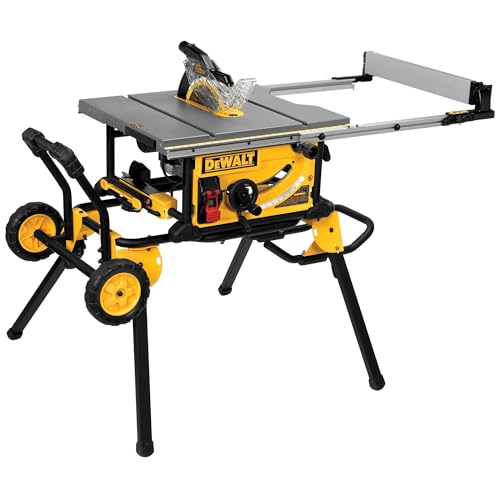 DEWALT DWE7491RS Table Saw with Rolling Stand | Check price on Amazon | |
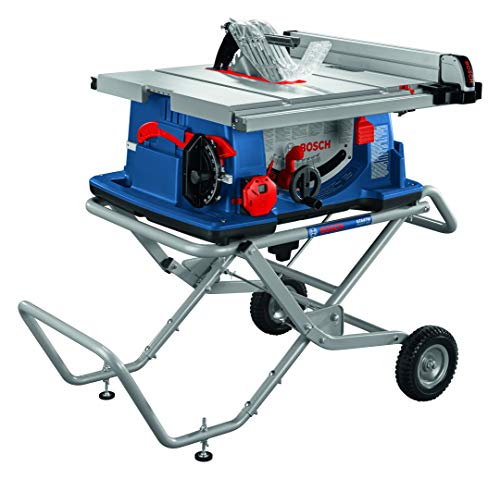 Bosch 4100XC-10 Worksite Table Saw with Gravity-Rise Wheeled Stand | Check price on Amazon | |
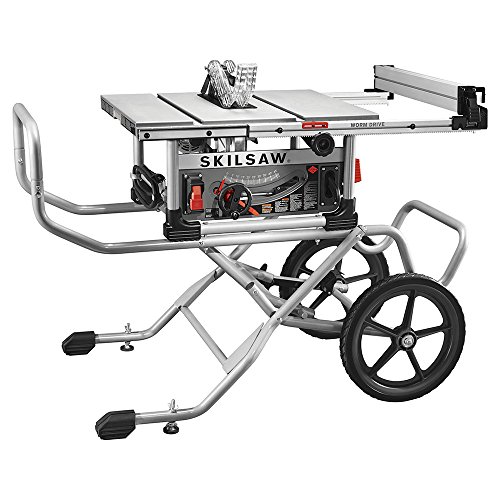 SKIL SPT99-11 Heavy Duty Worm Drive Table Saw with Stand | Check price on Amazon |
Key takeaways
- Find the best standing table saws for home shops and jobsites, with rolling stands, wide rip capacity, and dependable fences compared side by side.
Introduction
A standing table saw changes how a workshop feels. Instead of kneeling beside a benchtop unit balanced on sawhorses, the operator works at a comfortable height, with the table level, the fence within easy reach, and the full length of a board supported as it moves through the blade. For anyone who rips plywood sheets, cuts long trim, or breaks down lumber for furniture, that working height matters as much as the motor or the blade.
Standing table saws come in several related designs. Some arrive as a complete unit, with a saw mounted on a folding or rolling stand that collapses for transport. Others pair a jobsite saw with a wheeled stand that raises the machine to a locked working height in a single motion. Every saw in this guide is a ten inch machine with its own stand, so it can be rolled out of a garage corner, used on a driveway, and put away again when the work is done. Rip capacity, fence design, stand design, and weight decide which one fits a given shop, and the comparison below looks at each machine as a whole system.
At a Glance
| Saw | Blade | Motor | Rip Capacity | Stand |
|---|---|---|---|---|
| DEWALT DWE7491RS | 10 inch | 15 amp, 4800 RPM | 32-1/2 inch | Rolling stand |
| Bosch 4100XC-10 | 10 inch | 15 amp | 30 inch | Gravity-Rise wheeled stand |
| SKIL SPT99-11 | 10 inch | 15 amp worm drive | Wide, with included stand | Folding stand |
The DEWALT leads on rip capacity and fence control. The Bosch leads on stand movement and onboard storage. The SKIL worm drive leads on torque and on a compact frame that still stands at a full working height. All three use a ten inch blade and run on a standard household circuit.
DEWALT DWE7491RS Table Saw with Rolling Stand
The DEWALT DWE7491RS is the best known saw in this group, and its reputation rests on a strong fifteen amp motor, a wide rip capacity, and a rack and pinion fence. The motor spins at 4800 RPM, and the ten inch blade cuts to a depth of three and one eighth inches at ninety degrees, enough to cut thick boards and square up heavy stock in a single pass. Rip capacity reaches thirty two and one half inches, so a full sheet of plywood can be ripped into wide panels without repositioning the fence.
The rolling stand sets up and breaks down quickly, and the whole unit can be rolled into position. Contoured grips molded into the table edges make lifting easier, and the stand includes onboard storage for the fence, the miter gauge, the push stick, and the blade guard. The rack and pinion fence moves in small, controlled steps and stays parallel to the blade, which keeps repeated cuts consistent. When a project calls for ten identical boards, the fence can be set once and trusted to hold that setting.
Listing Features
- Ten inch blade with a fifteen amp motor running at 4800 RPM
- Thirty two and one half inch rip capacity for wide sheet goods
- Rack and pinion telescoping fence for accurate, repeatable settings
- Rolling stand with quick setup and breakdown
- Onboard storage for the fence, miter gauge, push stick, and blade guard
Considerations
The DWE7491RS is a substantial unit, and its folded footprint still needs clear space in a garage or a vehicle. The rolling stand moves well on flat ground, but rough ground or stairs call for a second person. Check the fence against a square when the saw is first set up, and again after transport, because any fence can shift if the saw is bumped during a move.
Bosch 4100XC-10 Worksite Table Saw with Gravity-Rise Wheeled Stand
Bosch 4100XC-10 Worksite Table Saw
The Bosch 4100XC-10 takes a different approach. Its defining feature is the Gravity-Rise wheeled stand, which raises the saw from a rolled position to a stable, locked working height with a single action. The operator tips the folded unit, lets gravity help the legs swing into place, and locks the stand with a foot pedal. Breakdown works in reverse, and the folded unit can be rolled like luggage.
The saw itself is a ten inch worksite machine with a fifteen amp motor and a thirty inch rip capacity, wide enough for most sheet goods and cabinet panels. The fence locks firmly and stays parallel to the blade, and Bosch includes onboard storage for the fence, the miter gauge, and the push stick. The eight inch wheels roll smoothly across a driveway or a garage floor, and the stand locks solidly once raised. The stand spreads its legs wide and the saw sits low in the frame, so the unit feels steady when a heavy sheet is fed across the table.
Listing Features
- Ten inch blade with a fifteen amp motor for worksite cutting
- Thirty inch rip capacity for sheet goods and cabinet panels
- Gravity-Rise wheeled stand with single action setup and breakdown
- Eight inch wheels for smooth rolling across flat surfaces
- Onboard storage for the fence, miter gauge, push stick, and accessories
- Dust port for connection to a collection hose
Considerations
The Gravity-Rise stand needs a clear area to unfold, because the legs swing out as the saw is raised. A crowded garage may require moving other tools out of the way first. The rip capacity is a little narrower than the widest saw in this guide, so readers who regularly rip full sheets into wide panels should check that thirty inches covers their most common cuts.
SKIL SPT99-11 Heavy Duty Worm Drive Table Saw with Stand
SKIL SPT99-11 Worm Drive Table Saw
The SKIL SPT99-11 brings a worm drive layout to the standing table saw. A worm drive places the motor behind the blade and uses a gear set that delivers strong torque at lower blade speed, which helps the saw hold its pace through thick material. The ten inch blade, the fifteen amp motor, and the included stand combine into a machine that stands at a full working height, about three feet from the floor, which helps reduce fatigue during long cutting sessions.
The stand folds for storage and transport, and the saw can be set up by one person. The frame is compact for a worm drive machine, which makes it easier to store in a small shop or load into a vehicle. The fence locks into place for rip cuts, a riving knife and blade guard are included, and the miter gauge runs in a slot on the table surface. Worm drive saws are often chosen by carpenters who cut framing lumber and thick boards, because the gear set delivers steady torque when the blade meets resistance.
Listing Features
- Ten inch blade with a fifteen amp worm drive motor for strong torque
- Included folding stand that places the table at a full working height
- Worm drive gear set that holds pace through thick material
- Fence for rip cuts and miter gauge for crosscuts
- Blade guard and riving knife included
- Dust port for connection to a collection hose
Considerations
A worm drive saw has a different balance and a different sound from a direct drive saw, and readers used to one layout may need a short adjustment period with the other. The stand should be locked fully before cutting, and the fence should be checked for parallel alignment after the saw is moved. The blade that ships with the saw is a general purpose blade, so readers who cut fine hardwood or veneer faced plywood may want a blade with more teeth for a cleaner edge.
How to Choose a Standing Table Saw
Rip capacity is the first number to check, because it sets the widest board that can be cut in a single pass. A saw with a thirty two and one half inch capacity can rip a full sheet of plywood into wide panels, while a narrower saw may require flipping the sheet. Readers who build cabinets, shelving, and bookcases will use that wide capacity often. Readers who mainly cut trim and small panels can give more weight to stand design and weight instead.
Motor layout is the second factor. All three saws in this guide use a fifteen amp motor, the standard for a ten inch jobsite saw on a household circuit. A direct drive saw spins the blade at high speed and cuts quickly through sheet goods. A worm drive saw delivers more torque and holds its pace through thick hardwood. Thick hardwood and dense engineered lumber favor torque, while plywood and softwood favor speed and a clean edge from a sharp blade.
Fence design is the third factor. A rack and pinion fence moves in small steps and stays parallel to the blade, which keeps each board the same width. A standard locking fence can be just as accurate, but it should be checked with a square and adjusted if needed. The fence should lock firmly without flexing and slide smoothly along its rail.
Stand design deserves as much attention as the motor. A rolling stand moves well on flat ground and folds for storage. A gravity rise stand sets up with a single action and rolls like luggage. A small shop favors a stand that folds flat against a wall, while a jobsite with rough ground favors large wheels and a wide leg spread. Table size and weight matter too: a larger table supports wide sheets, a heavier saw stays steadier, and a lighter saw moves more easily. Finally, measure the space where the folded saw will live and the vehicle that will carry it.
Fit and Installation Considerations
Start with a level surface. A garage floor, a driveway, or a flat patch of ground all work well, as long as the stand legs sit firmly and the table does not rock. If the floor slopes, position the saw so the feed direction runs across the slope, and check that all four legs touch the ground before cutting. A saw that rocks during a cut will leave marks on the board and make the feed harder to control.
Assembly usually involves mounting the saw to the stand, fitting the fence rail, and installing the blade guard and riving knife. Follow the manual that ships with the saw. The fence rail should be level with the table surface, and the fence should be checked for parallel alignment with the blade using a square. The blade should be checked for square to the table at ninety degrees. These checks take only a few minutes, and they should be repeated after the saw is transported, because movement can shift an adjustment.
Space around the saw matters as much as the saw itself. Leave clear space in front for feeding long boards, and clear space behind for the board to exit. A full sheet of plywood needs about eight feet behind the saw, so plan the layout before cutting. Keep the floor clear of offcuts and cords, and keep the push stick within reach. For storage, a rolling stand can be parked against a wall, and a gravity rise stand can be folded flat.
Frequently Asked Questions
What makes a table saw a standing table saw?
A standing table saw is a saw mounted on its own stand, so the table sits at a full working height without a separate bench or a pair of sawhorses. The stand may roll, fold, or rise with a single action, but in every case the saw can be set up, used, and stored as a complete unit.
Is a ten inch blade enough for most home shop work?
Yes, a ten inch blade covers most home shop work, including ripping plywood, cutting hardwood boards, and crosscutting trim and framing lumber. A ten inch blade cuts to a depth of about three inches at ninety degrees, which handles standard lumber and sheet goods. Blades are widely available in styles for ripping, crosscutting, and general use.
How important is rip capacity when choosing a saw?
Rip capacity sets the widest cut that can be made in a single pass, so it matters most for readers who cut wide panels from sheet goods. A capacity of thirty inches or more covers most cabinet and shelving work. Readers who mainly cut narrow boards can choose based on stand design, weight, and fence quality instead.
Should the fence be checked after moving the saw?
Yes, the fence should be checked for parallel alignment with the blade after the saw is moved, and the blade should be checked for square to the table as well. Transport can shift an adjustment, and a fence that is out of parallel will bind the material or leave an uneven cut. A quick check with a square takes only a minute.
Conclusion
The best standing table saw is the one that matches the work, the space, and the way the saw will be moved and stored. The DEWALT DWE7491RS leads on rip capacity and fence control, with a rack and pinion fence that keeps repeated cuts consistent. The Bosch 4100XC-10 leads on stand movement, with a Gravity-Rise system that sets up in a single action and rolls smoothly. The SKIL SPT99-11 leads on torque, with a compact worm drive frame that still stands at a full working height.
Any of these three saws can serve as the central cutting tool in a home shop or on a jobsite. Measure the workspace, think about the material that will be cut most often, and pick the saw whose stand, fence, and table size fit that work. With a sharp blade, a checked fence, and a clear space around the saw, a standing table saw turns a garage corner or a driveway into a capable workshop.
As an Amazon Associate, we earn from qualifying purchases.