Our Short List of 3
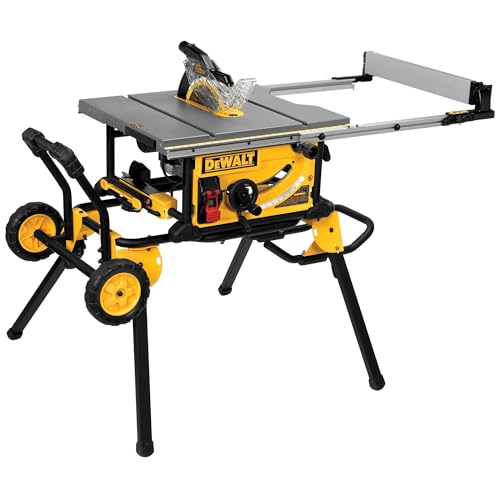
- Best for: Home woodworkers who rip sheet goods and need a rolling stand in the box.
- Blade size: 10 inches
- Motor: 15 amp
- Blade speed: 4,800 revolutions per minute
- Rip capacity: 32-1/2 inches to the right of the blade
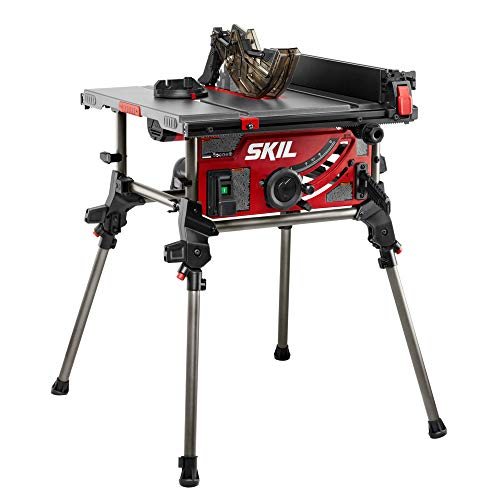
- Best for: Hobbyists who want a full-size blade, a folding stand and a fence that stays parallel.
- Blade size: 10 inches
- Motor: 15 amp
- Blade: 10-inch, 24-tooth carbide blade included
- Fence: Rack-and-pinion fence rails

- Best for: Remodelers and site workers who need a compact saw that travels well and still rips sheet goods.
- Blade size: 8-1/4 inches
- Motor: 15 amp
- Blade speed: 5,800 revolutions per minute
- Rip capacity: 24-1/2 inches
All 4 Picks at a Glance
| Product | Specs | Action |
|---|---|---|
| DEWALT DWE7491RS 10-Inch Table Saw with Rolling Stand |
| Check price on Amazon |
| SKIL TS6307-00 15 Amp 10-Inch Jobsite Table Saw with Folding Stand |
| Check price on Amazon |
| DEWALT DWE7485 8-1/4 in. Compact Portable Jobsite Table Saw |
| Check price on Amazon |
 SKILSAW SPT99-11 10 Inch Heavy Duty Worm Drive Table Saw with Stand |
| Check price on Amazon |
Key takeaways
- Compare the 4 best table saws for wood working, from compact jobsite saws to worm drive models, with rip capacity, blade size and fence details.
Choosing a table saw for wood working comes down to one honest trade-off: the size of the cuts you make most often against the space and strength you have to move the saw. A saw that rips full sheets with ease is a poor fit for a small garage if it never leaves its corner, while a light benchtop model frustrates a cabinet maker who needs repeatable wide rips every day. Blade size, rip capacity, fence design and stand type decide how cleanly that trade-off lands, so matching those details to real projects matters more than chasing the largest motor on the shelf.
This guide is for home woodworkers in a first shop, hobbyists building cabinets and shelving, remodelers who carry a saw between jobs, and anyone replacing a benchtop saw with something steadier. Every pick below comes from names and specifications shown on its Amazon product page, including blade diameter, motor rating, rip capacity and fence type, so you can compare the saws on published facts before you buy.
Quick Picks
As an Amazon Associate we earn from qualifying purchases.
| Product | Best for | Key spec from title |
|---|---|---|
| DEWALT DWE7491RS 10-Inch Table Saw with Rolling Stand | Ripping full sheets in a small shop | 10-inch blade, 32-1/2-inch rip capacity |
| SKIL TS6307-00 15 Amp 10-Inch Jobsite Table Saw with Folding Stand | A first full-size saw on a tight workshop footprint | 15 amp motor, 10-inch blade |
| DEWALT DWE7485 8-1/4 in. Compact Portable Jobsite Table Saw | Carrying a capable saw to different work sites | 8-1/4-inch blade, 24-1/2-inch rip capacity |
| SKILSAW SPT99-11 10 Inch Heavy Duty Worm Drive Table Saw with Stand | Deep cuts in thick stock without a helper | Worm drive, 3-5/8-inch depth of cut |
How to Choose
Blade size and depth of cut
Blade diameter sets the deepest cut a saw can make in one pass, and that limit shows up on thick workbench tops, fence posts and laminated panels. A 10-inch blade typically cuts a little over 3 inches deep at 90 degrees, which covers most furniture and cabinet stock, while an 8-1/4-inch blade cuts shallower and suits trim, plywood and thinner boards. Check the depth at 45 degrees as well, because bevel cuts lose depth quickly. If thick stock is a regular part of your work, depth matters more than extra rip width.
Rip capacity and fence accuracy
Rip capacity is the distance from the blade to the fence at its widest setting, and it decides whether a sheet of plywood can be cut down without a second tool. A capacity near 32 inches handles a full sheet cut in half, while a capacity near 24 inches still manages most cabinet panels and shelving. Fence design matters just as much, because a fence that drifts out of parallel leaves burn marks and binding cuts. Rack-and-pinion fences move smoothly along a rail and lock in place, which helps repeat widths across matching parts.
Motor power and blade speed
Most jobsite saws in this guide use a 15 amp corded motor, and the difference between them shows in blade speed and torque under load. A motor spinning near 4,800 revolutions per minute cuts hardwood cleanly when paired with a sharp blade, while a faster 5,800 revolutions per minute motor suits a smaller blade that needs speed to keep up. Listen for soft-start behaviour on larger saws, and remember that a dull blade strains any motor. Choose the motor for the hardest wood you cut regularly, not for the easiest board in the pile.
Portability, stand and dust control
A rolling stand turns a heavy saw into a tool one person can wheel across a garage, while folding legs let a saw store flat against a wall between weekends. Weight still matters on stairs and truck beds, so check the listed weight with the stand included before assuming a saw is portable. Dust control is the other practical detail: a dust port that fits a shop vacuum keeps the table visible and the floor safer. Plan where the saw will live, how it will travel, and where dust will go before you settle on a model.
The 4 Best Options
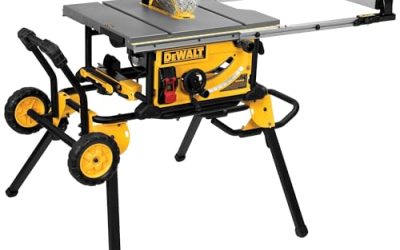
DEWALT DWE7491RS 10-Inch Table Saw with Rolling Stand
- Best for: Home woodworkers who rip sheet goods and need a rolling stand in the box.
- Blade size: 10 inches
- Motor: 15 amp
- Blade speed: 4,800 revolutions per minute
- Rip capacity: 32-1/2 inches to the right of the blade
Home woodworkers who rip sheet goods and need a rolling stand in the box.
Check the fence alignment and blade squareness after assembly, and confirm you have floor space for the stand when it is unfolded.
The DEWALT DWE7491RS suits a home shop that needs full-size capability without a permanent cabinet saw. Its 10-inch blade and 32-1/2-inch rip capacity handle sheet goods, cabinet carcasses and long trim in a single setup, while the folding rolling stand lets one person wheel the saw out for a project and fold it away afterwards. A rack-and-pinion fence keeps repeat cuts consistent, and the 15 amp motor spins at 4,800 revolutions per minute for steady work in hardwood and plywood alike.
Watch out for: Check the fence alignment and blade squareness after assembly, and confirm you have floor space for the stand when it is unfolded.
SKIL TS6307-00 15 Amp 10-Inch Jobsite Table Saw with Folding Stand
- Best for: Hobbyists who want a full-size blade, a folding stand and a fence that stays parallel.
- Blade size: 10 inches
- Motor: 15 amp
- Blade: 10-inch, 24-tooth carbide blade included
- Fence: Rack-and-pinion fence rails
Hobbyists who want a full-size blade, a folding stand and a fence that stays parallel.
Confirm the rip capacity fits the widest panels you cut, and check that the folding legs lock firmly before the first cut.
The SKIL TS6307-00 is a sensible first full-size saw for a hobbyist who wants a 10-inch blade and a rack-and-pinion fence without a large workshop footprint. Its integrated folding legs form a stand that folds flat for storage, and the coated cast aluminium tabletop gives boards a smooth sliding surface. A 15 amp motor drives the 24-tooth carbide blade, and the saw cuts material up to 4 by 4 at 90 degrees, which covers fence posts and thick legs as well as sheet goods and shelving.
Watch out for: Confirm the rip capacity fits the widest panels you cut, and check that the folding legs lock firmly before the first cut.
DEWALT DWE7485 8-1/4 in. Compact Portable Jobsite Table Saw
- Best for: Remodelers and site workers who need a compact saw that travels well and still rips sheet goods.
- Blade size: 8-1/4 inches
- Motor: 15 amp
- Blade speed: 5,800 revolutions per minute
- Rip capacity: 24-1/2 inches
Remodelers and site workers who need a compact saw that travels well and still rips sheet goods.
The stand is sold separately, so check whether you need a bench, sawhorses or a matching stand before ordering.
The DEWALT DWE7485 fits woodworkers who carry a saw to the work instead of bringing the work to the saw. Its compact metal roll-cage base protects the tool in a truck bed, and at 54 pounds it is far easier to lift onto a bench than a full rolling-stand saw. A 15 amp motor spins at 5,800 revolutions per minute, and the rack-and-pinion telescoping fence gives 24-1/2 inches of rip capacity, enough to rip a 4 by 8 sheet of plywood or oriented strand board down the middle.
Watch out for: The stand is sold separately, so check whether you need a bench, sawhorses or a matching stand before ordering.
SKILSAW SPT99-11 10 Inch Heavy Duty Worm Drive Table Saw with Stand
- Best for: Woodworkers cutting thick stock and large panels alone on a mobile stand.
- Blade size: 10 inches
- Motor: 15 amp, worm drive with Dual-Field design
- Blade speed: 5,000 revolutions per minute, no load
- Depth of cut: 3-5/8 inches
Woodworkers cutting thick stock and large panels alone on a mobile stand.
At 94.3 pounds with the stand, loading it into a vehicle needs care, and the larger footprint needs clear floor space.
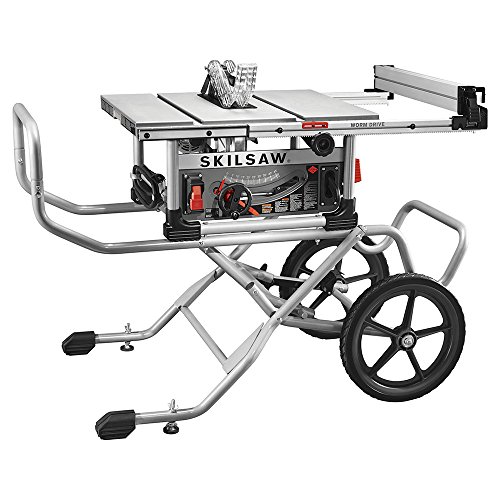
The SKILSAW SPT99-11 is built for thick stock and large panels handled by one person. Worm drive gearing delivers strong torque to the blade, and the 3-5/8-inch depth of cut is the deepest in this guide, so thick workbench tops and laminated beams pass through in one cut. A 30-1/2-inch rip capacity covers wide boards, while outfeed and left-side supports hold long pieces steady as they leave the blade. The rolling stand rides on 16-inch wheels for moving across uneven ground.
Watch out for: At 94.3 pounds with the stand, loading it into a vehicle needs care, and the larger footprint needs clear floor space.
Which One Fits Your Situation
Ripping full sheets in a small home shop
Choose the DEWALT DWE7491RS, because its 32-1/2-inch rip capacity and rolling stand cover sheet goods without a permanent cabinet saw. Wheel it out for cabinet carcasses and shelving, then fold the stand and store it against the wall. The rack-and-pinion fence keeps repeat rips consistent across matching panels.
Setting up a first woodworking saw
Choose the SKIL TS6307-00, because it pairs a 10-inch blade with folding legs and a rack-and-pinion fence in one package. It handles furniture boards, shelving and 4 by 4 posts, and it stores flat when the weekend project ends. Check blade alignment after assembly, then build confidence on straight rips before moving to bevels.
Working on different job sites each week
Choose the DEWALT DWE7485, because its compact roll-cage base and 54-pound weight make it the easiest saw here to carry and load. The 24-1/2-inch rip capacity still handles sheet goods, and onboard storage keeps the guard, fence and wrenches together between sites. Add a bench or stand if you work away from a fixed table.
Cutting thick stock without a helper
Choose the SKILSAW SPT99-11, because worm drive torque and a 3-5/8-inch depth of cut handle thick boards in one pass. Outfeed and side supports hold long pieces steady, so one person can manage panels that would otherwise need a second pair of hands. Plan for its weight and footprint before it arrives.
Common Mistakes
- Buying the largest rip capacity available when most cuts are narrow boards and trim, then struggling to store a saw that never fits the shop.
- Ignoring depth of cut at 45 degrees, then discovering bevel cuts on thick stock need a second pass or a different tool.
- Assuming a folding stand is included with every compact saw, when some benchtop models ship without any stand at all.
- Skipping fence and blade alignment checks after assembly, which leads to binding cuts, burn marks and wasted boards.
- Choosing a saw by motor amps alone, without checking blade speed, fence type and dust port size for the work at hand.
Frequently Asked Questions
What blade size is best for wood working at home?
A 10-inch blade suits most home woodworking, because it cuts a little over 3 inches deep at 90 degrees and handles furniture stock, cabinet panels and shelving in one pass. An 8-1/4-inch blade works well for trim, plywood and thinner boards, and it keeps the saw lighter for transport. Match blade size to the thickest stock you cut regularly, not to the largest blade you can find.
How much rip capacity do I need for sheet goods?
A rip capacity near 32 inches lets you cut a full 4 by 8 sheet in half in one setup, which helps with cabinet carcasses and large shelving. A capacity near 24 inches still covers most cabinet panels and shelving boards, and a circular saw can break down full sheets first if needed. Measure the widest panels in your current projects before choosing.
Does a rack-and-pinion fence really matter?
Yes, a rack-and-pinion fence moves smoothly along a rail and locks parallel to the blade, which makes repeat cuts more consistent across matching parts. A fence that drifts causes binding and uneven edges, especially on long rips. Check that the fence locks firmly and stays square after several adjustments before starting a large project.
Can a jobsite saw replace a cabinet saw?
A jobsite saw can handle most furniture, cabinet and shelving work in a home shop, especially with a good fence and a sharp blade. A cabinet saw still offers a larger table, heavier build and smoother power delivery for daily professional use. For weekend woodworking and remodeling, a well-chosen jobsite saw with a rolling stand is usually the more practical fit.