Key takeaways
- Four jobsite table saws suited to ordinary home users, compared on rip capacity, blade size, fence type and stand, with plain guidance on which fits your garage.
For most home users, the real decision behind a table saw is not raw power, because nearly every jobsite model in this class runs a similar motor. The decision is whether the saw will cut the sheet goods and boards you actually buy, stay accurate without constant fiddling, and then get out of the way in a garage that also holds a car, bikes and storage boxes. A saw that is awkward to move or slow to set up quietly stops being used, however good its specifications look on paper.
This guide is written for first-time saw buyers, weekend renovators and homeowners building shelves, decks and simple furniture rather than for full-time carpenters. Every model below was selected from its Amazon product name and the specifications printed on its Amazon listing, so the numbers quoted here match what the seller states. Read the rip capacity and blade size first, then use the situation guide near the end to match a saw to your space and your typical projects.
Quick Picks
As an Amazon Associate we earn from qualifying purchases.
| Product | Best for | Key spec from title |
|---|---|---|
| DEWALT Table Saw 10 Inch with Foldable Rolling Stand (DWE7491RS) | Ripping full plywood sheets in a shared garage | 10 inch blade, 32-1/2 inch rip capacity |
| SKIL 15 Amp 10 Inch Portable Jobsite Table Saw with Folding Stand (TS6307-00) | Occasional projects on a tighter equipment budget | 15 amp motor, 10 inch blade, folding stand |
| DEWALT Table Saw for Jobsites, 8-1/4 Inch, 15 Amp (DWE7485) | Small workshops and carrying the saw between rooms | 8-1/4 inch blade, 15 amp motor |
| BOSCH 10 In. Worksite Table Saw with Gravity-Rise Wheeled Stand (4100XC-10) | Frequent movers who want fast stand setup | 10 inch blade, Gravity-Rise wheeled stand |
How to Choose
Start With Rip Capacity, Not Motor Size
Rip capacity tells you the widest board the fence can handle, and it decides whether a saw suits your projects more than any other figure. A capacity around twenty four inches lets you halve a standard plywood sheet lengthwise, which covers most shelving and cabinet carcasses a home user builds. The larger thirty two and a half inch capacity on the biggest saw here opens up wider panels without a second tool. Measure the boards you expect to cut, look at the stated capacity in the product name, and buy for that width rather than for a motor number that rarely limits household work.
Match Blade Size to the Stock You Cut
Blade diameter controls maximum cutting depth, and it also affects how widely available replacement blades are in local stores. Ten inch blades are the common standard for jobsite saws, with a deep bench of blade options for plywood, laminate and general ripping. The smaller eight and a quarter inch format, used by the compact DEWALT in this list, trades some depth for a lighter, easier to carry machine. For typical two by material and sheet goods, either size copes comfortably. Choose the smaller blade only when portability matters more to you than cutting thicker stock in a single pass.
Judge the Fence Before Anything Else
Straight cuts come from the fence far more than from the blade, so the fence system deserves close attention from a first time buyer. Rack and pinion fences, fitted to the DEWALT and SKIL models listed here, move both ends of the fence together and tend to stay parallel to the blade with less checking. Simpler clamp style fences can work well but reward a tape measure check at the front and back before each important cut. Whichever style you pick, plan to verify fence alignment during your first setup session, because a fence that drifts turns accurate looking specifications into wasted boards.
Think Honestly About the Stand and Storage
A jobsite saw lives or dies by how easily it moves, since most home workshops are cleared away after each project. Rolling stands with large wheels, like the DEWALT rolling stand and the BOSCH Gravity-Rise design, let one person tilt the saw and wheel it into a corner. Simple folding leg stands, such as the one supplied with the SKIL, are lighter and fine when the saw travels only a few feet. Picture your own routine before ordering. If the saw must climb steps or fit into a car boot regularly, weight and folded size should outrank a small difference in cutting capacity.
The 4 Best Options
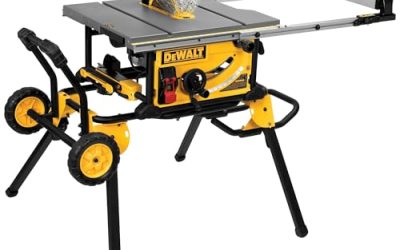
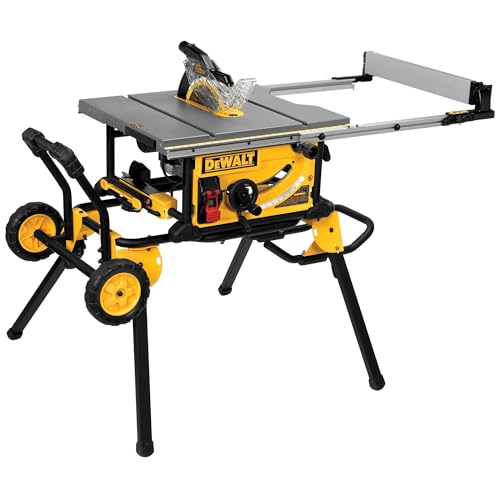
DEWALT Table Saw 10 Inch with Foldable Rolling Table Saw Stand, 15 Amp, 4800 RPM, 32-1/2-Inch Rip Capacity (DWE7491RS)
If your projects start with full sheets of plywood from the store, this is the saw in the group built around that habit. The wide rip capacity means a sheet can be broken down on the saw itself instead of on sawhorses with a circular saw first. The rolling stand suits garages where the saw parks against a wall during the week and rolls to the centre on Saturday. It is the largest option here, so it fits owners who have a clear parking spot and who value capacity over squeezing into the smallest footprint.
Specs
- Brand: DEWALT
- Model: DWE7491RS
- Blade size: 10 inch
- Motor: 15 amp, 4800 RPM
- Rip capacity: 32-1/2 inch
- Stand: foldable rolling table saw stand
Best for: Home users who regularly rip plywood sheets and want the widest capacity in this group.
Watch out for: Confirm the folded dimensions against your storage corner, because the rolling stand takes more room than the compact options.
ASIN: B00F2CGXGG
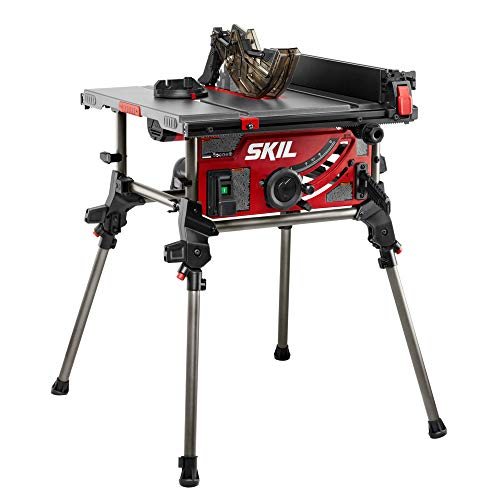
SKIL 15 Amp 10 Inch Portable Jobsite Table Saw with Folding Stand- TS6307-00
The SKIL suits the homeowner whose saw comes out a few weekends a year for decking repairs, laminate flooring or a set of garage shelves. Its rack and pinion fence rails are a practical feature at this level, helping the fence stay parallel without repeated measuring. The folding stand keeps the whole package simple to store flat against a wall. Parallel blade alignment adjustment is also listed for this model, which helps when you want to fine tune the blade to the miter slot during setup rather than accepting the factory setting as final.
Specs
- Brand: SKIL
- Model: TS6307-00
- Blade size: 10 inch
- Motor: 15 amp
- Fence: rack and pinion fence rails
- Bevel capacity: -2 to 47 degrees, as listed
- Stand: integrated folding stand
Best for: Occasional users who want a full ten inch blade and a guided fence without choosing the largest saw.
Watch out for: Check the listed rip capacity on the product page against your widest planned cut before ordering, as it is smaller than the biggest model here.
ASIN: B08F9RFJ2K
DEWALT Table Saw for Jobsites, 8-1/4 Inch, 15 Amp (DWE7485)

Compactness is the whole point of this DEWALT, and for a small workshop that trade makes sense. The smaller blade keeps the body light enough to carry through a house or load into a vehicle without help, which matters for renovators working room by room. Rack and pinion fence adjustment is still included, so the downsizing does not mean giving up guided fence movement. Owners cutting mostly sheet goods, flooring and standard dimension lumber will rarely miss the larger blade, while anyone planning to resaw thick hardwood in one pass should look at the ten inch models instead.
Specs
- Brand: DEWALT
- Model: DWE7485
- Blade size: 8-1/4 inch
- Motor: 15 amp
- Fence: rack and pinion telescoping fence rails, as listed
- Design: compact portable jobsite table saw
Best for: Small garages, flats with limited storage and anyone who carries the saw to the work.
Watch out for: The smaller blade limits maximum depth of cut, so check the listed cutting depth if you work with thick stock.
ASIN: B0842QDW95
BOSCH 10 In. Worksite Table Saw with Gravity-Rise Wheeled Stand 4100XC-10
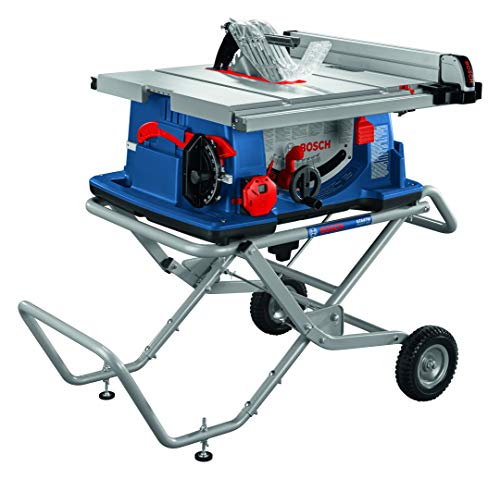
BOSCH built this model around its wheeled stand, which is designed to raise and lower the saw with a smooth assisted motion rather than a lift and wrestle. That matters for users who set up on a driveway or patio and pack away the same day. The saw itself is a full ten inch worksite model with a fifteen amp motor, and the listing highlights onboard storage for accessories. It fits the home user who expects to move the saw often, perhaps between a garage and a garden project, and wants setup to feel routine rather than like a workout.
Specs
- Brand: BOSCH
- Model: 4100XC-10
- Blade size: 10 inch
- Motor: 15 amp
- Stand: Gravity-Rise wheeled stand
- Fence: rack and pinion fence, as listed
Best for: Users who set up and pack away frequently and want the easiest stand routine.
Watch out for: Wheeled stands are wide when folded upright, so measure your doorway and storage gap before choosing it.
ASIN: B0851KL858
Which One Fits Your Situation
Your Garage Doubles as Parking for a Car
Choose a saw that earns its parking spot by moving easily, which points to the DEWALT DWE7491RS or the BOSCH 4100XC-10. Both roll on wheeled stands, so clearing the floor takes minutes. Pick the DEWALT when sheet capacity is your priority and the BOSCH when the stand routine itself is the deciding factor in how often you will bother setting up.
You Are Buying Your First Saw for Weekend Projects
The SKIL TS6307-00 is the natural starting point in this group. It keeps the standard ten inch blade, includes a guided rack and pinion fence and folds away on its own stand. It covers the shelving, decking and repair work most first time owners describe, without committing you to the largest footprint here while you learn what you actually build.
Your Workshop Is a Spare Room or a Balcony Store
Go compact with the DEWALT DWE7485. Its smaller blade and lighter body make it the one model here that a single person can carry through doorways and store in a cupboard without planning around it. The trade is cutting depth, which rarely matters for the flooring, trim and sheet material jobs that dominate small space projects.
You Cut Plywood Sheets Most Weeks
Capacity should decide, and that means the DEWALT DWE7491RS. Its thirty two and a half inch rip capacity handles wide panels that would force extra steps on narrower saws. The rolling stand keeps that capacity practical in a home garage, because a big saw that is painful to move quickly becomes a saw that stays parked and unused.
Common Mistakes
- Buying on motor size alone and ignoring rip capacity, then discovering a standard plywood sheet does not fit the fence.
- Forgetting to measure the storage corner, doorway or car boot the folded saw has to pass through.
- Skipping fence alignment checks during first setup and blaming the blade for cuts that wander.
- Choosing the smallest blade size while planning projects in thick hardwood that need deeper cuts.
- Leaving the blade guard and push stick in the box instead of learning to use them from the first cut.
Frequently Asked Questions
Is a ten inch or an eight and a quarter inch saw better for a beginner?
Neither is automatically better, because the right choice follows your material. Ten inch models cut deeper and use the most widely stocked blades. The smaller format is lighter and easier to store. Beginners cutting sheet goods and standard lumber are served well by either, so let storage space and carrying needs make the final call.
Can one of these saws really handle a full plywood sheet alone?
The widest model here can rip a sheet within its stated capacity, but handling a full sheet safely is a separate question from fence width. Support the sheet on both sides so it cannot tip or bind, and consider breaking sheets down with help for the first cuts. Capacity on paper still needs a flat, supported setup in practice.
What should I check in the first setup session?
Work through fence alignment, blade squareness to the table and the operation of the guard and riving knife before cutting project material. Make a test rip in scrap and measure both ends of the offcut. Ten minutes of checking at the start prevents the crooked cuts that beginners often blame on the saw itself.
Do I need the rolling stand, or is a folding stand enough?
A folding stand is enough when the saw moves a few feet across one room. A rolling stand earns its place when the saw crosses thresholds, travels over a driveway or parks in a tight corner after every session. Match the stand to the journey the saw actually makes in your home, not to an imagined workshop.