Key takeaways
- The best table jig saws for beginners use standard jigsaw blades in a guarded benchtop station. Compare the verified picks, specs and safety features.
As an Amazon Associate, we earn from qualifying purchases made through links on this page.

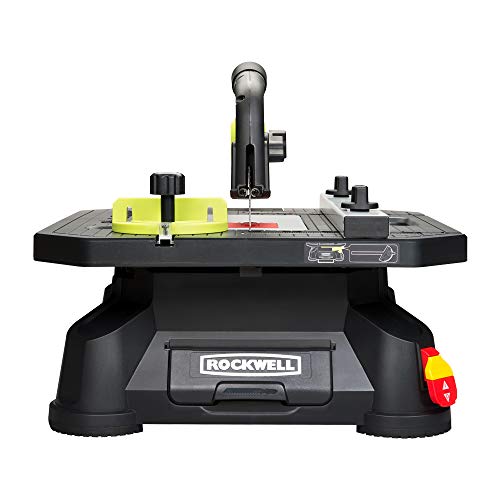
A table jig saw turns the most beginner-friendly saw in the workshop into a stationary tool. Instead of moving a handheld jigsaw along a pencil line, the blade stays fixed in a benchtop station and you guide the workpiece into it with both hands, much like feeding material through a small table saw. For a first-time user, that change matters: both hands stay on the wood instead of on a vibrating tool, the cut line is easier to watch, and fences and gauges take over the job of keeping cuts straight.
One honest warning before the picks: this is a very narrow product category in the United States. The dedicated table jig saw market is essentially one machine design sold under two brand names, the WORX BladeRunner X2 and the Rockwell BladeRunner X2. Both come from the same parent company, Positec, and share the same basic layout. Plate-style jigsaw tables that clamp your own handheld jigsaw upside down under a steel plate are common in Europe, but we could not verify a current Amazon US listing for the best known example, so no plate-only product appears below. Every pick here is a complete, powered benchtop machine that takes standard jigsaw blades, is sold on Amazon US, and was verified at the time of writing.
Table jig saw, handheld jigsaw or scroll saw?
Beginners mix these three tools up constantly, and the difference decides whether you buy the right machine.
A table jig saw is a benchtop station built around an ordinary reciprocating jigsaw blade. The blade points up through a small table, moves up and down, and cuts on the upstroke. Because it uses standard 4-inch T-shank jigsaw blades, it can cut wood, plastic, sheet metal, aluminum and even ceramic tile simply by swapping blades. It handles straight rips with a fence, crosscuts and miters with a gauge, and freehand curves by steering the workpiece.
A handheld jigsaw is the same cutting action in a portable body. It is more flexible for big sheets and cutouts in installed work, but a beginner has to control the tool, the line and the vibration all at once, and the blade can wander without a guide.
A scroll saw is a different machine entirely. It uses very thin, fine blades held under tension between two arms, and it is built for delicate fretwork: tight inside curves, thin craft wood and intricate patterns. Scroll saw blades are far finer than jigsaw blades, the cutting capacity is smaller, and the machine will not rip a board or cut tile and metal the way a table jig saw can. If your goal is detailed scrollwork in thin stock, you want a scroll saw. If your goal is general beginner cutting across several materials with one inexpensive blade system, you want the table jig saw covered here.
What to look for in a beginner table jig saw
A guarded blade with a hold-down. On a table jig saw the blade is exposed above the table, so look for a clear guard and hold-down arm that keeps the workpiece pressed to the table and your fingers behind a barrier. A riving knife behind the blade also helps stop thin stock from pinching and kicking back during rip cuts.
Tool-free blade changes. Beginners break and swap blades often while learning. A tool-less clamp that accepts standard 4-inch T-shank blades means a change takes seconds, needs no Allen key, and uses blades sold in every hardware store. Avoid any design locked to a proprietary blade.
Cutting capacity that matches your projects. Check the manufacturer’s stated depth of cut for each material, not just wood. On this class of machine, expect roughly an inch and a half in wood, and much less in metal and tile. If your first projects are thicker than the stated wood capacity, this is the wrong tool category.
A fence and a miter gauge in the box. Straight cuts are where beginners struggle most. A rip fence that locks parallel to the blade and a miter gauge that slides in a table slot turn guesswork into repeatable setups, and both should be included rather than sold separately.
Low vibration and a way to anchor the machine. Light benchtop saws can walk across a bench. Look for a low, stable base, mounting holes for bolting the saw down, and enough mass that the machine stays put. Clamping or bolting the saw to the bench is the single easiest upgrade to cut quality.
Dust extraction. A vacuum port that connects to a shop vacuum keeps the cut line visible, and a visible cut line is a safety feature for a new user. Enclosed blade storage on the machine is a small bonus that keeps sharp blades out of drawers.
Simple controls. A single, clearly placed power switch and a safety key that can be removed to lock the tool off are worth more to a beginner than extra speed settings or electronics.
The best table jig saws for beginners
1. WORX BladeRunner X2 Portable Tabletop Saw (WX572L)
ASIN: B071P6GZN5
The WORX BladeRunner X2 is the easiest entry point into table jig saw cutting, and it is the version of this design with the widest current retail support. WORX fits a 5.5-amp motor with a 3/4-inch stroke length and a no-load speed of 3,000 strokes per minute, and the saw arrives as a complete kit: five blades covering wood, aluminum, steel, ceramic tile and scrolling, plus a rip fence, a miter gauge, a vacuum adapter and a blade grip for safe blade handling.
For a beginner, the details are well judged. The traditional guard and riving knife system lets you make rip, cross, scroll and miter cuts with the workpiece held down, blade changes are completely tool-free and accept any standard T-shank blade, and the whole machine weighs under 15 pounds with a carry handle, so it can live on a shelf and come out only when needed. The steel tabletop includes a miter gauge slot, and the base has mounting holes for bolting the saw to a bench, which is the setup we would suggest for your first sessions. WORX lists cutting capacities of 1-1/2 inches in wood, 1-1/4 inches in PVC pipe, 3/8 inch in aluminum and ceramic tile, and 1/8 inch in steel plate, and backs the tool with a 3-year manufacturer warranty.
Who it is for: First-time users who want one small machine for mixed beginner projects in wood, plastic, laminate, tile and thin metal, and who value a complete in-box kit over everything else.
Limitations from the specs: The table does not tilt, so bevel cuts are not part of the package. The motor runs at a single working speed, which is fine for wood but gives you no way to slow the stroke for delicate plastics beyond choosing the right blade. Like every saw in this class, it relies on thin jigsaw blades, which can flex and drift in thick or dense hardwood, so its stated capacities should be treated as ceilings, not everyday working depths.
2. Rockwell BladeRunner X2 Portable Tabletop Saw (RK7323)
ASIN: B00L47FZ8A
The Rockwell BladeRunner X2 is the original branded version of this benchtop design, and on paper it matches its WORX sibling closely: a 5.5-amp motor, 3,000 strokes per minute, a 3/4-inch stroke, and the same standard 4-inch T-shank blade system with tool-less changes that Rockwell rates at about three seconds. It ships with a steel rip fence, a miter gauge and seven accessories, including a starter set of blades for wood, ceramic tile, plastic, aluminum and metal.
The beginner-relevant hardware is the same formula that makes this design approachable. A guard and riving knife system supports rip, cross, scroll and miter cuts, the miter gauge adjusts from 0 to 60 degrees in both directions for angled trim work, and a dust extraction port is built into the top of the saw head so a vacuum can clear the cut line. At about 14.7 pounds it is easy to carry to the work instead of carrying material to a fixed saw, and onboard storage keeps the blade set with the machine. Stated cutting capacities mirror the WORX version: 1-1/2 inches in wood, 1-1/4 inches in plastic or PVC, 3/8 inch in aluminum and ceramic, and 1/8 inch in steel.
Who it is for: Beginners who find the Rockwell version in stock and prefer its steel fence and accessory bundle, or who already own Rockwell tools and want the matching machine.
Limitations from the specs: Availability is the headline caveat: this listing is older and stock on Amazon US has been inconsistent, so check that it is genuinely in stock before planning a purchase around it. The table does not tilt for bevels, rip width is limited by the compact tabletop, and the same thin-blade flex that affects the WORX applies here in thick stock.
Side-by-side comparison
| Feature | WORX BladeRunner X2 (WX572L) | Rockwell BladeRunner X2 (RK7323) |
|---|---|---|
| Motor | 5.5 amp | 5.5 amp |
| No-load speed | 3,000 strokes per minute | 3,000 strokes per minute |
| Stroke length | 3/4 inch | 3/4 inch |
| Blade type | Standard 4-inch T-shank, tool-free change | Standard 4-inch T-shank, tool-free change |
| Wood capacity | 1-1/2 inches | 1-1/2 inches |
| Metal capacity | 3/8 inch aluminum, 1/8 inch steel | 3/8 inch aluminum, 1/8 inch steel |
| Table tilt | None | None |
| Guides included | Rip fence, miter gauge | Steel rip fence, miter gauge (0 to 60 degrees) |
| Blades included | 5 (wood, aluminum, steel, tile, scrolling) | Starter blade set within 7 accessories |
| Dust extraction | Vacuum adapter included | Port built into saw head |
| Weight | Under 15 pounds | About 14.7 pounds |
| Warranty | 3-year manufacturer warranty | Manufacturer warranty (see listing) |
Beginner tips for your first cuts
Bolt or clamp the saw down before your first cut; a stationary machine is calmer to learn on and produces straighter lines. Start with the wood blade in soft, thin stock and practise feeding slowly with both hands flat on the workpiece, letting the blade set the pace instead of pushing. Keep the guard and hold-down adjusted close to the material, use the rip fence for every straight cut rather than freehanding it, and switch the machine off and remove the safety key before every blade change. Finally, match the blade to the material every time: the tile and metal blades in the box are not optional extras, they are what make this category of saw genuinely useful to a beginner.
Frequently asked questions
Is a table jig saw the same as a scroll saw?
No. A scroll saw uses very fine blades held under tension between two arms and is built for delicate fretwork in thin material. A table jig saw uses standard reciprocating jigsaw blades in a benchtop station, cuts thicker stock, and can also cut plastic, metal and ceramic tile by changing blades.
Can a beginner use a table jig saw safely?
It is one of the gentler powered saws to learn on because both hands stay on the workpiece, the blade is small, and the picks above include a guard, hold-down and riving knife. It is still a power tool: keep the guard in place, bolt the saw down, disconnect it before blade changes, and follow the manual.
What blades do these saws take?
Both picks use standard 4-inch T-shank jigsaw blades, the same blades sold for most handheld jigsaws. Changes are tool-free, and blades are available for wood, scrolling, metal, plastic and ceramic tile.
What can a table jig saw not do?
It cannot tilt its table for bevel cuts, it cannot match a table saw for long, perfectly straight rips in thick lumber, and its thin blades can wander in dense hardwood. Treat the manufacturer’s stated depth capacities as maximums.
Why are there only two picks in this roundup?
Because the dedicated table jig saw category in the US is genuinely that small. Rather than pad the list with handheld jigsaws, scroll saws or unverified imports, this guide covers the two complete machines that could be verified as sold on Amazon US at the time of writing.
Conclusion
For most beginners, the WORX BladeRunner X2 (WX572L) is the table jig saw to buy first: it is the same proven design as the Rockwell, it arrives with every guide and blade a new user needs, and it currently has the strongest retail availability of the two. The Rockwell BladeRunner X2 (RK7323) remains a fair alternative when its Amazon US listing is in stock, with a steel fence and accessory set that some buyers will prefer. Whichever badge you choose, you are getting the same beginner-friendly idea: an inexpensive, guarded benchtop station that cuts many materials with cheap, standard blades and asks very little of the person learning to use it.