Our Short List of 3
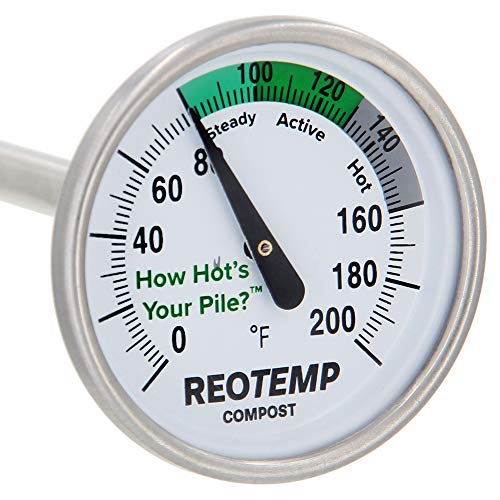
- Best for: New and everyday composters with a standard backyard pile or pallet bin.
- Brand: REOTEMP
- Model name: FG20P
- Stem: 20 inches long, 1/4 inch diameter, stainless steel construction
- Dial: Analog, hermetically sealed to prevent fogging, 3 temperature zones

- Best for: Gardeners who want Fahrenheit and Celsius on a single dial for compost and soil checks.
- Brand: Greenco
- Model name: YGP-20
- Stem: 20 inch (508 mm) long, 0.2 inch (5 mm) diameter, 304 stainless steel
- Dial: 2 inch wide, color-coded temperature ranges

- Best for: Larger backyard piles and multi-bin systems that need a longer, heavier stem.
- Brand: REOTEMP
- Model name: BP-F43
- Stem: 24 inches long, 5/16 inch diameter, stainless steel
- Dial: 2.5 inch, hermetically sealed, glass lens, color-coded zones for Steady, Active and Hot
All 4 Picks at a Glance
| Product | Specs | Action |
|---|---|---|
| REOTEMP 20 Inch Fahrenheit Backyard Compost Thermometer with Digital Composting Guide |
| Check price on Amazon |
| Compost Soil Thermometer by Greenco, 20 Inch Stem |
| Check price on Amazon |
| REOTEMP 24 Inch Fahrenheit Backyard Pro Compost Thermometer with Digital Composting Guide |
| Check price on Amazon |
 Garden Weasel 98001-A Analog Soil and Composting Dial Thermometer |
| Check price on Amazon |
Key takeaways
- Compare the best compost thermometers with long stainless stems, sealed dials and clear heat zones to track pile temperature with confidence.
A compost pile can look busy on the surface while its center stays cool, and that gap between appearance and reality is exactly what a compost thermometer settles. The real decision is not whether to measure temperature, but how deep your pile is, how wide its hot core runs, and how often you plan to check it. A stem that is too short reads the cooler outer layer and misleads every turning and watering choice that follows, while a stem matched to the pile gives a number you can act on.
This guide is for backyard composters running open piles, pallet bins, tumblers and worm systems who want a simple analog gauge they can leave in the pile or carry out on each visit. Every pick below is a dedicated compost thermometer chosen from the names and specifications printed on its Amazon product page, with attention to stem length, dial design and stated temperature range.
Quick Picks
As an Amazon Associate we earn from qualifying purchases.
| Product | Best for | Key spec from title |
|---|---|---|
| REOTEMP 20 Inch Fahrenheit Backyard Compost Thermometer with Digital Composting Guide | Everyday backyard piles and pallet bins | 20 inch stem |
| Compost Soil Thermometer by Greenco, 20 Inch Stem | Readers who want Fahrenheit and Celsius on one dial | Dual-scale dial, 40 to 180 degrees Fahrenheit |
| REOTEMP 24 Inch Fahrenheit Backyard Pro Compost Thermometer with Digital Composting Guide | Larger piles with a deep hot core | 24 inch stem |
| Garden Weasel 98001-A Analog Soil and Composting Dial Thermometer | Deep piles, windrows and soil beds | 36 inch probe |
How to Choose
Match Stem Length to Pile Depth
The stem has one job: put the sensing tip in the center of the pile, because that is where decomposition heat builds and where turning decisions should come from. The product pages for the picks below note that the temperature-sensitive portion sits in the last portion of the probe near the tip, so a stem that stops in the outer layer reports the weather more than the compost. Measure your pile from the side you will insert from, then choose a stem that reaches past the halfway point with the dial still clear of the material. Shallow bins and tumblers suit shorter stems, while wide open piles reward the longest probes.
Read the Dial: Zones, Scales and Size
Dial design decides how much thinking a reading takes. Some compost thermometers print three color-coded zones that label the pile as steady, active or hot, which suits a quick glance on a garden round. Others print numbered scales only, and a dual-scale dial shows Fahrenheit and Celsius together for gardeners who keep notes in either unit. Dial diameter matters outdoors: a larger face stays readable at arm’s length and in bright light, while a compact face is easier to store in a pocket or tool caddy. Check the listing photos for zone markings, scale layout and lens material before deciding which style fits your routine.
Check the Stated Temperature Range
Every listing states a range, and the top of that range should sit comfortably above the hottest reading you expect from an active pile. A dial that tops out too low leaves you guessing during the most active phase, exactly when readings guide turning and moisture calls. The bottom of the range matters less for compost, though a wide span also makes the same tool useful for checking soil warmth before planting. Compare the stated range on each product page rather than assuming two similar-looking dials measure the same span, because near-identical models from one brand can carry different dials.
Stem Build, Sealing and Calibration
Compost is wet, acidic and abrasive, so construction decides how many seasons a thermometer survives. Stainless steel stems resist the corrosion that pile moisture causes, and a thicker stem diameter bends less when it meets compacted material or a woody chunk. A hermetically sealed dial keeps condensation from fogging the face, a common failure on gauges left outdoors. Some models add an adjustable calibration screw, which lets you correct the needle against a known reference instead of replacing the tool. Read the product page for stem diameter, sealing language and calibration notes, since these details separate a one-season gauge from a long-term one.
The 4 Best Options
REOTEMP 20 Inch Fahrenheit Backyard Compost Thermometer with Digital Composting Guide
- Best for: New and everyday composters with a standard backyard pile or pallet bin.
- Brand: REOTEMP
- Model name: FG20P
- Stem: 20 inches long, 1/4 inch diameter, stainless steel construction
- Dial: Analog, hermetically sealed to prevent fogging, 3 temperature zones
New and everyday composters with a standard backyard pile or pallet bin.
The dial reads Fahrenheit only, so check the listing if your notes and guides are kept in Celsius.
This is the straightforward starting point for a typical backyard setup. The 20 inch stem reaches the center of most pallet bins and modest open piles, and the dial sorts the reading into three zones so a beginner can tell at a glance whether the pile is steady, active or hot. The listing includes a digital composting guide and basic instructions, which suits someone building their first pile and learning what each temperature band asks for next. The hermetically sealed dial is meant to stay clear when the thermometer lives in the pile between checks.
Compost Soil Thermometer by Greenco, 20 Inch Stem
- Best for: Gardeners who want Fahrenheit and Celsius on a single dial for compost and soil checks.
- Brand: Greenco
- Model name: YGP-20
- Stem: 20 inch (508 mm) long, 0.2 inch (5 mm) diameter, 304 stainless steel
- Dial: 2 inch wide, color-coded temperature ranges
Gardeners who want Fahrenheit and Celsius on a single dial for compost and soil checks.
The stated range tops out lower than the other picks, so confirm the 40 to 180 degree span covers your pile before ordering.
Greenco’s thermometer suits gardeners who think in both scales. Its dial prints Fahrenheit and Celsius together with color-coded ranges, so a reading needs no conversion whether your composting book comes from the US or elsewhere. The 20 inch stem is solid stainless steel with a reinforced welded bolt where the stem meets the dial, a joint that takes the strain when you push into dense material. The lens is hermetically sealed against fogging, and the listing states a water-resistant build, which fits a gauge that will be rinsed off and left near the bin rather than stored indoors.
REOTEMP 24 Inch Fahrenheit Backyard Pro Compost Thermometer with Digital Composting Guide
- Best for: Larger backyard piles and multi-bin systems that need a longer, heavier stem.
- Brand: REOTEMP
- Model name: BP-F43
- Stem: 24 inches long, 5/16 inch diameter, stainless steel
- Dial: 2.5 inch, hermetically sealed, glass lens, color-coded zones for Steady, Active and Hot
Larger backyard piles and multi-bin systems that need a longer, heavier stem.
Confirm the 24 inch length suits your storage spot, since it is awkward to keep in a small tool caddy.
The Backyard Pro steps up in both reach and sturdiness for bigger piles. Its 24 inch stem is thicker than the standard Backyard model, which helps it push through layered, compacted material without flexing, and the larger dial keeps the three activity zones readable while you stand over the pile. A glass lens covers the face, and the head is hermetically sealed so the thermometer can stay in the pile full time. An adjustable calibration screw sets it apart from fixed gauges, letting you correct the needle if readings drift. A digital composting guide is included for planning turning and feeding around the numbers.
Garden Weasel 98001-A Analog Soil and Composting Dial Thermometer
- Best for: Deep piles, windrows and gardeners who also check soil temperature in beds.
- Brand: Garden Weasel
- Model: 98001-A
- Probe: 36 inch long stainless steel stem
- Dial: 3 inch diameter with glass cover
Deep piles, windrows and gardeners who also check soil temperature in beds.
The extra length is unwieldy in small tumblers, so match it to a pile that genuinely needs the reach.
Garden Weasel’s model is the reach specialist of this group. The 36 inch probe gets the sensing tip into the middle of deep piles, long windrows and large bins where a 20 inch stem only samples the shoulder of the heap. The wide temperature span also makes it a double-duty tool for checking soil warmth across beds in spring. The 3 inch dial is the largest here, with a glass cover that keeps the face readable from standing height. Because the listing covers both soil and composting use, it suits gardeners who want one long probe for the whole plot rather than separate tools.
Which One Fits Your Situation
A Standard Backyard Pile or Pallet Bin
Most home piles heat in a core that sits well within reach of a 20 inch stem, so the REOTEMP FG20P or the Greenco thermometer covers the job without extra length to store. Pick the REOTEMP if you want the three activity zones and the included composting guide, or the Greenco if a dual Fahrenheit and Celsius dial matches the way you keep garden notes.
A Large Pile With a Deep Hot Core
Wide piles and multi-bin systems bury their hottest zone far from any edge, and a short probe reads the cool shoulder instead of the core. The 24 inch Backyard Pro reaches that center with a thicker stem that tolerates compacted layers, and its calibration screw keeps readings honest over seasons of heavy use. For windrows, step up to the Garden Weasel and its 36 inch probe.
A Tumbler or Shallow Bin
Tumblers and small bins hold a shallow charge of material, so the challenge is not reach but avoiding a stem so long it levers against the drum or lid. A 20 inch model is the longest that stays manageable here, and it should be removed before rotating the drum. Either 20 inch pick works; the Greenco’s dual-scale dial is handy if the tumbler also handles worm bedding checks.
A Worm Bin or Soil Bed on the Side
Worm systems and planting beds need gentler, shallower checks than a hot pile, and a wide-range dial earns its keep across both jobs. The Garden Weasel covers soil and compost on one listing, with a span that runs from near freezing upward, so the same probe that checks a deep pile in summer can confirm bed warmth before spring sowing without swapping tools.
Common Mistakes
- Buying a stem that is too short for the pile, so every reading comes from the cool outer layer instead of the active core.
- Leaving a thermometer in a tumbler while rotating the drum, which bends the stem and can crack the dial housing.
- Reading the dial the moment the probe goes in, rather than waiting for the needle to settle at the pile’s actual temperature.
- Judging a pile by a single insertion point instead of checking two or three spots at core depth.
- Storing the thermometer outdoors unprotected all winter, when a dry shelf keeps the lens clear and the needle true.
Frequently Asked Questions
How deep should I insert a compost thermometer?
Push the stem in until the sensing tip near the end of the probe sits in the center of the pile, since the listings note that the temperature-sensitive portion is the last stretch of the probe. For most backyard piles that means inserting most of a 20 inch stem. Take readings at two or three spots to confirm the core temperature is consistent.
How long should I wait before reading the dial?
Leave the probe in place until the needle stops moving and holds steady. Analog dials respond more slowly than a quick glance allows, and pulling the thermometer out early gives you the temperature of the outer layer the stem passed through. A steady needle, not the first number the dial swings past, is the reading worth recording and acting on.
Can I leave a compost thermometer in the pile all the time?
Models with hermetically sealed dials are built to stay in the pile, and the listings for the REOTEMP picks describe sealing that prevents fogging during continuous use. Leaving the gauge in place makes spot checks faster, but remove it before turning the pile with a fork, and pull it out of a tumbler before every rotation to protect the stem.
What temperature should my compost pile reach?
The zone dials on several picks divide the scale into steady, active and hot bands, and the active-to-hot stretch is where decomposition moves fastest. Use the zones as your working guide rather than chasing one exact number: a pile sitting in the steady band usually needs turning, moisture or fresh material, while a pile holding the hot band is working as intended.