Our Short List of 3

- Best for: Deer hunters who want the widest cut in this group and field-point-like flight to the target.
- Weight: 100 grain
- Blades: 2, rear-deploying, 0.035-inch stainless steel
- Cutting diameter: 2 inches
- Retention: Shock Collar Technology

- Best for: Hunters shooting fast crossbows who want a wide cut behind a tougher steel ferrule and slim tip.
- Weight: 100 grain
- Blades: 2, rear-deploying, 0.035-inch stainless steel
- Cutting diameter: 2 inches
- Tip: hybrid hypodermic tip

- Best for: Hunters who want to practice with a matched head and like the idea of blades opening fresh inside the animal.
- Weight: 100 grain
- Blades: 2, mechanical, opens after entry
- Cutting diameter: 1.75 inches open, 1 inch in flight
- Ferrule: aircraft-grade aluminum
All 5 Picks at a Glance
| Product | Specs | Action |
|---|---|---|
| Rage Crossbow X 100 Grain |
| Check price on Amazon |
| Rage Hypodermic Crossbow 100 Grain |
| Check price on Amazon |
| Swhacker #219 Crossbow 100 Grain |
| Check price on Amazon |
 Muzzy Trocar HBX 100 Grain |
| Check price on Amazon |
 Muzzy Trocar Crossbow 100 Grain |
| Check price on Amazon |
Key takeaways
- Compare five 100 grain crossbow hunting broadheads, from wide two-blade mechanicals to a solid fixed blade, and match one to your bow, bolts and game.
Picking a broadhead for a crossbow is really two decisions folded into one: how the blades should behave at crossbow speed, and how much cutting width your setup can afford to push through hide, rib and far-side skin. A head that flies perfectly from a vertical bow can open early or plane off course when a crossbow launches it, so crossbow-specific builds earn their place on the bolt.
This guide is for crossbow hunters who have settled on 100 grain heads and want a pack built for bolts rather than adapted from a bow line. The five picks below were chosen from their Amazon listing names and specification data: two rear-deploying Rage mechanicals, a two-stage Swhacker, a Muzzy hybrid, and a solid fixed-blade Muzzy for hunters who want no moving parts at all.
Quick Picks
As an Amazon Associate we earn from qualifying purchases.
| Product | Best for | Key spec from title |
|---|---|---|
| Rage Crossbow X 100 Grain | Widest wound channel | 2-inch cut, Shock Collar retention |
| Rage Hypodermic Crossbow 100 Grain | Hard hits on bigger deer | Hybrid hypodermic tip, stainless ferrule |
| Swhacker #219 Crossbow 100 Grain | Practicing with the hunting head | 1.75-inch cut, practice tip included |
| Muzzy Trocar HBX 100 Grain | A cut even if blades stay shut | 2 5/8-inch total cut, fixed plus expandable |
| Muzzy Trocar Crossbow 100 Grain | Bone and fixed-blade certainty | 1 3/16-inch cut, solid steel ferrule |
How to Choose
Fixed, Mechanical and Hybrid Blade Layouts
Fixed blades are always open, so they cut from the first touch and ask nothing of the impact to work. Mechanical heads fold their blades against the ferrule in flight, which keeps the profile slim and the flight close to a field point, then open on contact for a wider cut. Hybrids split the difference: a small fixed pair cuts no matter what, while larger expandable blades add width once inside. Crossbows drive bolts hard enough that any of the three can work, so the choice rests on how much you trust moving parts at your hunting ranges.
Cutting Diameter Against Penetration
Width and depth pull in opposite directions. A two-inch mechanical cut opens a large wound channel and tends to leave a heavier blood trail, but the blades spend energy as they open and sweep, which can stop a bolt short on a quartering hit or a heavy shoulder. A narrower fixed cut near 1 3/16 inches spends less energy per inch of travel and is more likely to exit, and an exit wound usually trails better than a wider entry alone. Match width to the animal: deer forgive width, while elk and big hogs reward a head that keeps driving.
Grain Weight and Bolt Balance
Most factory crossbow bolts are built around a 100 grain head, and swapping to a heavier or lighter point shifts both impact and balance. A heavier head raises front-of-center balance, which can steady flight but drops trajectory at longer range; a lighter head flattens the arc and can leave the bolt under the maker’s minimum total weight. Check the minimum bolt weight in your crossbow manual before changing grain, and confirm that your field points match the hunting heads, so practice sessions predict hunting impact instead of approximating it.
Blade Retention at Crossbow Speeds
A crossbow launch is abrupt, and a mechanical blade that creeps open in the first inches of travel ruins the shot before it begins. Makers answer with shock collars that fracture on impact, shrink bands, set screws, or tab locks built into the pivot. Each system works when it is fresh and fitted as directed, and each fails when it is reused, stretched or swapped for the wrong strength. Fast bows above roughly 400 feet per second need the retention the maker specifies for high-energy setups, so read the pack instructions rather than trusting a collar left over from last season.
The 5 Best Options
Rage Crossbow X 100 Grain
- Best for: Deer hunters who want the widest cut in this group and field-point-like flight to the target.
- Weight: 100 grain
- Blades: 2, rear-deploying, 0.035-inch stainless steel
- Cutting diameter: 2 inches
- Retention: Shock Collar Technology
Deer hunters who want the widest cut in this group and field-point-like flight to the target.
Collars are single-use, so budget for spares, and confirm the collar type matches your bow’s speed.
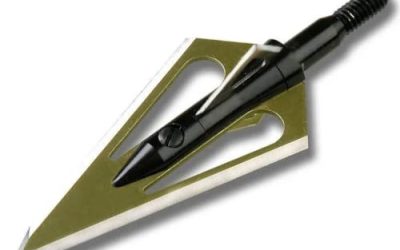
The Crossbow X is Rage’s bolt-specific mechanical, built around the rear-deploying SlipCam layout the brand is known for. Its two blades ride folded along an aluminum ferrule in flight, held by a shock collar tuned for crossbow launches, then swing back and open to a full two-inch cut on contact. Ferrule Alignment Technology keeps the head concentric with the bolt for cleaner flight. This is the pick for deer hunters who put wound channel and blood trail first and are willing to manage collars and replacement blades as part of the routine.
Watch out for: Collars are single-use, so budget for spares, and confirm the collar type matches your bow’s speed.
Rage Hypodermic Crossbow 100 Grain
- Best for: Hunters shooting fast crossbows who want a wide cut behind a tougher steel ferrule and slim tip.
- Weight: 100 grain
- Blades: 2, rear-deploying, 0.035-inch stainless steel
- Cutting diameter: 2 inches
- Tip: hybrid hypodermic tip
Hunters shooting fast crossbows who want a wide cut behind a tougher steel ferrule and slim tip.
The needle-style tip is less forgiving on steep quartering angles than a chisel point, so favor broadside shots.
The Hypodermic Crossbow keeps the same two-blade, two-inch formula but rebuilds the front end for harder hits. A slender hybrid hypodermic tip leads the head, shaped to slip through hide with little resistance, and the ferrule is stainless steel rather than aluminum, so it holds up better when a shot lands on rib or shoulder. A high-energy shock collar handles blade retention for fast bows. Hunters who like the wide Rage cut but worry about an aluminum body bending on bone will find this the sturdier route to the same wound channel.
Watch out for: The needle-style tip is less forgiving on steep quartering angles than a chisel point, so favor broadside shots.
Swhacker #219 Crossbow 100 Grain
- Best for: Hunters who want to practice with a matched head and like the idea of blades opening fresh inside the animal.
- Weight: 100 grain
- Blades: 2, mechanical, opens after entry
- Cutting diameter: 1.75 inches open, 1 inch in flight
- Ferrule: aircraft-grade aluminum
Hunters who want to practice with a matched head and like the idea of blades opening fresh inside the animal.
The blades depend on the entry stage working first, so very light hits at long range may not open the full cut.
The #219 takes a two-stage route no other head here uses. Its wing blades and hardened tip punch the entry hole first, and the main blades stay closed until they are inside the animal, then open to 1.75 inches and cut fresh tissue that the entry never dulled them on. In flight the head is only one inch wide, so it tracks close to a field point. A practice tip comes in the pack, which lets you confirm impact with a head of the same weight and profile instead of sacrificing a hunting blade set to the target.
Watch out for: The blades depend on the entry stage working first, so very light hits at long range may not open the full cut.
Muzzy Trocar HBX 100 Grain
- Best for: Hunters torn between fixed reliability and mechanical width who want both in a single crossbow head.
- Weight: 100 grain
- Blades: 4 (2 fixed, 2 expandable), 0.035-inch stainless steel
- Cutting diameter: 1 inch fixed, 1 5/8 inches expandable, 2 5/8 inches total
- Ferrule: steel, chisel tip
Hunters torn between fixed reliability and mechanical width who want both in a single crossbow head.
The expandable blades pivot rather than lock open, so they rely on tissue contact to stay fully deployed.
The HBX hedges the fixed-versus-mechanical argument inside one head. Two fixed blades are always open and cut a one-inch path even if nothing else moves, while two expandable blades fold against the steel ferrule in flight and open to 1 5/8 inches on impact, for a combined 2 5/8 inches of cutting width. The chisel tip and steel ferrule give it more bone tolerance than most wide mechanicals. It suits a hunter who wants a large total cut but refuses to bet the whole shot on a deployment event.
Watch out for: The expandable blades pivot rather than lock open, so they rely on tissue contact to stay fully deployed.
Muzzy Trocar Crossbow 100 Grain
- Best for: Hunters who want fixed-blade certainty and deep driving hits on deer and heavier game alike.
- Weight: 100 grain
- Blades: 3 fixed, replaceable, 0.035-inch stainless steel
- Cutting diameter: 1 3/16 inches
- Ferrule: solid steel, one piece
Hunters who want fixed-blade certainty and deep driving hits on deer and heavier game alike.
The narrower cut can leave a lighter blood trail on marginal hits, so shot placement matters more here.
The Trocar Crossbow is the fixed-blade anchor of this set: three replaceable blades locked into a solid steel ferrule behind a hardened trocar tip, with nothing to deploy, jam or inspect beyond edge condition. The blades sit offset on a right-helix layout that adds spin and steadies flight, and the 1 3/16 inch cut is modest by design, spending the bolt’s energy on depth rather than width. For hunters who shoot through brush lanes, hunt in freezing rain, or simply distrust moving parts, this is the head that behaves the same on every shot.
Watch out for: The narrower cut can leave a lighter blood trail on marginal hits, so shot placement matters more here.
Which One Fits Your Situation
Hunting Deer From a Stand or Blind
Most stand shots land inside thirty yards on deer-sized game, which is mechanical country. The Crossbow X and Hypodermic Crossbow both open a two-inch cut that shortens trails in thick cover, and both fly close enough to field points that a single sight-in covers practice and hunting. Pick the Hypodermic if your shots often meet shoulder, the Crossbow X if they usually land behind it.
Shooting a Fast Crossbow
Above roughly 400 feet per second, retention and ferrule strength decide whether a mechanical survives its own launch. The Hypodermic Crossbow pairs a steel ferrule with a high-energy collar made for that class of bow. The Trocar HBX also belongs here, since its fixed blades keep cutting even if the expandable pair opens late. Whichever you choose, fire one head into a broadhead target before the season rather than trusting the first hunting shot.
Hunting Elk, Moose or Big Hogs
Heavy-boned game punishes wide, thin blades and rewards depth. The fixed Trocar Crossbow is the natural pick, with its solid steel ferrule, bone-splitting tip and modest cut that keeps the bolt driving. The HBX is the compromise: its fixed pair and chisel tip open the hole honestly, and the expandable blades add width once the head is inside. Keep ranges conservative and angles close to broadside with either head.
Practicing With Your Hunting Setup
If you like to confirm impact with the exact profile you hunt with, the Swhacker #219 is built for you, since a practice tip rides in the pack. Mechanical shooters using the Rage heads should dedicate one head from the pack to target duty and hunt with the other two, because foam dulls edges and spends collars. Fixed-blade shooters can shoot the Trocar, then swap in a fresh blade set before the hunt.
Common Mistakes
- Reusing a shock collar or band that already held a blade through one launch, then blaming the head when it opens in flight.
- Sight-in work done only with field points, without ever confirming that the hunting heads land in the same place.
- Mixing 100 grain heads with bolts built and tuned around a different point weight, shifting both impact and total bolt weight.
- Choosing the widest mechanical cut for a slow or short-draw setup, then watching the bolt stop short on a quartering hit.
- Carrying loose heads in a pack pocket, where edges dull against each other and cut fingers during a hurried grab.
Frequently Asked Questions
Can I shoot compound bow broadheads from a crossbow?
Threads match, so they screw on, but the head may not survive or behave at crossbow speeds. Vertical-bow mechanicals often use retention tuned for a gentler launch and can open in flight from a crossbow, and light ferrules can bend on the harder hit. Crossbow-specific versions use stronger retention and bodies, which is why every head in this guide is sold for crossbow use.
Do mechanical broadheads fly like field points?
Usually closer than fixed blades do, because the folded profile catches little air. Closer is not identical, though: collar drag, blade alignment and bolt spine can still shift impact at longer range. Confirm with one dedicated head into a broadhead-rated target at your longest hunting distance, and hunt with fresh heads from the same pack.
How many broadheads should I carry?
Three is the working minimum: two for game and one reserved for a follow-up shot or an end-of-day practice check. A three-pack covers exactly that, which leaves no spare for a head damaged on a miss into soil or rock. Hunters who shoot mechanicals often carry a second pack so a spent collar or bent blade never shortens a trip.
Are mechanical broadheads lawful for crossbow hunting?
Most states allow them, but some set a minimum cutting diameter, a few restrict expandable designs for certain seasons or species, and barbed-blade rules vary. Fixed heads like the Trocar Crossbow clear nearly every rule set. Regulations change between seasons, so read your current state rules before ordering, especially if you hunt across state lines.