Our Short List of 3

- Best for: Families who want one dependable three-burner grill for most nights of the week.
- 3 stainless steel burners, 30,000 BTU-per-hour input
- 424 sq in primary cooking area, 105 sq in warming rack, 529 sq in total
- Porcelain-enameled cast-iron cooking grates
- GS4 grilling system with Infinity ignition

- Best for: Couples and small families with limited patio space who still want cast-iron grates.
- 2 burners with Snap-Jet ignition, one per burner
- 360 sq in primary cooking area, 90 sq in warming rack, 450 sq in total
- Porcelain-enameled cast-iron cooking grates
- Enclosed cabinet that hides the propane tank
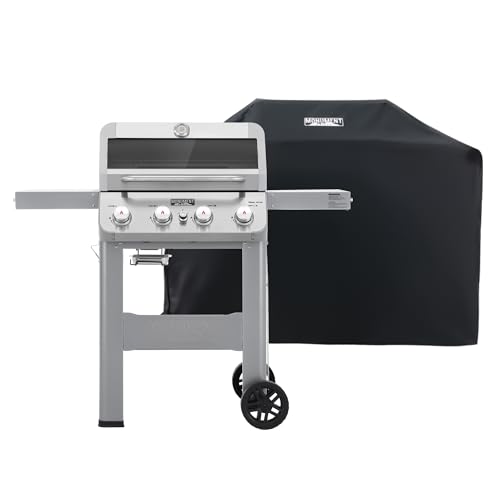
- Best for: Hosts who grill for groups and want to check food without opening the lid.
- 4 stainless steel burners, 36,000 BTU-per-hour input
- 405 sq in primary cooking area, 165 sq in warming rack, 570 sq in total
- Porcelain-enameled cast-iron cooking grates
- ClearView glass window in the lid
All 5 Picks at a Glance
| Product | Specs | Action |
|---|---|---|
| Weber Spirit II E-310 |
| Check price on Amazon |
| Weber Spirit E-210 |
| Check price on Amazon |
| Monument Mesa400MF |
| Check price on Amazon |
 Nexgrill 720-0830H |
| Check price on Amazon |
 Weber Genesis E-325 |
| Check price on Amazon |
Key takeaways
- Five gas grills compared on burners, cooking area and grate material, from a compact two-burner Weber to a four-burner Monument with a viewing window.
The real decision with a gas grill is not the headline heat number printed on the box. It is whether the grate space, burner layout and build materials match how you actually cook: weeknight burgers for four, or a full patio of guests with sides going at the same time. Pick the wrong size and you either crowd every cookout or heat a huge firebox for two chicken breasts.
This guide is for backyard cooks who grill with propane and want a cart-style grill that stays outside year-round, through summer heat and winter storage alike. Every model below was chosen from its Amazon listing, using the burner count, cooking area and grate material stated on that page, so you can match the numbers here against the listing before you order.
Quick Picks
As an Amazon Associate we earn from qualifying purchases
| Product | Best for | Key spec from title |
|---|---|---|
| Weber Spirit II E-310 | Everyday family grilling | 3 burners, 30,000 BTU, 529 sq in total area |
| Weber Spirit E-210 | Small patios and couples | 2 burners, 450 sq in total cooking area |
| Monument Mesa400MF | Watching food without lifting the lid | 4 burners, 36,000 BTU, ClearView window lid |
| Nexgrill 720-0830H | Big gatherings with sides on the go | 4 main burners plus side burner, 626 sq in |
| Weber Genesis E-325 | Hard searing and larger groups | 3 burners plus sear zone, 641 sq in total |
How to Choose
Burner Count and Heat Zones
Burners decide how many heat zones you can run at once. Two burners suit direct grilling for a few people, but leave little room for an indirect zone where food finishes away from the flame. Three burners let you sear on one side and hold finished food on a cooler side. Four burners add a genuine low zone for ribs or whole chickens. Count burners against your typical cook, not the biggest party you host once a year, because every extra burner is extra width, weight and cleaning after each session.
Primary Area Versus Total Area
Listings advertise total cooking area, which adds the warming rack to the main grate. The rack is useful for buns and resting meat, but it is not where burgers sear. Compare primary grate area first: roughly 360 to 430 square inches handles family dinners, while 460 square inches and up gives elbow room for parties. Then treat the warming rack as a bonus. A grill that looks huge on paper can feel small if most of that space sits on the upper rack, so check the split stated in the product details.
Grate and Burner Materials
Porcelain-enameled cast iron is the grate material to look for in this class: it holds heat for strong sear marks and resists rust while the coating stays intact. Plain stainless grates are lighter and easier to scrub but leave paler marks. Burner tubes matter just as much, because they sit in dripping grease and heat cycles. Stainless steel burners outlast aluminized steel, and a grease tray that slides out from the front makes the weekly clean far more likely to actually happen.
Ignition, Lids and Useful Extras
Reliable ignition sounds minor until a burner refuses to light with guests waiting. Push-button electronic ignition and per-burner ignition systems both beat match lighting. A built-in lid thermometer helps you hold temperature for indirect cooking. Side burners earn their space only if you genuinely cook sauces or corn outside; otherwise that width is wasted. A glass viewing window, like the one on the Monument below, lets you check color without dumping heat, but it needs a wipe after greasy cooks to stay clear.
The 5 Best Options
Weber Spirit II E-310
- Best for: Families who want one dependable three-burner grill for most nights of the week.
- 3 stainless steel burners, 30,000 BTU-per-hour input
- 424 sq in primary cooking area, 105 sq in warming rack, 529 sq in total
- Porcelain-enameled cast-iron cooking grates
- GS4 grilling system with Infinity ignition
Families who want one dependable three-burner grill for most nights of the week.
The open cart leaves the propane tank visible, and there is no side burner for pots or sauces.
The Spirit II E-310 is the steady middle of this lineup: three burners under a family-sized grate, with Weber’s GS4 system tying together the ignition, burners and grease management. It fits households that grill several nights a week and want two or three heat zones without a grill that dominates the patio. The open cart keeps the tank easy to swap, and the porcelain-enameled cast-iron grates hold heat well for weeknight steaks, chicken thighs and vegetables cooked side by side.
Weber Spirit E-210
- Best for: Couples and small families with limited patio space who still want cast-iron grates.
- 2 burners with Snap-Jet ignition, one per burner
- 360 sq in primary cooking area, 90 sq in warming rack, 450 sq in total
- Porcelain-enameled cast-iron cooking grates
- Enclosed cabinet that hides the propane tank
Couples and small families with limited patio space who still want cast-iron grates.
Two burners leave little room for a true indirect zone, and the propane tank is sold separately.
This is the current two-burner Spirit, built for smaller patios, balconies and households of two to four. Snap-Jet ignition lights each burner individually with one hand, which makes short cooks feel effortless, and the enclosed cabinet hides the propane tank for a tidier look than open-cart models. The 360 square inch main grate still fits a full family dinner of burgers or chicken pieces, while the warming rack holds buns and finished food above the heat.
Monument Mesa400MF
- Best for: Hosts who grill for groups and want to check food without opening the lid.
- 4 stainless steel burners, 36,000 BTU-per-hour input
- 405 sq in primary cooking area, 165 sq in warming rack, 570 sq in total
- Porcelain-enameled cast-iron cooking grates
- ClearView glass window in the lid
Hosts who grill for groups and want to check food without opening the lid.
The window needs regular wiping after greasy cooks, or it clouds over and loses its point.
The Mesa400MF stands out for its ClearView lid: a glass window lets you watch color develop without lifting the lid and losing heat. Four burners spread 36,000 BTU across a 405 square inch primary grate, giving you a real low zone for slower cooks alongside direct heat. This listing bundles a grill cover with the grill, and one side shelf folds down when storage space is tight. It suits cooks who entertain often and like to keep an eye on the food.
Nexgrill 720-0830H
- Best for: Large families and party hosts who cook mains and sides at the same time.
- 4 main burners at 12,000 BTU each, plus a 12,000 BTU side burner
- 60,000 BTU total output across all burners
- 462 sq in primary cooking area, 164 sq in warming rack, 626 sq in total
- Stainless steel cooking grates
Large families and party hosts who cook mains and sides at the same time.
The 60,000 BTU headline includes the side burner, and the assembled grill is wide, so measure your space first.
The 720-0830H is the biggest grill here, with four main burners, a separate side burner and 626 square inches of total cooking space. That layout suits large gatherings where mains, corn and a sauce all need heat at once. Each main burner is rated at 12,000 BTU, and the side burner adds the same again for a pot or skillet. Stainless steel grates and a double-door cabinet give it a built-in look on a cart, though the footprint demands a generous patio.
Weber Genesis E-325
- Best for: Frequent grillers who want strong searing power and the most main-grate space here.
- 3 PureBlu burners, 39,000 BTU-per-hour main input
- Dedicated Sear Zone burner at 13,000 BTU
- 513 sq in primary cooking area, 128 sq in warming rack, 641 sq in total
- Porcelain-enameled cast-iron cooking grates
Frequent grillers who want strong searing power and the most main-grate space here.
It is a heavy grill at around 162 pounds, so plan for two people during assembly and positioning.
The Genesis E-325 is the step-up pick, with three PureBlu burners and a dedicated Sear Zone burner that adds 13,000 BTU of focused heat for steaks. The 513 square inch primary grate is the largest main cooking surface in this guide, and the porcelain-enameled cast-iron grates work with the Weber Crafted frame system if you later add specialty inserts. It is a heavy, solid cart grill aimed at people who grill often and cook for a crowd.
Which One Fits Your Situation
Weeknight Dinners for Two to Four People
Choose the Weber Spirit E-210. Its two burners heat a smaller firebox quickly, the 360 square inch grate covers a family dinner without wasted space, and the cabinet keeps a small patio looking tidy. Snap-Jet ignition makes short cooks painless on busy evenings, and the warming rack handles buns or garlic bread while the main course finishes below.
A Family Grill That Handles Almost Everything
Choose the Weber Spirit II E-310. Three burners give you a sear zone and a cooler holding zone in one cook, and 424 square inches of primary grate fits weekday dinners and modest weekend gatherings without the footprint of the largest models here. It is the safest single answer if you only plan to own one grill.
Weekend Parties With Sides Cooking Alongside
Choose the Nexgrill 720-0830H. Four main burners and a side burner mean burgers, corn and a pan of beans can all cook at once, and the 626 square inch total area keeps finished food warm while the next batch goes on. The cabinet below also swallows the tank and leaves room for tools and a spare grate brush.
Steak Nights Where Sear Marks Matter
Choose the Weber Genesis E-325. The dedicated Sear Zone burner concentrates extra heat where steaks land first, and the big cast-iron grate holds that heat between batches. The Monument Mesa400MF is the alternative if you would rather watch the sear develop through the window lid, checking color without lifting the lid and losing the heat you built up.
Common Mistakes
- Comparing total cooking area instead of the primary grate, even though the warming rack cannot sear food.
- Adding a side burner or sear burner into the headline BTU figure when comparing one grill against another.
- Overlooking grate material, then fighting rust or weak sear marks a season later.
- Buying a four-burner grill that is too wide for the patio, gate or balcony it has to fit through.
- Ordering the natural gas version when the patio only has a propane tank, or the other way around.
Frequently Asked Questions
How many burners do I need for a family of five?
Three burners is the comfortable point for most families of five. You get enough grate space for a full dinner plus a cooler zone for food that finishes early. Two burners can work if you cook in batches, while four burners mainly help when guests regularly join.
Is a side burner worth having?
Only if you will actually use it for sauces, side dishes or boiling corn outdoors. It adds width, another burner to clean and another ignition point to maintain. If your sides always cook in the kitchen, spend the space and attention on a larger main grate instead.
What is the difference between primary and total cooking area?
Primary area is the main grate over the burners, where searing happens. Total area adds the warming rack, which holds finished food and buns but cooks gently at best. When two grills claim similar totals, compare the primary figures to see which one really fits more food.
Should I choose liquid propane or natural gas?
Propane is the flexible default: the grill rolls anywhere and runs from a refillable tank. Natural gas suits a fixed spot with an existing gas line and removes tank swaps, but the grill stays tethered to that line. Match the version to your patio before ordering, because conversions are not always supported.