Key takeaways
- Find the best home theater soundbars for movies, music and game nights, from compact two-channel bars to full Dolby Atmos systems with wireless subwoofers.
A home theater soundbar is the fastest way to turn thin, flat TV audio into sound that fills the room. Built-in TV speakers point down or backward, squeeze dialogue into a narrow band, and run out of room for bass long before a movie gets loud. A soundbar puts dedicated drivers in front of the room, adds a center channel for voices, and, in the systems below, brings in a subwoofer for the low end that TV speakers cannot reach. The result is dialogue you can follow without subtitles, effects that move across the room, and music that sounds like it comes from real speakers rather than a panel.
The best home theater soundbar for most rooms is the Samsung HW-Q800C, because its 5.1.2-channel layout pairs a wide bar with an 8-inch wireless subwoofer, decodes Dolby Atmos and DTS:X, and adds room calibration that tunes the sound to the space. Buyers who want strong Atmos sound at a lower tier should look at the Sony HT-A3000, which keeps the same immersive formats and adds optional rear speakers later. Buyers on a tighter budget get the clearest value from the Samsung HW-B550F, a 2.1-channel bar with a wireless subwoofer, while the Sony HT-S100F suits small rooms and desks where a single compact bar is enough. The LG S75Q sits between the budget and premium picks with true up-firing height channels and a wireless subwoofer in the box.
As an Amazon Associate, we earn from qualifying purchases.
Table of Contents
- How to Choose a Home Theater Soundbar
- Quick Comparison
- 1. Samsung HW-Q800C 5.1.2 Soundbar System
- 2. Sony HT-A3000 3.1 Soundbar
- 3. LG S75Q 3.1.2 Soundbar
- 4. Samsung HW-B550F 2.1 Soundbar with Wireless Subwoofer
- 5. Sony HT-S100F 2.0 Soundbar
- Before You Buy: Room, TV and Connection Checks
- Frequently Asked Questions
- Conclusion
- Product and ASIN Reference
How to Choose a Home Theater Soundbar
Start with the room, not the spec sheet. A soundbar that sounds full in a bedroom can sound thin in an open living room, because sound loses energy as it travels and bass spreads into extra volume instead of building pressure at the sofa. Measure the distance from the TV to the main seats and the width of the TV stand. A bar wider than the stand looks wrong and can block the TV sensor, while a bar much narrower than a large TV leaves the soundstage smaller than the picture. The five systems in this guide range from a compact 35.4-inch bar to a 43.75-inch bar, so match the width to the TV first and the channel count second.
Channel count is the shorthand for how many directions sound comes from. The first number counts the main channels across the front, the second counts the subwoofer, and the third counts height channels that fire upward and bounce off the ceiling. A 2.0-channel bar has left and right only, a 2.1-channel bar adds a subwoofer, a 3.1-channel bar adds a dedicated center channel for dialogue, and a 5.1.2-channel system adds surround and height channels for effects that move overhead. Height channels need a flat ceiling at a normal height to work well. Vaulted, beamed, or very high ceilings scatter the bounce, so buyers with those rooms get more from a system with real rear speakers than from virtual height effects.
The subwoofer decision matters as much as the bar. A built-in subwoofer keeps everything in one slim box and suits small rooms, desks, and bedrooms. A wireless subwoofer adds real low-end weight for movie explosions, deep music bass, and the rumble of a game world, and it can sit anywhere in the room with a power outlet nearby. Three of the five picks below ship with a wireless subwoofer, one builds dual subwoofers into the bar, and one relies on a bass reflex design with no separate subwoofer. If the room is shared with neighbors or sleeping children, check for a night mode that tames loud peaks and a dialogue mode that lifts voices without raising overall volume.
Connections decide whether the bar works with the rest of the system. HDMI eARC is the connection to look for, because it carries the highest-quality audio formats, including Dolby Atmos, from the TV back to the bar over a single cable, and it lets the TV remote control the bar volume. Every pick in this guide has HDMI ARC or eARC. Optical digital input is the fallback for older TVs, and it carries standard surround formats but not Atmos. Bluetooth streams music from a phone, while Wi-Fi adds multi-room audio, voice assistants, and streaming services built into the bar. Check the TV for an HDMI eARC port before buying an Atmos bar, because without it the bar falls back to lesser formats.
Dolby Atmos and DTS:X are the two immersive formats that matter for movies. Atmos adds height information to the soundtrack, so rain sounds like it falls from above and a helicopter passes overhead. DTS:X does the same job with a different layout and is common on Blu-ray discs. A bar that decodes both covers streaming services and discs. Virtual surround processing, such as DTS Virtual:X and Sony S-Force Pro Front Surround, simulates surround sound from a front bar alone. It helps in rooms where rear speakers are impractical, but it cannot match physical rear speakers for effects that come from behind the seats.
Room calibration is the feature that separates good bars from great ones in real rooms. Samsung SpaceFit Sound Pro measures the room with a microphone and adjusts the output, while Sony room tuning works with optional rear speakers to map the space. These systems help when the room is open-plan, has hard floors, or places the sofa against a wall. Dialogue clarity features also deserve attention. A dedicated center channel is the most reliable way to keep voices clear, followed by voice enhancement modes that lift the vocal range. Bars without a center channel depend on processing to keep dialogue forward, which works well at moderate volume and less well when effects get loud.
Brand matching helps when the TV and the bar come from the same maker. Samsung Q-Symphony lets a Samsung TV and a Samsung bar play together, LG Synergy features link an LG bar with an LG TV, and Sony bars pair with Sony TVs for on-screen settings and shared acoustic tuning. None of these links are required, and every bar in this guide works with any TV brand over HDMI eARC, but a matched pair removes setup friction and adds features that a mixed pair cannot offer.
Size the bar to the viewing distance as well as the TV. In a room where the sofa sits eight to ten feet from the screen, a 2.1-channel or 3.1-channel system fills the space comfortably. Beyond twelve feet, or in a room open to a kitchen or hallway, a 5.1.2-channel system with a large subwoofer holds its sound better, because it has more drivers, more amplifier output, and a subwoofer that can pressurize a larger volume. The guide below orders the picks from the most capable system to the most compact, so readers can start at the top for a dedicated theater room and work down for a bedroom or apartment living room.
Music matters too, because a home theater bar spends most of its life playing TV shows and music between movies. Bars with wide frequency response and dedicated tweeters handle vocals and acoustic instruments better than bars that tune everything for explosions. High-resolution audio support matters for listeners who stream lossless tracks, and a music mode that widens the soundstage without adding artificial echo keeps stereo recordings natural. The picks below cover both jobs, with music modes listed in each product section.
Finally, plan the placement before the purchase. A bar sits on the stand in front of the TV or mounts on the wall below it, and the height drivers need a clear path to the ceiling. A subwoofer needs a power outlet and a few inches of clearance from the wall, and a rear speaker kit needs power at the back of the room. Measure the stand depth, check the outlet locations, and confirm the bar does not block the TV infrared sensor or the bottom edge of the screen. A few minutes with a tape measure prevents the most common home theater disappointment, which is a great bar installed in a spot where it cannot do its job.
Quick Comparison
| Product | Channels | Subwoofer | Dolby Atmos | TV Connection | Tier |
|---|---|---|---|---|---|
| Samsung HW-Q800C | 5.1.2 | Wireless, 8 in | Yes | HDMI eARC, optical | Premium |
| Sony HT-A3000 | 3.1 | Built in, dual | Yes | HDMI eARC, optical | Mid-range |
| LG S75Q | 3.1.2 | Wireless | Yes | HDMI eARC, optical | Mid-range |
| Samsung HW-B550F | 2.1 | Wireless | No, DTS Virtual:X | HDMI ARC, optical | Budget |
| Sony HT-S100F | 2.0 | Built in, bass reflex | No | HDMI ARC, optical | Budget |
1. Samsung HW-Q800C 5.1.2 Soundbar System

The Samsung HW-Q800C is the most complete home theater soundbar in this guide, and it earns the top spot by covering every part of the movie experience in one box. Its 5.1.2-channel layout uses a ten-driver array in the bar, two up-firing height drivers, and an 8-inch wireless subwoofer, so dialogue stays anchored to the screen, effects move across the front and overhead, and bass lands with real weight. It decodes Dolby Atmos and DTS:X, which covers the immersive formats used by streaming services and Blu-ray discs, and it adds Samsung Q-Symphony for owners of compatible Samsung TVs, letting the TV speakers and the bar play together for a wider front stage.
SpaceFit Sound Pro is the feature that makes the HW-Q800C work in rooms that are not ideal theater spaces. It measures the room and adjusts the output, which helps in open-plan living rooms, rooms with hard floors, and seating placed against a wall. Adaptive Sound analyzes the content and adjusts the balance scene by scene, so quiet dialogue stays audible and sudden effects do not overwhelm it. Active Voice Amplifier lifts voices further when background noise rises, which helps in rooms near a kitchen or a busy street. Game Mode Pro tunes the sound for gaming, with directional cues that help players locate sounds in the game world, and the bar supports wireless Dolby Atmos from compatible Samsung TVs, which removes a cable from the setup.
The bar measures 43.75 inches wide and weighs 11.2 pounds, so it suits TVs of 55 inches and larger and needs a stand with enough depth to hold it. The wireless subwoofer weighs 21.6 pounds and can sit anywhere with a power outlet, which gives placement flexibility that a wired subwoofer cannot match. HDMI eARC carries the full-quality audio signal from the TV, and the HDMI 2.1 connection supports 4K video passthrough. Optical digital input covers older TVs, and Bluetooth and Wi-Fi handle music streaming, Apple AirPlay 2, and Alexa built in for voice control. The bar is wall-mountable, and a wall-mount kit ships in the box.
For movie nights, the HW-Q800C delivers the three things that define a home theater: a wide front stage, height effects, and bass that the listener feels as well as hears. The height drivers bounce sound off the ceiling for rain, aircraft, and crowd noise, while the subwoofer handles the low end that makes explosions and orchestral scores feel large. The system also accepts the optional SWA-9500S wireless rear speaker kit, which turns the 5.1.2-channel layout into a fuller surround setup for buyers who later decide they want sound from behind the seats. That upgrade path matters, because it means the bar grows with the room instead of needing replacement.
Music playback benefits from the same driver count. The bar handles stereo recordings with a wide stage, and the subwoofer adds depth to bass-heavy tracks without muddying the midrange. Wi-Fi streaming supports the main services, and Bluetooth covers everything else from a phone or tablet. The bar works with the SmartThings app for setup and control, and the included remote covers the daily controls without opening an app.
The HW-Q800C suits a dedicated theater room or a large living room where the sofa sits well back from the screen. It is the pick for buyers who want the fullest sound in this guide and who have the stand space and the budget tier to match. Buyers with smaller rooms should look further down the list, because the bar width and the subwoofer output suit larger spaces best.
Specs
- Channels: 5.1.2 with two up-firing height drivers
- Drivers: 10-driver array in the bar
- Subwoofer: wireless, 8 in driver
- Surround formats: Dolby Atmos, DTS:X
- Room tuning: SpaceFit Sound Pro, Adaptive Sound, Active Voice Amplifier
- TV features: Q-Symphony, Game Mode Pro, Alexa built in
- Connections: HDMI eARC, optical digital input, Bluetooth, Wi-Fi, Apple AirPlay 2
- Video passthrough: 4K via HDMI
- Bar dimensions: 43.75 in wide
- Bar weight: 11.2 lb
- Subwoofer weight: 21.6 lb
- Optional upgrade: SWA-9500S wireless rear speaker kit
- Wall-mountable: yes, kit included
2. Sony HT-A3000 3.1 Soundbar

The Sony HT-A3000 brings true Dolby Atmos sound to rooms that cannot fit a wide flagship bar. Its 3.1-channel layout uses three front speakers, including a dedicated center speaker for dialogue, plus a built-in dual subwoofer, so the whole system lives in a single bar with no separate subwoofer box to place. That single-bar design suits apartments, bedrooms, and living rooms where floor space is tight, while the Atmos and DTS:X decoding keeps the sound format current for streaming movies and discs.
The dedicated center channel is the most important part of the HT-A3000 for everyday viewing. Dialogue sits in its own speaker instead of sharing drivers with music and effects, so voices stay clear when a scene gets busy. The built-in dual subwoofer adds low-end weight that a bar without a subwoofer cannot reach, giving movie scores and action scenes a fuller foundation. Vertical Surround Engine and S-Force Pro Front Surround create height and surround effects from the front bar, so rain and overhead sounds have a sense of place even without ceiling speakers. The 360 Spatial Sound Mapping feature activates when optional Sony rear speakers are added, measuring the room and placing sound around the listener.
The HT-A3000 measures 37.4 inches wide, which fits TVs of 50 inches and larger and sits comfortably on a standard media stand. Total output is 250 watts, and the bar connects over HDMI eARC for full-quality Atmos audio, with optical digital input as a fallback. Wi-Fi and Bluetooth cover music streaming, Chromecast built in and Apple AirPlay 2 handle casting from phones and tablets, and Spotify Connect plays directly from the app. The bar works with Alexa and Google Assistant for voice control, and the on-screen menu appears on Sony TVs for easy settings changes.
Upgrade options give the HT-A3000 a longer life than most single bars. The optional SA-SW3 and SA-SW5 wireless subwoofers add deeper bass for larger rooms, and the optional SA-RS3S and SA-RS5 wireless rear speakers add true surround sound and enable the full 360 Spatial Sound Mapping experience. Buyers can start with the bar alone and add pieces as the room and the budget allow, instead of replacing the whole system when they want more.
For music, the bar supports high-resolution audio and plays stereo recordings with a clean, open stage. The dedicated center speaker keeps vocals forward, and the built-in subwoofers add warmth to acoustic bass and electronic tracks without overwhelming the mix. The bar suits listeners who want one elegant box under the TV that handles movies, shows, and music without extra boxes or cables.
The HT-A3000 is the pick for buyers who want Dolby Atmos and a dedicated center channel in a single bar, with a clear upgrade path to full surround sound later. It fits mid-size rooms best, and it is the strongest choice in this guide for buyers who value dialogue clarity above raw bass output.
Specs
- Channels: 3.1 with dedicated center speaker
- Subwoofer: built in, dual subwoofers
- Surround formats: Dolby Atmos, DTS:X, 360 Spatial Sound Mapping with optional rear speakers
- Surround processing: Vertical Surround Engine, S-Force Pro Front Surround
- Total output: 250 watts
- Connections: HDMI eARC, optical digital input, USB, Bluetooth, Wi-Fi
- Streaming: Chromecast built in, Apple AirPlay 2, Spotify Connect
- Voice control: works with Alexa and Google Assistant
- Bar width: 37.4 in
- Optional upgrades: SA-SW3 and SA-SW5 wireless subwoofers, SA-RS3S and SA-RS5 wireless rear speakers
- High-resolution audio: supported
3. LG S75Q 3.1.2 Soundbar
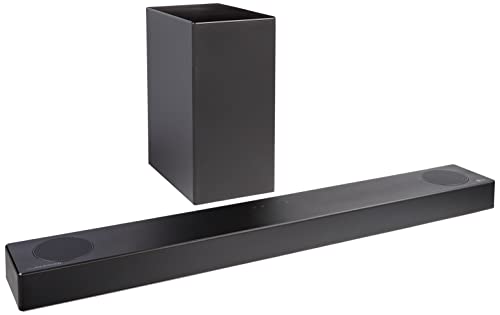
The LG S75Q is the most affordable way in this guide to get true up-firing height channels, and it pairs them with a wireless subwoofer for a complete 3.1.2-channel system. Its layout includes left, center, and right front channels, two height channels, and a wireless subwoofer, so the bar delivers dialogue clarity, overhead effects, and bass from one package. Dolby Atmos and DTS:X decoding cover the immersive formats, and Meridian Audio technology tunes the sound for a wider, more detailed stage.
Total output is 380 watts, which gives the S75Q enough headroom for mid-size living rooms without strain. The wireless subwoofer handles the low end, so the bar itself can focus on voices, music, and effects. High-resolution audio support suits listeners who stream lossless tracks, and the bar handles both movies and music without needing a mode change for each. The S75Q measures 37.4 inches wide, which matches TVs of 50 inches and larger and fits a standard media stand.
HDMI eARC carries full-quality Atmos audio from the TV, and the bar supports 4K passthrough with Dolby Vision, so a streaming box or console can connect through the bar without losing video quality. Optical digital input covers older TVs, Bluetooth streams music from a phone, and Wi-Fi adds voice assistant support and multi-room options. LG Synergy features link the bar with compatible LG TVs for shared settings and TV Sound Mode Share, which keeps the TV and the bar tuned together.
The S75Q suits buyers who want height effects and a wireless subwoofer without moving to the premium tier. It fills a mid-size room well, and the up-firing drivers add the overhead dimension that makes Atmos movies feel different from standard surround. The bar works with any TV brand over HDMI eARC, so LG TV ownership is a bonus rather than a requirement.
For everyday viewing, the dedicated center channel keeps dialogue clear, and the wireless subwoofer adds weight to action scenes and music without taking up stand space. The bar is a strong middle choice in this guide, balancing channel count, bass, and format support in a single package that installs with one HDMI cable and a power outlet for the subwoofer.
Specs
- Channels: 3.1.2 with two up-firing height drivers
- Subwoofer: wireless
- Surround formats: Dolby Atmos, DTS:X
- Audio tuning: Meridian Audio technology
- Total output: 380 watts
- Connections: HDMI eARC, optical digital input, Bluetooth, Wi-Fi
- Video passthrough: 4K with Dolby Vision
- TV features: Synergy TV, TV Sound Mode Share with compatible LG TVs
- High-resolution audio: supported
- Bar width: 37.4 in
4. Samsung HW-B550F 2.1 Soundbar with Wireless Subwoofer

The Samsung HW-B550F is the budget pick that covers the basics of home theater sound without compromise on the parts that matter most. Its 2.1-channel layout pairs a slim bar with a wireless subwoofer, so dialogue and effects come from the front while bass comes from a dedicated driver that can sit anywhere in the room. DTS Virtual:X adds a sense of surround width from the front bar, and Dolby Audio decoding covers the standard surround formats used by streaming services and broadcasts.
Voice Enhance Mode is the feature that makes the HW-B550F easy to live with. It lifts the vocal range so dialogue stays clear without raising the overall volume, which helps for late-night viewing and for shows with quiet speaking voices. Bass Boost adds low-end weight for movies and music when the room allows it, and Adaptive Sound adjusts the balance to the content. The bar supports Bluetooth multi-connection, so two phones can stay paired and hand off music without re-pairing, and the wireless surround kit option lets buyers add rear speakers later.
The bar measures 33.9 inches wide, which suits TVs of 43 inches and larger and fits smaller stands and bedrooms. HDMI ARC connects to the TV with a single cable and lets the TV remote control the volume, while optical digital input covers older TVs. Bluetooth handles music streaming, and the bar is wall-mountable for rooms where stand space is tight. The wireless subwoofer needs only a power outlet, so it can sit beside the stand, behind the sofa, or in a corner.
For movie nights on a budget, the HW-B550F delivers the two upgrades that matter most over TV speakers: clearer dialogue and real bass. The subwoofer gives explosions and music a foundation that a bar alone cannot reach, and the virtual surround processing widens the soundstage beyond the bar width. It does not decode Dolby Atmos, so buyers who want height effects should look at the mid-range picks above, but for standard surround content and everyday TV it covers the essentials well.
The HW-B550F suits bedrooms, apartments, and smaller living rooms, and it is the pick for buyers who want a wireless subwoofer at the lowest tier in this guide. It installs in minutes, works with any TV brand, and leaves a clear upgrade path through the optional wireless rear speaker kit.
Specs
- Channels: 2.1
- Subwoofer: wireless
- Surround formats: Dolby Audio, DTS Virtual:X
- Sound modes: Voice Enhance Mode, Bass Boost, Adaptive Sound
- Connections: HDMI ARC, optical digital input, Bluetooth multi-connection
- Wireless surround: compatible with optional rear speaker kit
- Bar width: 33.9 in
- Wall-mountable: yes
5. Sony HT-S100F 2.0 Soundbar

The Sony HT-S100F is the compact pick for rooms where a subwoofer box does not fit and a single slim bar must do the whole job. Its 2.0-channel layout uses a built-in bass reflex speaker and an integrated tweeter to cover the full range from one bar, and S-Force Front Surround processing widens the soundstage beyond the bar width. Total output is 120 watts, which suits bedrooms, home offices, and smaller living rooms where the seats sit close to the screen.
The bass reflex design is the key to the HT-S100F. A tuned port in the bar reinforces the low end, so the bar produces more bass than its slim size suggests, without a separate subwoofer. The integrated tweeter handles the high end, keeping dialogue crisp and music detailed. Dolby Digital decoding covers the standard surround format used by broadcasts and streaming services, and the bar offers sound modes for cinema, music, and voice, so the balance shifts to match the content.
The bar measures 35.4 inches wide and sits low in front of the TV, with a slim profile that fits on shallow stands and under wall-mounted screens. HDMI ARC connects with a single cable and lets the TV remote control the volume, optical digital input covers older TVs, and Bluetooth streams music from a phone or tablet. A USB port plays audio files directly, and the included remote covers power, volume, and sound modes. A wall-mount template ships in the box for buyers who want the bar on the wall below the TV.
For everyday viewing, the HT-S100F is a clear step up from TV speakers. Dialogue gains presence and weight, music gains stereo separation, and movies gain a wider front stage. It will not shake the room with bass, and buyers who want deep low-end effects should choose one of the picks above with a wireless subwoofer. But for a bedroom, a study, or a small apartment living room, it delivers the core home theater improvement in the simplest package in this guide.
The HT-S100F suits buyers who want a single-box upgrade with no extra pieces, no subwoofer placement to plan, and no extra cables beyond the HDMI connection to the TV. It is the most affordable pick here, and it is the right choice when space and simplicity matter more than maximum bass.
Specs
- Channels: 2.0
- Drivers: built-in bass reflex speaker, integrated tweeter
- Surround processing: S-Force Front Surround
- Surround formats: Dolby Digital
- Total output: 120 watts
- Connections: HDMI ARC, optical digital input, Bluetooth, USB
- Sound modes: cinema, music, voice and standard
- Bar width: 35.4 in
- Wall-mountable: yes, template included
Before You Buy: Room, TV and Connection Checks
Measure the stand and the wall before ordering. The bar should sit centered under the TV, with its width close to the TV width for a balanced look, and it must not block the TV infrared sensor or the bottom edge of the screen. Wall-mounted bars need a clear path for the height drivers to reach the ceiling, and the subwoofer needs a power outlet within reach of its cable. Rear speaker kits need power at the back of the room, so check outlet locations there too.
Check the TV connections next. An HDMI eARC port is the best link for an Atmos bar, and it is usually labeled on the back of the TV. If the TV has only HDMI ARC, the bar still works but falls back to lesser audio formats. Optical digital input is the fallback for TVs without HDMI ARC, and it carries standard surround sound. Confirm the cable situation as well, because some bars ship with an HDMI cable and some do not.
Think about the ceiling before choosing height channels. Flat ceilings at normal height reflect up-firing sound back to the seats, which is how Atmos height effects work. Vaulted, beamed, or very high ceilings scatter the reflection, and open-plan rooms with no wall behind the seats weaken surround effects. In those rooms, a system with physical rear speakers or a strong center channel gives more reliable results than a bar that depends on reflections.
Consider the neighbors and the household schedule. A wireless subwoofer adds bass that travels through walls and floors, so apartment buyers should test the subwoofer level at normal viewing volume and use night mode for late viewing. Dialogue modes help when the household includes light sleepers, because they lift voices without raising the overall volume. A bar with a dedicated center channel is the most reliable way to keep dialogue clear at low volume.
Plan for upgrades. The bars in this guide that accept optional rear speakers and subwoofers let buyers start simple and add pieces later, which spreads the cost and avoids replacing the whole system. Check which accessories fit each model before buying, because rear speaker kits and subwoofers are model-specific and do not transfer between brands or model lines.
Finally, confirm the return window and the warranty terms with the seller before the purchase, and keep the packaging until the bar has been tested in the room. A soundbar that measures well on paper can still disappoint if the room acoustics fight it, so a home trial is the best final check. Listen to dialogue-heavy scenes, a music track, and an action sequence at normal volume, and judge whether voices stay clear, bass stays controlled, and effects move naturally across the front of the room.
Frequently Asked Questions
What size soundbar should I buy for my TV?
Match the bar width to the TV width and the stand size. A bar close to the TV width looks balanced and spreads sound across the full picture, while a bar much narrower than a large TV leaves the soundstage smaller than the image. The bars in this guide range from 33.9 inches to 43.75 inches wide, covering TVs from 43 inches to 75 inches and larger.
Do I need Dolby Atmos in a home theater soundbar?
Dolby Atmos adds height information to the soundtrack, so rain, aircraft, and crowd noise come from above as well as from the front. It matters most for movie lovers with a flat ceiling at normal height and an HDMI eARC connection. Buyers who mostly watch news, talk shows, and comedies get more value from a dedicated center channel and clear dialogue than from height effects.
Is a wireless subwoofer worth it for a soundbar?
A wireless subwoofer adds real low-end weight that a bar alone cannot reach, and it can sit anywhere with a power outlet, which gives placement freedom. It matters most for action movies, music with deep bass, and larger rooms. Buyers in small rooms, apartments with thin walls, or bedrooms may prefer a bar with a built-in subwoofer and a night mode instead.
Can I add rear speakers to a soundbar later?
Some soundbars accept optional wireless rear speaker kits, and the Samsung HW-Q800C, Sony HT-A3000, and Samsung HW-B550F in this guide all support one. Rear speakers must match the model, so check compatibility before buying. Adding rears turns a front-only system into true surround sound, with effects that come from behind the seats.
Conclusion
The best home theater soundbar is the one that matches the room, the TV, and the way the household watches. The Samsung HW-Q800C leads this guide with its 5.1.2-channel layout, 8-inch wireless subwoofer, and room calibration, making it the strongest choice for a large living room or a dedicated theater space. The Sony HT-A3000 and the LG S75Q cover the mid-range with true Dolby Atmos sound, dedicated center channels, and clear upgrade paths to full surround sound. The Samsung HW-B550F brings a wireless subwoofer to the budget tier, and the Sony HT-S100F covers small rooms with a single compact bar. Measure the stand, check the TV connections, and choose the channel count that fits the seating distance, and the result is movie sound that fills the room instead of sound that stays trapped inside the TV.
Product and ASIN Reference
| Product | ASIN |
|---|---|
| Samsung HW-Q800C 5.1.2 Soundbar System | B0BVWG9GH9 |
| Sony HT-A3000 3.1 Soundbar | B0B8TG2BLT |
| LG S75Q 3.1.2 Soundbar | B09WD4TWYP |
| Samsung HW-B550F 2.1 Soundbar with Wireless Subwoofer | B0DY1VSC7F |
| Sony HT-S100F 2.0 Soundbar | B0797MY6JB |