Key takeaways
- Five standard Blu-ray players for 1080p discs and DVDs at home, from a compact Sony deck to a Wi-Fi LG and a 4K-upscaling Sony with SACD playback.
The best Blu-ray player for a standard disc collection is the Sony BDP-S1700U, because it plays Blu-ray discs in Full HD 1080p, upscales DVDs to near-HD quality, handles Dolby TrueHD and DTS soundtracks, and ships with an HDMI cable in the box, so a household with a shelf of ordinary Blu-ray discs and DVDs gets everything it needs from one compact deck without paying for 4K Ultra HD playback it will never use. This guide is about standard Blu-ray players only, which is an important distinction. A 4K Ultra HD Blu-ray player reads a different kind of disc, the Ultra HD format, and costs more for HDR formats and 4K processing. The five players here play standard Blu-ray discs, DVDs, and CDs, and that is exactly what a household needs when its collection is already on those formats and its television is a 1080p set or a 4K set that already upscales on its own.
The five picks cover the real range of standard Blu-ray decks still available, from a simple wired player to a wireless deck with streaming apps and a 4K-upscaling model for music collectors. The Sony BDP-S1700U is the default pick, because it is the newest deck here, a 2025 model, and it keeps the formula simple: disc in, picture out, with an HDMI cable included so there is nothing else to buy. The LG BP175 is the pick for the tightest shelf, because it is a compact wired deck with an Ethernet port and no wireless hardware to configure. The LG BP350 is the pick for a household that wants streaming apps built into the player, because it adds built-in Wi-Fi and a DLNA media link to the same 1080p playback. The LG BP550 is the pick for a household with 3D Blu-ray discs, because it is the only pick here that plays them, alongside Wi-Fi and USB media playback. The Sony BDP-S6700 is the pick for a household that wants the most from a standard deck, because it upscales Blu-ray and DVD to 4K output for a 4K television and plays SACD music discs as well.
Start with the How to Choose section if the household has never bought a disc player, because four checks decide everything before any player is ordered: whether the discs are standard Blu-ray or 4K Ultra HD, whether the television needs upscaling help, whether Wi-Fi matters, and whether the audio path runs through a receiver or straight to the television. A player bought for the wrong disc format is the most common mistake in this category, and a player with no Wi-Fi is the second, because many households now expect the deck to stream as well as spin discs. The quick comparison table puts the five picks side by side, and each product section lists the full published specs.
As an Amazon Associate, we earn from qualifying purchases.
Table of Contents
- How to Choose a Standard Blu-ray Player
- Quick Comparison
- 1. Sony BDP-S1700U
- 2. LG BP175
- 3. LG BP350
- 4. LG BP550
- 5. Sony BDP-S6700
- Before You Buy: Checks for Standard Blu-ray Players
- Frequently Asked Questions
- Conclusion
- Product and ASIN Reference
How to Choose a Standard Blu-ray Player
Check the disc format first, because standard Blu-ray and 4K Ultra HD Blu-ray are different discs. A standard Blu-ray player plays standard Blu-ray discs, DVDs, and CDs, and it cannot play a 4K Ultra HD Blu-ray disc at all. A 4K Ultra HD player plays both formats, but it costs more for that ability, and it is wasted money when the shelf holds only standard discs. Every player in this guide is a standard Blu-ray deck, and none of them plays 4K Ultra HD discs, so a household that owns even a few Ultra HD discs should buy a 4K player instead. The reverse mistake is just as common: buying a 4K player for a collection of standard discs and a 1080p television, and paying for HDR processing that never switches on. Count the discs on the shelf before ordering, and if the answer is standard Blu-ray and DVD, a standard player is the right buy.
Decide whether the television needs upscaling help, because not every player upscales the same way. Upscaling is the processing that turns a standard-definition DVD into a cleaner picture on a high-definition or 4K screen, and every player here does it for DVDs, but only the Sony BDP-S6700 upscales Blu-ray and DVD output all the way to 4K for a 4K television. On a 1080p television the difference between players is small, because the screen itself is doing the final step, and the LG BP175, the LG BP350, and the Sony BDP-S1700U all deliver the same native 1080p Blu-ray picture. On a 4K television the S6700 earns its place, because it sends the television a 4K signal instead of leaving the television to stretch a 1080p picture on its own. A household with a 1080p set can buy on size and features alone, and a household with a 4K set should weigh the S6700 more heavily.
Decide whether Wi-Fi matters, because two of these players have none. The Sony BDP-S1700U and the LG BP175 are wired decks: the BP175 connects through an Ethernet port, and the S1700U is built for disc playback first, so a household that wants streaming apps on the player itself should look at the LG BP350, the LG BP550, or the Sony BDP-S6700 instead, all of which carry built-in Wi-Fi. The honest question is whether the player needs to stream at all, because most households already own a streaming stick or a smart television that covers apps faster and with a wider catalog than any disc player. A player bought mainly for discs does not need Wi-Fi, and a player bought as the only smart device in the room does. If the television already streams, buy the simplest deck that fits the shelf and let the television handle apps.
Match the audio to the sound system, because the audio path decides what the household actually hears. Every player here passes Dolby TrueHD and DTS-HD Master Audio soundtracks to a receiver or soundbar over HDMI, which is the lossless audio that makes a Blu-ray disc sound better than a stream, and all five connect to the television with a single HDMI cable. The differences sit at the edges: the Sony BDP-S6700 also plays SACD music discs, which matters for a household with a hi-res music collection, and the LG BP550 and the Panasonic-free LG decks handle USB media files, which matters for a household with movies on a thumb drive. Check the receiver before ordering, because a receiver with only one HDMI input means the player shares it with everything else, and a soundbar with no HDMI input at all means the player connects to the television and the television sends sound onward. A single HDMI output is enough for most setups, and it is what four of the five picks here carry.
Measure the shelf before the player, because these decks are not all the same size. The Sony BDP-S1700U is the most compact deck here at about 9 inches wide and 1.5 inches high, which fits on a crowded media shelf or beside a cable box where a full-width component will not. The three LG decks are wider, at about 10.6 inches wide and 1.7 inches high, which is still a small box but needs a full shelf slot. Height matters more than width in a closed cabinet, because a player needs air above it: the manual for every deck here warns against installing it in a confined space with the ventilation openings covered, and a player stacked under a hot cable box will run warm and load discs slowly. Measure the shelf, leave a gap above the deck, and keep the front clear so the disc tray opens fully, because a tray that hits a cabinet door is a player that cannot load a disc.
Quick Comparison
| Player | Tier | Wi-Fi | 3D Blu-ray | 4K Upscaling | Disc Formats |
|---|---|---|---|---|---|
| Sony BDP-S1700U | Budget | No | No | DVD to near HD | Blu-ray, DVD, CD |
| LG BP175 | Budget | No, Ethernet only | No | DVD to near HD | Blu-ray, DVD, CD |
| LG BP350 | Mid-range | Yes | No | DVD to 1080p | Blu-ray, DVD, CD |
| LG BP550 | Mid-range | Yes | Yes | DVD to 1080p | Blu-ray, 3D Blu-ray, DVD, CD |
| Sony BDP-S6700 | Premium | Yes | Yes | Blu-ray and DVD to 4K | Blu-ray, 3D Blu-ray, DVD, CD, SACD |
1. Sony BDP-S1700U

The Sony BDP-S1700U is the Blu-ray player to buy first, because it is the newest deck in this guide, a 2025 model, and it does the core job with nothing extra to buy: Full HD 1080p Blu-ray playback, DVD upscaling to near-HD quality, Dolby TrueHD and DTS audio, and an HDMI cable included in the box. It is the default pick for a reason: the S1700 line has been Sony’s compact standard deck for years, and this updated model keeps the same small chassis, about 9 inches wide and 1.5 inches high, so it fits on a shelf where a full-width player will not, and it fits beside a cable box or a streaming device without crowding the ventilation. The listing describes a player built for discs first, with a simple remote and a straightforward menu, which is the right design for a household that wants to put in a disc and watch it without navigating a smart platform.
The picture and sound cover the formats a standard collection actually holds. Blu-ray discs play at native 1080p, DVDs are upscaled toward high definition so an old collection looks cleaner on a modern screen, and the audio side handles Dolby TrueHD and DTS soundtracks, which are the lossless formats that make a disc sound better than a stream. The player also handles the color processing Sony publishes for this line, which keeps Blu-ray color vivid on a 1080p set without any settings to adjust. There is no 4K Ultra HD disc playback and no 3D playback, and that is the honest boundary of this deck: it is a standard Blu-ray player, and a household with Ultra HD discs or a 3D collection should look at the Sony BDP-S6700 instead.
The S1700U also suits the household that wants the simplest setup in this guide, because the HDMI cable in the box means the player connects to the television the day it arrives, and the compact weight of under two pounds means it sits safely on a narrow shelf or a wall-mounted media ledge. The trades are two, and both are worth naming plainly. There is no built-in Wi-Fi, so streaming apps are not part of this deck, and a household that wants apps on the player should look at the LG BP350 or the LG BP550 instead. The player is also a standard-definition upscaler rather than a 4K upscaler, so a household with a 4K television that wants the player to do the upscaling should look at the Sony BDP-S6700. Buy the Sony BDP-S1700U if the household wants the newest, simplest standard Blu-ray player with everything in the box, and buy the LG BP175 if the household wants the same idea with a wired network connection.
Specs
- Brand/model: Sony BDP-S1700U, 2025 model
- Video: Full HD 1080p Blu-ray playback, DVD upscaling to near HD
- Audio: Dolby TrueHD and DTS as published
- Outputs: HDMI, with HDMI cable included in the box
- Disc formats: Blu-ray, DVD, CD
- Network: no built-in Wi-Fi, disc playback first
- Size: about 9.1 inches wide, 1.5 inches high, compact chassis
- Weight: under 2 pounds
- Tier: Budget
2. LG BP175
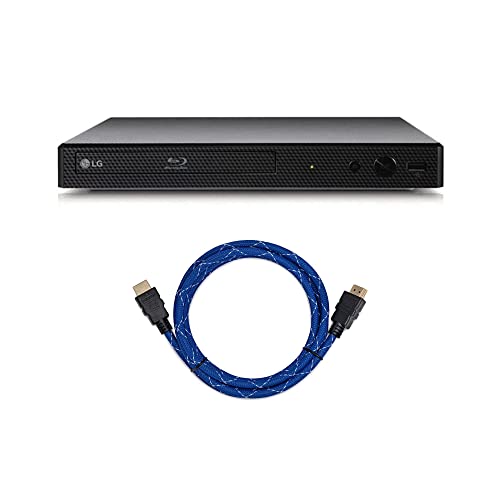
The LG BP175 is the pick for the tightest shelf, because it is a compact wired deck that plays standard Blu-ray discs in Full HD 1080p, upscales DVDs, and connects to a home network through an Ethernet port, with no wireless hardware to configure and no streaming platform competing for attention. It is the simplest LG in this guide, and that simplicity is the reason it earns its place: a household that already streams through a television or a stick does not need a second smart platform inside the disc player, and the BP175 spends its whole design on disc playback instead. The published specs list Dolby TrueHD and DTS-HD Master Audio support, so the lossless soundtracks on a Blu-ray disc reach the receiver intact, and the HDMI output carries picture and sound on one cable.
The wired network connection is the detail that separates the BP175 from the Sony default pick. The Ethernet port lets the player reach the network for firmware updates and for LG’s wired media features, which keeps the deck current without any Wi-Fi setup, and it suits a media cabinet that already has a network cable run to it. The deck is about 10.6 inches wide and 1.7 inches high, which is wider than the Sony S1700U but still a small box, and it weighs about 2 pounds, so it sits steadily on a shelf without needing a full-width component slot. The USB port is absent from the published feature list for this model, so a household with movies on a thumb drive should look at the LG BP350 or the LG BP550 instead, both of which carry USB media playback.
The BP175 also suits the household that wants the lowest-maintenance player here, because there is no Wi-Fi password to enter, no app to update, and no smart menu to navigate past before the disc starts. The trades are two, and both are worth naming plainly. There is no Wi-Fi and no built-in streaming apps of note, so a household that wants the player to stream should look at the LG BP350, and there is no 3D Blu-ray playback, so a household with 3D discs should look at the LG BP550 or the Sony BDP-S6700. Buy the LG BP175 if the household wants a compact wired deck that plays discs and nothing else, and buy the Sony BDP-S1700U if the household wants the newest deck with an HDMI cable in the box.
Specs
- Brand/model: LG BP175
- Video: Full HD 1080p Blu-ray playback, DVD upscaling
- Audio: Dolby TrueHD and DTS-HD Master Audio as published
- Outputs: HDMI, Ethernet
- Disc formats: Blu-ray, DVD, CD
- Network: Ethernet only, no built-in Wi-Fi
- Size: about 10.6 inches wide, 1.7 inches high
- Weight: about 2 pounds
- Tier: Budget
3. LG BP350
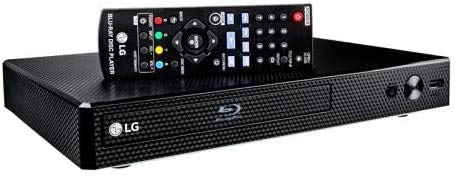
The LG BP350 is the pick for a household that wants streaming apps built into the player, because it adds built-in Wi-Fi and a DLNA media link to the same Full HD 1080p Blu-ray playback, so one box plays discs, streams movies, and reaches media stored on a computer on the same home network. It is the connected pick in this guide, and that connectivity is the reason it earns its place: the published feature list includes premium streaming providers such as Netflix, YouTube, Vudu, Hulu Plus, and Amazon, plus DLNA-certified access to a home media library, which means the player covers an evening when the household streams and an evening when it spins a disc without switching inputs. The Wi-Fi connection is built in, so there is no adapter to buy and no cable to run to the router.
The disc side is the same solid standard playback as the BP175, with Blu-ray at Full HD 1080p, DVD upscaling to 1080p, and Dolby TrueHD and DTS-HD Master Audio soundtracks passed over HDMI. The published dimensions match the BP175 at about 10.6 inches wide, 1.7 inches high, and 7.7 inches deep, and the weight is 1.9 pounds, so the two LG decks share a shelf footprint and the choice between them is purely about connectivity. Power consumption is published at 12 watts with standby under half a watt, which is the low draw a household expects from a small deck that stays plugged in. The USB port handles media files from a thumb drive, which the BP175 does not offer, and that alone settles the choice for a household with a drive full of movies.
The BP350 also suits the household that wants one remote for discs and streaming, because the LG remote app and the on-screen menu cover both sides without a second device. The trades are two, and both are worth naming plainly. There is no 3D Blu-ray playback, so a household with 3D discs should look at the LG BP550, and there is no 4K upscaling beyond 1080p, so a household with a 4K television that wants the player to upscale should look at the Sony BDP-S6700. Buy the LG BP350 if the household wants Wi-Fi streaming and USB media playback in the same standard Blu-ray deck, and buy the LG BP175 if the household wants the same disc playback without any wireless features.
Specs
- Brand/model: LG BP350
- Tier: Mid-range
- Video: Full HD 1080p Blu-ray playback, DVD upscaling to 1080p
- Audio: Dolby TrueHD and DTS-HD Master Audio as published
- Outputs: HDMI, USB, built-in Wi-Fi
- Streaming: Netflix, YouTube, Vudu, Hulu Plus, Amazon as published, DLNA media link
- Disc formats: Blu-ray, DVD, CD
- Size: 10.6 x 1.7 x 7.7 inches
- Weight: 1.9 pounds
- Power: 12 watts, standby under 0.5 watts
- Tier: Mid-range
4. LG BP550

The LG BP550 is the pick for a household with 3D Blu-ray discs, because it is the only LG in this guide that plays them, and it pairs that with built-in Wi-Fi, streaming apps, and USB media playback, so a 3D collection and a streaming habit share one deck. It is the top of LG’s 2015 standard Blu-ray line, and that position shows in the feature list: 3D Blu-ray disc playback alongside standard Blu-ray, DVD, and CD, premium streaming providers, and a private sound mode that sends audio to a phone or tablet for late-night viewing without waking the house. The published specs list the same 10.6 by 1.7 by 7.7 inch chassis as the BP350 and the same 1.9 pound weight, so the step up from the BP350 costs no extra shelf space.
The media playback is the widest of the three LG decks. The USB port and external hard drive support let the player reach movies and music stored on a drive, and the published file list covers common video and audio formats including MKV, MP4, and FLAC, which makes the BP550 the pick for a household that keeps a local media library as well as a disc shelf. The Wi-Fi connection covers streaming apps, and the DLNA link reaches a computer on the home network, so the player works as a media hub even on nights when no disc goes in. Dolby TrueHD and DTS-HD Master Audio soundtracks pass over HDMI to a receiver or soundbar, which is the same lossless audio the other LG decks carry.
The BP550 also suits the household that watches late, because the private sound mode is the one feature in this guide built for that exact habit, and it needs nothing more than a phone and the LG app to work. The trades are two, and both are worth naming plainly. There is no 4K Ultra HD disc playback and no 4K upscaling, so a household with Ultra HD discs should buy a 4K player, and a household that wants the player to upscale to 4K should look at the Sony BDP-S6700. The streaming apps are also the 2015 generation, so a household that streams daily may still prefer a modern streaming stick for apps and keep this deck for discs and 3D. Buy the LG BP550 if the household owns 3D Blu-ray discs and wants Wi-Fi and USB media playback in the same box, and buy the LG BP350 if the household wants the same connected playback without 3D.
Specs
- Brand/model: LG BP550, 2015 model
- Tier: Mid-range
- Video: Full HD 1080p Blu-ray playback, 3D Blu-ray playback, DVD upscaling to 1080p
- Audio: Dolby TrueHD and DTS-HD Master Audio as published
- Outputs: HDMI, USB, built-in Wi-Fi
- Streaming: premium content providers as published, DLNA media link, private sound mode
- Media files: MKV, MP4, FLAC and common formats as published, external hard drive playback
- Disc formats: Blu-ray, 3D Blu-ray, DVD, CD
- Size: 10.6 x 1.7 x 7.7 inches
- Weight: 1.9 pounds
- Power: 12 watts, standby under 0.5 watts
- Tier: Mid-range
5. Sony BDP-S6700

The Sony BDP-S6700 is the pick for a household that wants the most from a standard deck, because it upscales Blu-ray and DVD output to 4K for a 4K television, plays 3D Blu-ray discs, carries built-in Wi-Fi, and plays SACD music discs, which no other player in this guide does. It is the premium pick here, and the upscaling is the reason it earns that place: on a 4K television the S6700 sends a 4K signal instead of leaving the television to stretch a 1080p picture, so a standard Blu-ray collection looks its best on a modern screen without buying a single Ultra HD disc. The 3D support covers a 3D collection as well, and the Wi-Fi connection covers streaming apps for nights when no disc goes in.
The audio side is where the S6700 separates from the rest of the field. Alongside Dolby TrueHD and DTS-HD Master Audio soundtracks over HDMI, it plays SACD discs, which makes it the pick for a household with a hi-res music collection on disc, and that music capability is the reason audio-focused reviewers still recommend this deck years after its release. The USB port handles media files from a thumb drive, and the published feature list includes screen mirroring from a compatible phone, so photos and videos reach the television without a cable. The player is a full-width deck rather than a compact box, so it needs a proper shelf slot and the ventilation gap the manual calls for, but that size is the trade for the extra processing inside.
The S6700 also suits the household that is replacing an older player and wants one deck to cover every disc format it owns, because standard Blu-ray, 3D Blu-ray, DVD, CD, and SACD all play in the same box. The trades are two, and both are worth naming plainly. It cannot play 4K Ultra HD Blu-ray discs, so a household with Ultra HD discs still needs a 4K player, and the deck has been discontinued, so a household buying one should check the live offer and the seller before ordering, because availability now runs through third-party sellers rather than Sony directly. Buy the Sony BDP-S6700 if the household wants 4K upscaling and SACD playback from a standard Blu-ray deck, and buy the LG BP550 if the household wants 3D and Wi-Fi without the 4K upscaling.
Specs
- Brand/model: Sony BDP-S6700
- Tier: Premium
- Video: Full HD 1080p Blu-ray playback, 3D Blu-ray playback, 4K upscaling of Blu-ray and DVD
- Audio: Dolby TrueHD and DTS-HD Master Audio as published, SACD playback
- Outputs: HDMI, USB, built-in Wi-Fi
- Streaming: network streaming apps as published, screen mirroring from a compatible phone
- Disc formats: Blu-ray, 3D Blu-ray, DVD, CD, SACD
- Tier: Premium
Before You Buy: Checks for Standard Blu-ray Players
Check the live offer, because listing records lag and several of these decks are older models. The Sony BDP-S1700U rests on an Amazon listing record whose freshest copy is about 193 days old. The LG BP175 rests on an Amazon-sourced mirror record. The LG BP350 rests on an Amazon listing record whose freshest copy is about 216 days old, and its plain-player listing showed no featured offers at that crawl, so the bundle listing is the one to check. The LG BP550 rests on an Amazon listing record whose freshest copy is about 215 days old. The Sony BDP-S6700 rests on an Amazon listing record tracked through an Amazon-sourced mirror, and the deck has been discontinued, so its live offer runs through third-party sellers. Those ages are the reason to glance at the live page before ordering: a player that was widely stocked months ago can be a third-party listing today, and the seller matters as much as the model name. Confirm the seller, the included cable, and the return window before ordering, and keep the receipt until the first disc has played through without a skip.
On safety recalls, no recall notice was found naming any player in this guide. The recall record for disc players names no Sony, LG, or Panasonic standard Blu-ray deck in this guide, and the Sony recalls that do appear in the record cover Bravia televisions and VAIO laptops, which are different product classes entirely. The practical lesson from that record is still worth carrying into the purchase: buy the player from a seller the household recognises, check the ventilation openings before the first play, and never cover them with cloth or paper, because a disc player in a closed cabinet with blocked vents runs hot and loads discs slowly. If a used or renewed player arrives, check the disc tray, the remote, and the power supply before the return window closes, because those are the parts that wear first on an older deck.
Match the player to the television before ordering, because the wrong pairing wastes the purchase. A 1080p television needs no upscaling help, so any player here delivers the same native Blu-ray picture, and the choice should turn on Wi-Fi, 3D, and shelf size instead. A 4K television benefits from the Sony BDP-S6700, because it is the only pick here that upscales to 4K output, while the other four send 1080p and leave the television to do the stretching. A television with only one HDMI input means the player shares that input with a streaming stick or a cable box, so a household in that situation should plan for a switch or a receiver with more inputs. Check the television manual for the HDMI port that supports the highest resolution, because some sets enable full-bandwidth video on only one or two ports.
Plan the audio path, because the player is only half the sound system. All five players send lossless Dolby TrueHD and DTS-HD Master Audio soundtracks over HDMI, but that audio only reaches the household if the receiver or soundbar can receive it. With a modern receiver or soundbar that takes HDMI, one cable from the player to the receiver to the television is enough. With an older receiver that lacks HDMI, the household needs a different plan, because none of these players carries analog surround outputs, and the television’s optical output becomes the fallback for sound. The Sony BDP-S6700 adds SACD playback for music collectors, and that format needs a receiver that can take its audio over HDMI as well. Check the receiver’s inputs before ordering, because a player with no matching audio path is a player that plays silently.
Keep the remote and the manual together, and update the firmware once. A disc player lives or dies by its remote, because disc menus, audio tracks, and subtitle options all run through it, and a lost remote for a discontinued deck is harder to replace than a lost remote for a current one. Keep the manual beside the remote, so the next person to use the player knows how to switch audio tracks and enable 3D output. Check for a firmware update on the first day, because the Wi-Fi models in this guide receive updates over the network and the wired LG BP175 receives them over Ethernet, and an update can fix disc compatibility with newer releases. After that first update, the player should be left alone unless a new disc refuses to load, which is the usual sign that another update is due.
Frequently Asked Questions
Will a standard Blu-ray player play my 4K Ultra HD discs?
No. A standard Blu-ray player cannot read a 4K Ultra HD Blu-ray disc, because the Ultra HD format uses a different disc structure and a different video layer. A household with Ultra HD discs needs a 4K Ultra HD player, which also plays standard Blu-ray discs, DVDs, and CDs. The five players in this guide are for households whose collections are standard Blu-ray discs and DVDs, and buying one for an Ultra HD collection is the one mistake that cannot be fixed with a setting.
Do I need Wi-Fi on a Blu-ray player?
Only if the player is expected to stream. A household that already streams through a smart television or a streaming stick does not need Wi-Fi on the disc player, and the Sony BDP-S1700U and the LG BP175 in this guide are built for that household. A household that wants the player to be the only smart device in the room should buy the LG BP350, the LG BP550, or the Sony BDP-S6700, all of which carry built-in Wi-Fi and streaming apps. Disc playback itself needs no network connection at all.
Can these players make my DVDs look better?
Yes, within limits. Every player here upscales DVDs to a cleaner picture on a high-definition screen, and the Sony BDP-S6700 upscales them all the way to 4K output for a 4K television. Upscaling sharpens presentation and reduces the softness of standard-definition video, but it cannot add detail that is not on the disc, and a DVD will still look like a DVD, just a cleaner one. A Blu-ray disc of the same film will always look sharper than an upscaled DVD of it.
What is the difference between these players and a 4K Blu-ray player?
The difference is the disc format, not the picture on standard discs. A 4K Ultra HD player reads Ultra HD discs with HDR formats such as Dolby Vision and HDR10+, and it costs more for that ability. A standard Blu-ray player reads standard Blu-ray discs at 1080p and cannot read Ultra HD discs. On a standard Blu-ray disc, both kinds of player deliver the same 1080p picture, so a household with no Ultra HD discs gains nothing from the 4K deck except the upscaling, which only the Sony BDP-S6700 in this guide matches.
Conclusion
The Sony BDP-S1700U is the Blu-ray player to buy first: a 2025 standard deck with Full HD 1080p playback, DVD upscaling, Dolby TrueHD and DTS audio, and an HDMI cable in the box. The LG BP175 is the pick for the tightest shelf, with a compact wired design and an Ethernet port. The LG BP350 is the pick for a household that wants Wi-Fi streaming and USB media playback in the same deck. The LG BP550 is the pick for a household with 3D Blu-ray discs, adding 3D playback and a private sound mode. The Sony BDP-S6700 is the pick for the most from a standard deck, with 4K upscaling, 3D playback, Wi-Fi, and SACD music discs. Check the disc format first, match the player to the television and the sound system, and any of the five will play a standard collection the way it was meant to be watched.