Key takeaways
- Compare the best laser TVs for home theater: triple-laser ultra short throw systems with bundled screens and bright standalone units for large rooms.
A laser TV is an ultra short throw projector that sits on a media console a few inches from the wall and throws a 100-inch or larger 4K picture upward onto a screen. It replaces a big flat-panel television without a ceiling mount, long cable runs, or a fully darkened room, and the laser is rated to last for tens of thousands of hours.
This guide covers laser TV systems only. Some picks ship with an ambient light rejecting screen in the box, and some are projector-only units, so check what is included before you order.
As an Amazon Associate, we earn from qualifying purchases.
Quick Answer
The Hisense 120L9H is the safest first choice, with a 120-inch screen in the box and triple-laser color. The PX3-PRO is the strongest standalone option for a bright living room. The AWOL LTV-3000 Pro adds a built-in center speaker, the Epson LS800 is the brightest pick, and the PL2 is the most affordable way in.
Hisense 120L9H TriChroma Laser TV with 120-Inch Screen

The Hisense 120L9H is the only pick here that arrives as a complete system, with a 120-inch ambient light rejecting screen in the box alongside the console. An ultra short throw projector throws its image upward at a steep angle, and a plain wall washes out in a lit room, while the bundled screen rejects light from above and keeps the picture punchy. The console uses three pure color lasers to reach 107 percent of the BT.2020 color space, rated at 3000 ANSI lumens, with 4K UHD, Dolby Vision and HDR10, 40-watt Dolby Atmos sound, and Google TV.
One caveat: the most recent page crawl, about 241 days old, showed only used offers from a third-party seller, with no new listing visible, so confirm new stock at checkout. Also confirm the listing reads 120L9H-CINE120A: the same page offers a 100-inch version and related models, including the L5G, L5H, and L9G, under one style menu, and each is a separate listing.
Specs
| Feature | Detail |
|---|---|
| Light source | TriChroma triple laser (red, green, blue) |
| Brightness | 3000 ANSI lumens |
| Resolution | 4K UHD (3840 x 2160) |
| Screen | 120-inch ambient light rejecting screen included |
| Color space | 107 percent of BT.2020 |
| Sound | 40-watt built-in Dolby Atmos |
| Smart platform | Google TV |
| Model | 120L9H-CINE120A |
Hisense PX3-PRO TriChroma Laser Cinema Projector

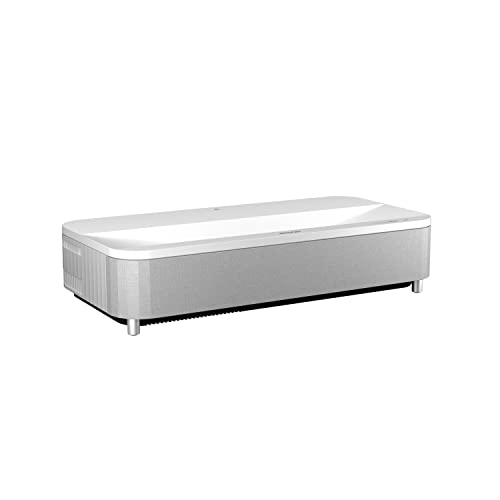
The Hisense PX3-PRO is the strongest standalone laser TV here for a bright living room. It uses the same triple-laser TriChroma engine as the L9H, rated at 3000 lumens, with 3000 to 1 contrast and an 80 to 150-inch image range. Dolby Vision, HDR10 Plus, and IMAX Enhanced are all supported, the widest HDR suite here, and the 240-hertz high refresh mode makes it the most gaming-friendly pick, with a Designed for Xbox badge. Google TV is built in, with 3D playback support. It is a projector-only unit, so a screen is a separate purchase: an ambient light rejecting screen for daytime viewing, or a plain fixed-frame screen for a dark room.
Two listing traps need care. A renewed PX3-PRO listing circulates under a different code, B0DYPJPVCN, and the Canadian listing uses another code, B0D93D9979, so confirm the listing reads B0DGHZ1C8V and says new. The PX3-PRO is also easy to confuse with the older PX2-PRO, a dimmer 2400-lumen model with a 90 to 130-inch range.
Specs
| Feature | Detail |
|---|---|
| Light source | TriChroma triple laser (red, green, blue) |
| Brightness | 3000 lumens |
| Resolution | 4K UHD (3840 x 2160) |
| Image size | 80 to 150 inches |
| Screen | Not included — projector only |
| HDR | Dolby Vision, HDR10 Plus, IMAX Enhanced |
AWOL Vision LTV-3000 Pro Triple Laser Projector
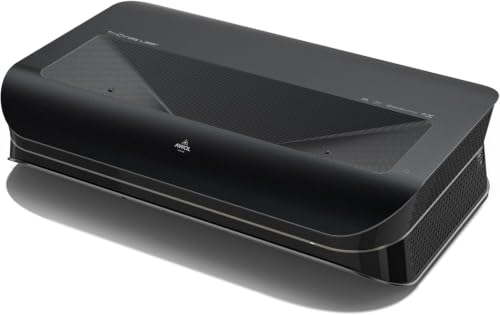
The AWOL Vision LTV-3000 Pro is the pick for buyers who want a home theater without adding a separate center speaker. Its built-in center-channel speaker anchors dialogue to the screen, which helps where a soundbar would crowd the console. The triple-laser engine is rated at 3000 peak lumens, with Dolby Vision, Dolby Atmos, and HDR10 Plus support, plus active 3D playback, and the image runs to 150 inches. A 120-hertz mode at 1080p is available for gaming, and the 36-watt stereo speakers cover casual viewing.
Brightness figures need a careful read. The listing advertises 3000 peak lumens, while the maker’s own white-brightness figure is 2000 ISO lumens, and those are two different measures of the same projector. One code trap matters: a second AWOL listing for the same model name, the LTV-3000-DE variant, circulates under the code B0CKMH91PZ, so confirm the listing reads B0CR13MB4F. The LTV-3000 Pro has no built-in smart platform in the usual sense, so plan on a streaming stick or box.
Specs
| Feature | Detail |
|---|---|
| Light source | Triple laser (red, green, blue) |
| Brightness | 3000 peak lumens; 2000 ISO lumens white brightness |
| Resolution | 4K UHD (3840 x 2160) |
| Image size | Up to 150 inches |
| Screen | Not included — projector only |
| HDR | Dolby Vision, HDR10 Plus |
| Sound | Built-in center-channel speaker; 36-watt stereo speakers |
Epson EpiqVision Ultra LS800 Laser Projection TV
The Epson EpiqVision Ultra LS800 is the brightest pick in this roundup, rated at 4000 lumens, and the only one built on 3-chip 3LCD technology instead of a single DLP chip. Three LCD panels, one per color, mean no color wheel and no rainbow artifacts, and the extra brightness suits a living room with windows that cannot be covered. Epson markets it as a Laser Projection TV, and it pairs with screens up to 150 inches. Android TV is built in, and the 2.1-channel Yamaha speakers add a bass channel that gives soundtracks more weight.
The LS800 uses 4K PRO-UHD, which is pixel shifting rather than native 4K panels: it shifts pixels at high speed to render a 4K-resolution image, sharp for movies and sports, though not the same optical path as native 4K. Two details need care. The white version is the pick here, under the code B0BCXT6BSP, and the black version is a separate listing under B0BCXTVXMC, so confirm white at checkout. The Product information excerpt for this listing is about 363 days old, the oldest here, so confirm stock before ordering.
Specs
| Feature | Detail |
|---|---|
| Light source | Laser, 3-chip 3LCD |
| Brightness | 4000 lumens |
| Resolution | 4K PRO-UHD (pixel shifting) |
| Image size | Up to 150 inches |
| Screen | Not included — projector only |
| Smart platform | Android TV |
Hisense PL2 Laser Cinema Projector

The Hisense PL2 is the most affordable way into the laser TV category. It uses a single X-Fusion laser engine rated at 2700 ANSI lumens, with a 3000 to 1 contrast figure, an 80 to 150-inch image range, and Dolby Vision plus Dolby Atmos support, all on Google TV with WiFi 6E. In a dark or dim room, the picture is close enough to the triple-laser models that most viewers will not notice. The 0.22 to 1 throw ratio is the shortest here, so the console sits closest to the wall, which helps in a shallow room.
The single-laser design is the trade-off: it cannot match the color range of a triple-laser engine, so bright scenes look slightly less saturated. The laser is rated for more than 25,000 hours. One stock note matters: a major electronics retailer lists the PL2 as no longer available in its own store, while Amazon shows a current listing as of November 19, 2026, so confirm stock at checkout. Do not confuse it with the older PL1, a dimmer model with a different feature set.
Specs
| Feature | Detail |
|---|---|
| Light source | X-Fusion single laser |
| Brightness | 2700 ANSI lumens |
| Contrast | 3000 to 1 |
| Resolution | 4K UHD (3840 x 2160) |
| Image size | 80 to 150 inches |
| Screen | Not included — projector only |
| Throw ratio | 0.22 to 1 |
How to choose
Begin with the room. Measure the wall and the console: an ultra short throw projector needs a low, deep console and a few inches of clearance, and the image grows fast as the console moves back, so a console too deep or too tall will throw the picture past the top of the screen. A dark room suits any pick here, while a bright living room favors the brightest models and an ambient light rejecting screen. Next, decide whether the screen is included: the L9H ships with one, while the other four need a screen bought separately. Then weigh the light source: triple-laser models cover more color than single-laser models, and 3-chip 3LCD avoids rainbow artifacts entirely.
Who should skip
Skip a laser TV if the room has no suitable wall or screen space, because the image needs a flat surface at least 100 inches across, and a small room is better served by a large flat-panel television. Skip the screen-bundled L9H if the wall cannot fit a fixed 120-inch screen, since the bundled screen is not optional. Skip a projector-only pick if the budget cannot stretch to a screen: a bare wall in a bright room will wash out even the brightest model here. Skip the PL2 if color accuracy is the top priority, since its single laser covers less of the color space than the triple-laser models.
Frequently Asked Questions
Is a laser TV a real television?
A laser TV is an ultra short throw laser projector, usually sold with a screen, that behaves like a television: it sits on a console, turns on with a remote, and runs streaming apps from a built-in smart platform. It is not a flat panel, so it needs a screen or a suitable wall, and more setup than a wall-mounted television.
Do I need a special screen for a laser TV?
A special screen is not strictly required, but an ambient light rejecting screen makes a large difference in a room with windows or lamps: it rejects light from above while reflecting the steep upward beam. A plain white wall works in a dark room, and a standard fixed-frame screen works in a dim room, but a bright room without one will look washed out.
How big a picture can a laser TV make?
Every pick here reaches at least 150 inches, and the L9H ships with a 120-inch screen in the box. The image size depends on how far the console sits from the wall, so measure first: too close makes a small picture, and too far makes a picture larger than the screen.
How long does a laser TV last?
The laser light source in these models is rated for 20,000 to 25,000 hours or more, which covers many years of evening viewing, and there is no lamp to replace. The smart platform is the part most likely to feel dated first, since streaming apps change faster than laser hardware, so a separate streaming stick can extend the life of the unit.
Final verdict
The Hisense 120L9H is the best first laser TV for most buyers, because the bundled 120-inch screen removes the hardest decision. The PX3-PRO is the best standalone pick for a bright living room, with the widest HDR support. The AWOL LTV-3000 Pro is the pick for buyers who want a center speaker built in, the Epson LS800 is the pick for the brightest rooms, and the PL2 is the pick for buyers who want in at the lowest cost. Whichever you choose, measure the wall, confirm whether a screen is included, and confirm stock before ordering.